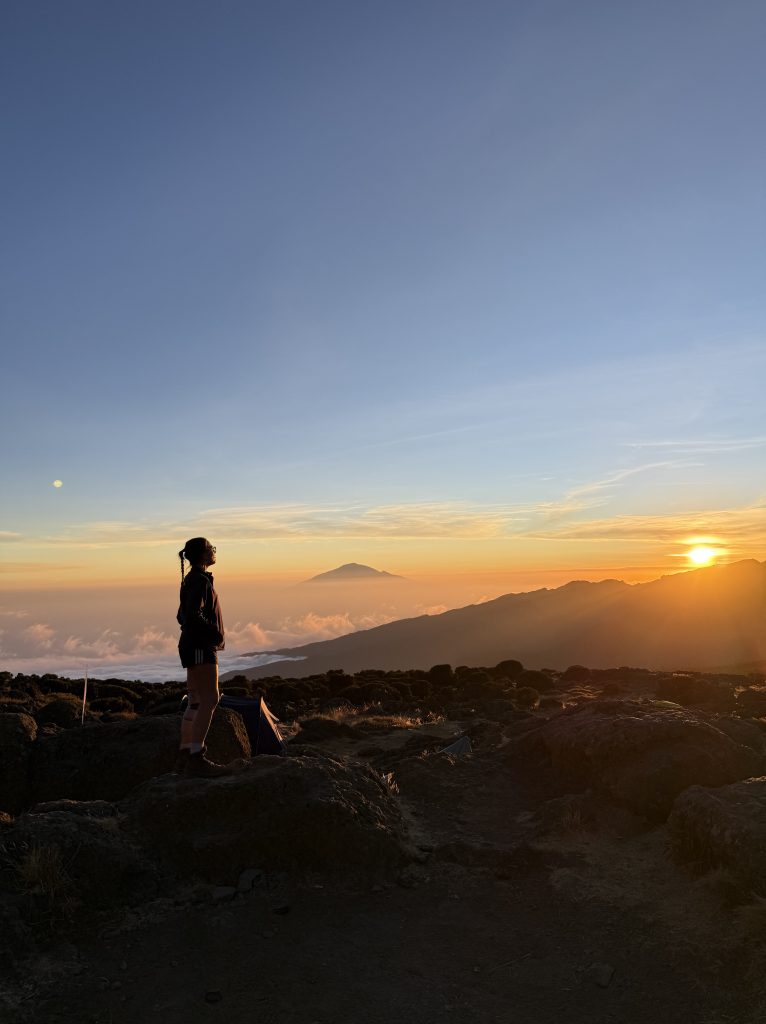
Weekly Update – Sept 15, 2026 – Mt Kilimanjaro
Writing from Wildebeest Eco Camp just outside of Nairobi. Buckle up for this Kilimanjaro update!
On August 30, 2026 I began my travels commuting from the West End to Edinburgh. Locking the door and turning off the flat water felt like the biggest physical representation of saying goodbye to material and physical comfort and stepping into a big adventure. Walking with my duffel, day pack, and carry-on backpack proved to be quite challenging, but what better way to kickstart an adventure with a cumbersome commute to the airport. At Edinburgh airport, I checked my big adventure duffel bag, ran into slight problems with my Tanzania visa due to my lack of an exit flight and remedied the situation by buying a bus ticket from Moshi to Nairobi in line. Through security, I met up with Nicole at the only available table in the terminal (shoutout Burger King). I purchased last minute flight snacks (pringles and mentos), and got in line for the flight. The first leg of the journey was Edinburgh to Doha. I spent the plane ride writing in my physical journal, listening to Qatar airways podcasts, and attempting to sleep.
For so long, Kilimanjaro and the subsequent weeks of travel felt far off. I fragmented to summer into sections like Wimbledon, Isle of May, travel back home to the states, finishing my dissertation. I was so focused on getting through the summer with all its wonderful plans, that I put off thinking about the massive journey I was about to undertake. On the plane, the finality of my year in Scotland and ending the Bobby Jones year hit me like a mack truck. Anxieties like “did I pack correctly?” “do I have enough USD cash?” “am I strong enough?” “will I be too exhausted to summit?” “will I be safe?” “do I have enough planned?” bounced around in my head. I have not felt homesick throughout the year, but something about taking a plane across the world to begin a huge adventure stirred an intense longing for my friends and family at home. I wrote in my journal, “Hello, hello, Welcome to volume 2 – solo-ish travel through Easter Africa edition. I cannot lie, I want to be unfazed, but I’m a bit anxious, so let’s practice transparency, honesty, and letting go of any facade.” I chronicled about the excitement I possessed for the Kilimanjaro trek upcoming, and the ways I could take it day-by-day as to reduce the associated stress and enjoy the present moment. As I’d heard from family and friend testimonies, I vowed to trust my guides, focus on the controllables, and take it one step at a time. Pole Pole. Whatever will be, will be.
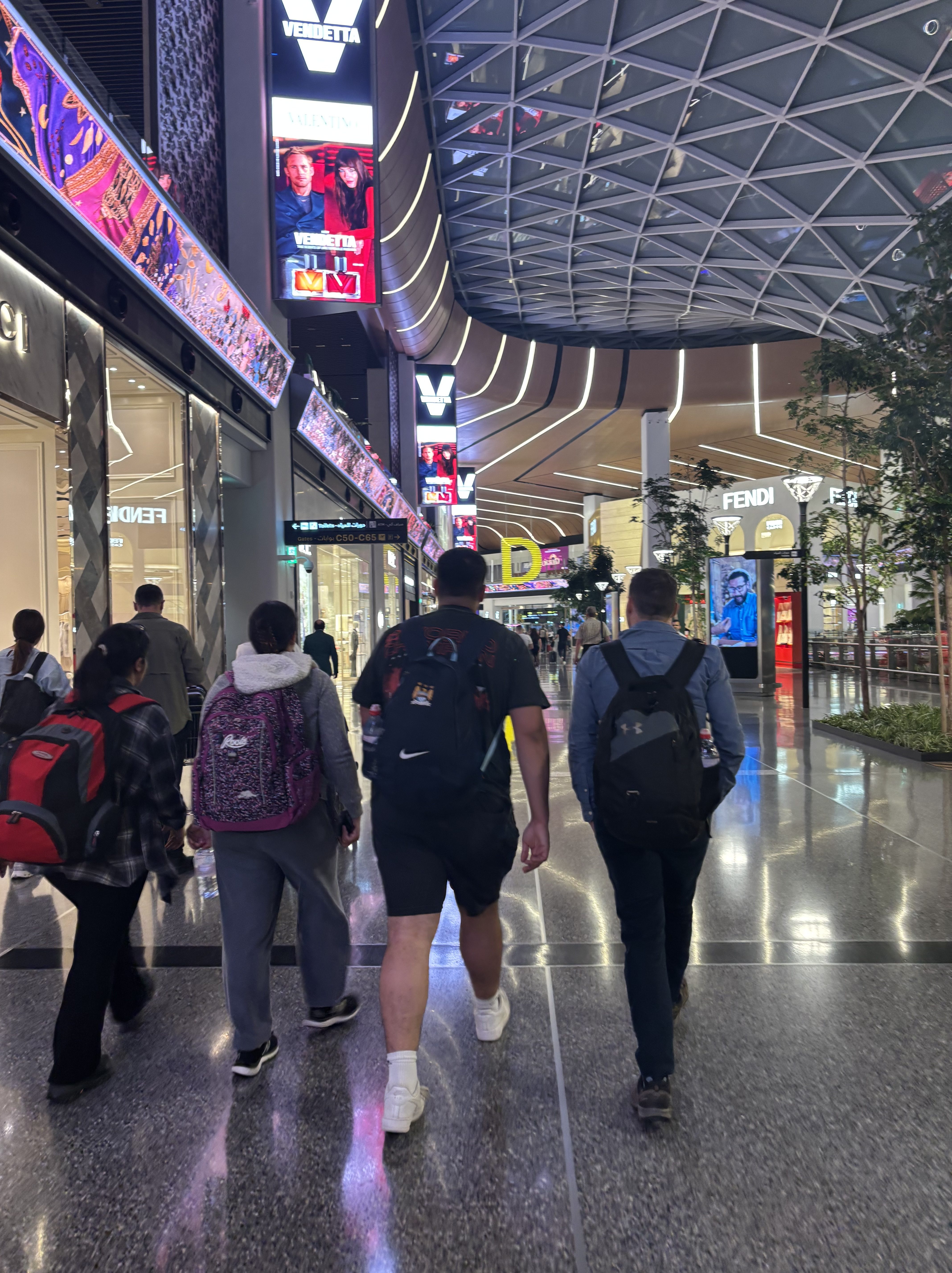
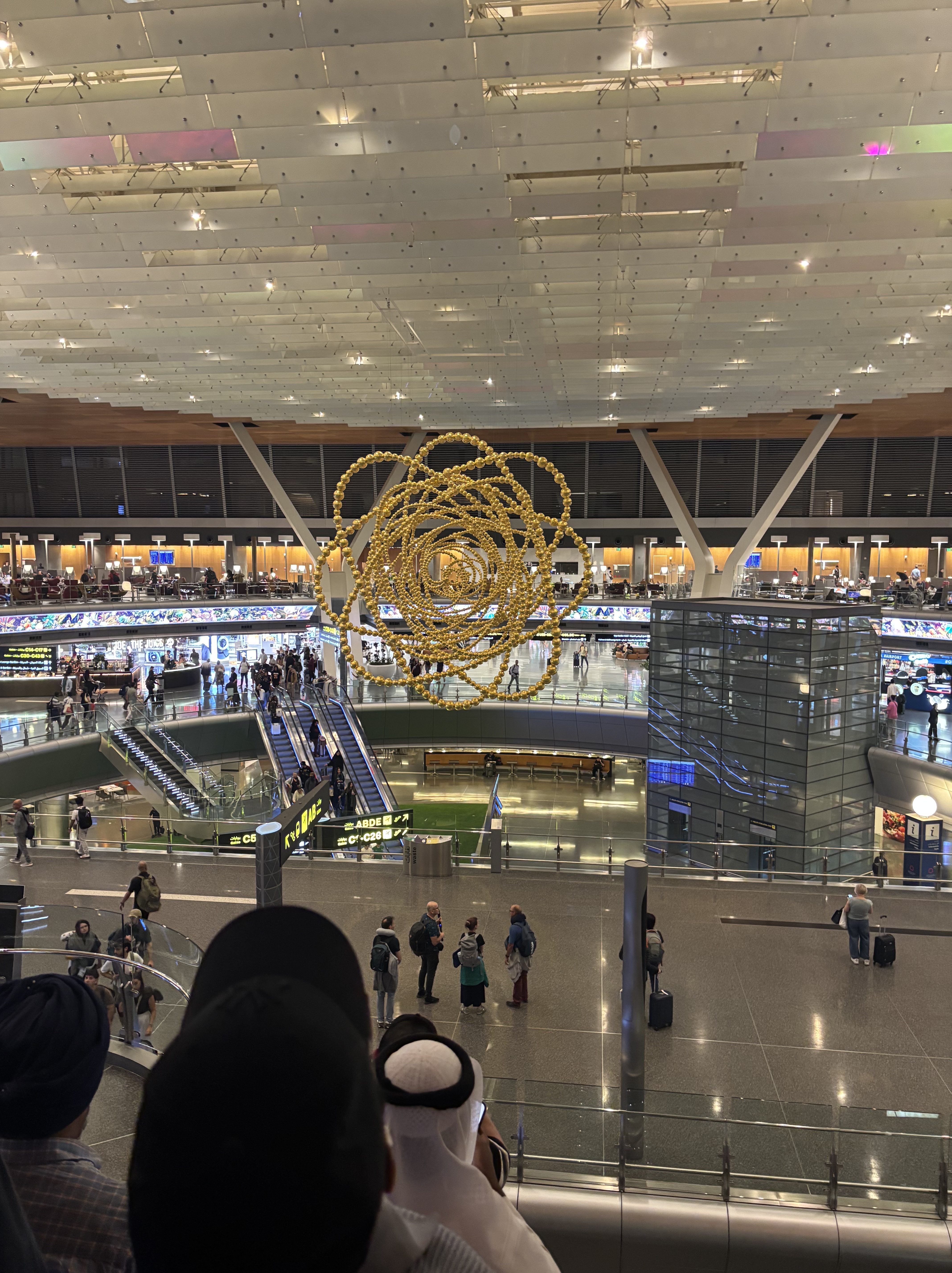
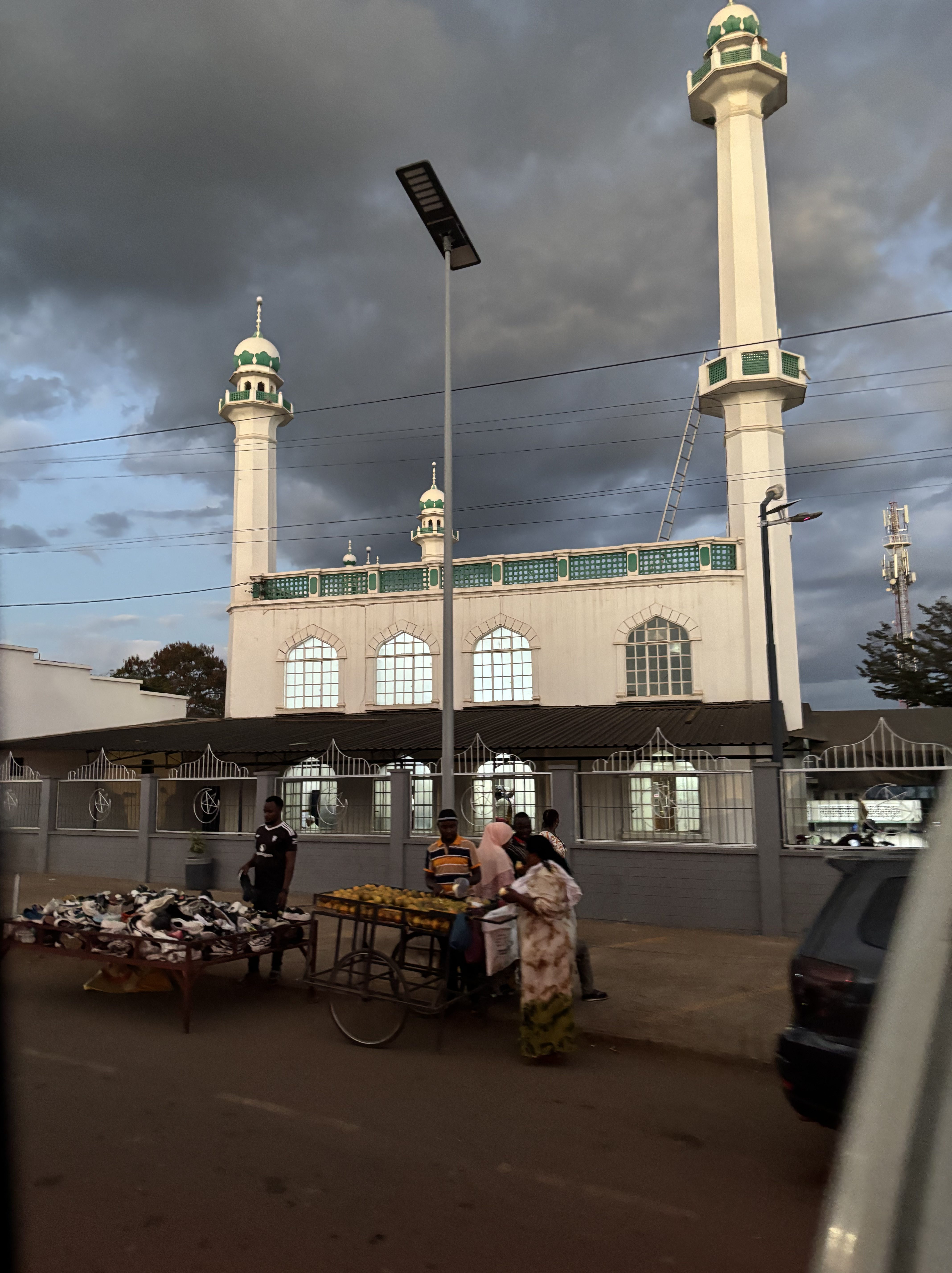
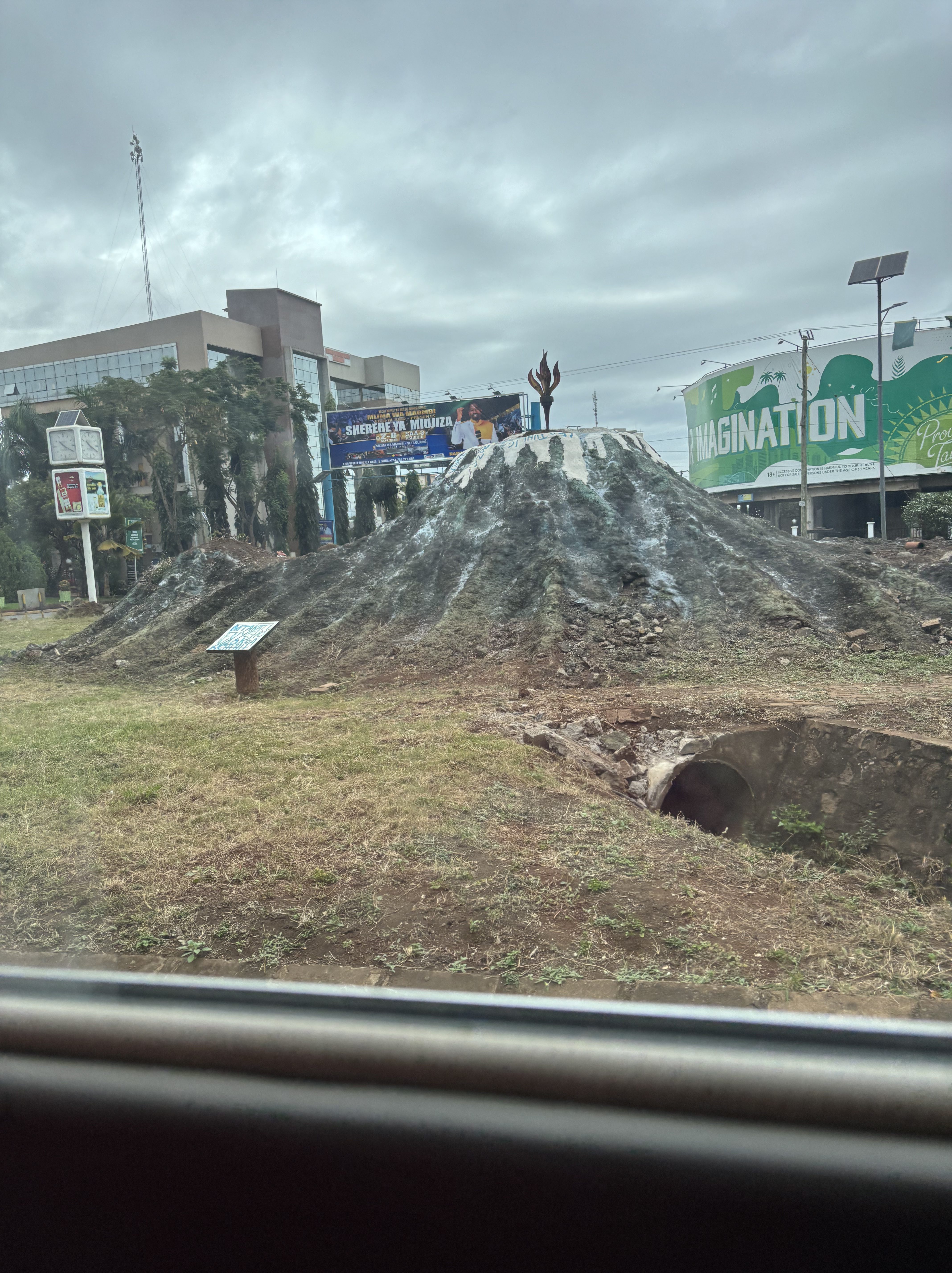
At the Kilimanjaro airport, Dig Deep organized airport transfer to Kilimanjaro Eco Hostel. Around a dozen of us arrived on the same flight and got bused to our temporary hostel accommodation. We drove by local businesses, small fire pits burning trash, fields of white corn, and countless transport trucks.
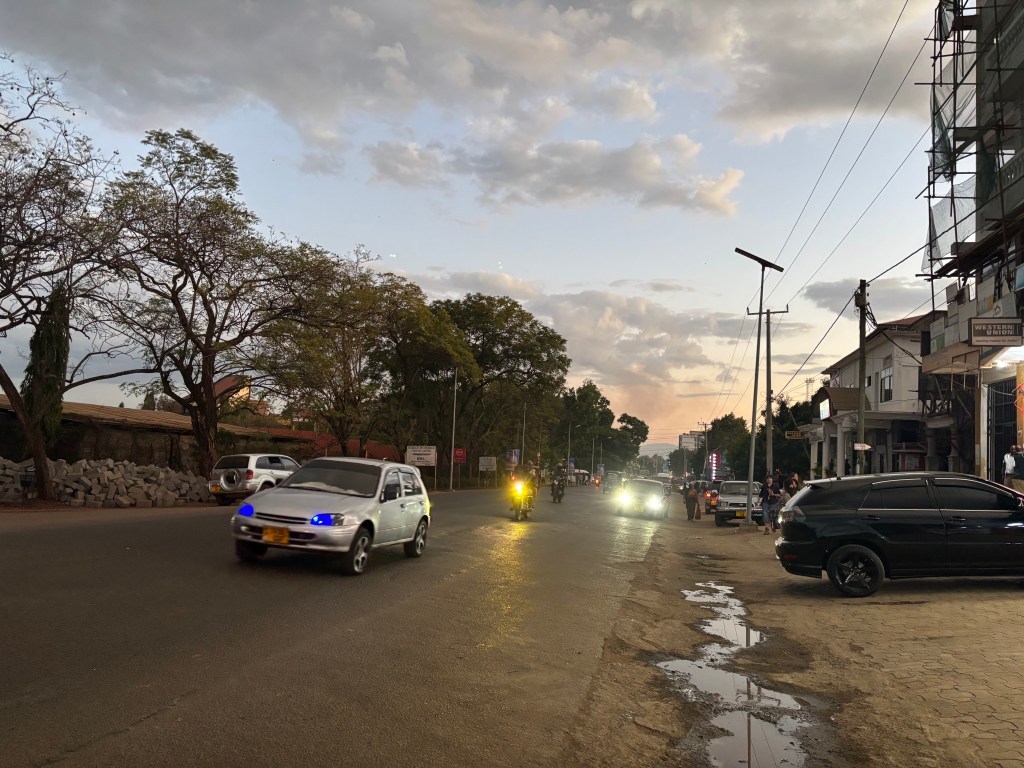
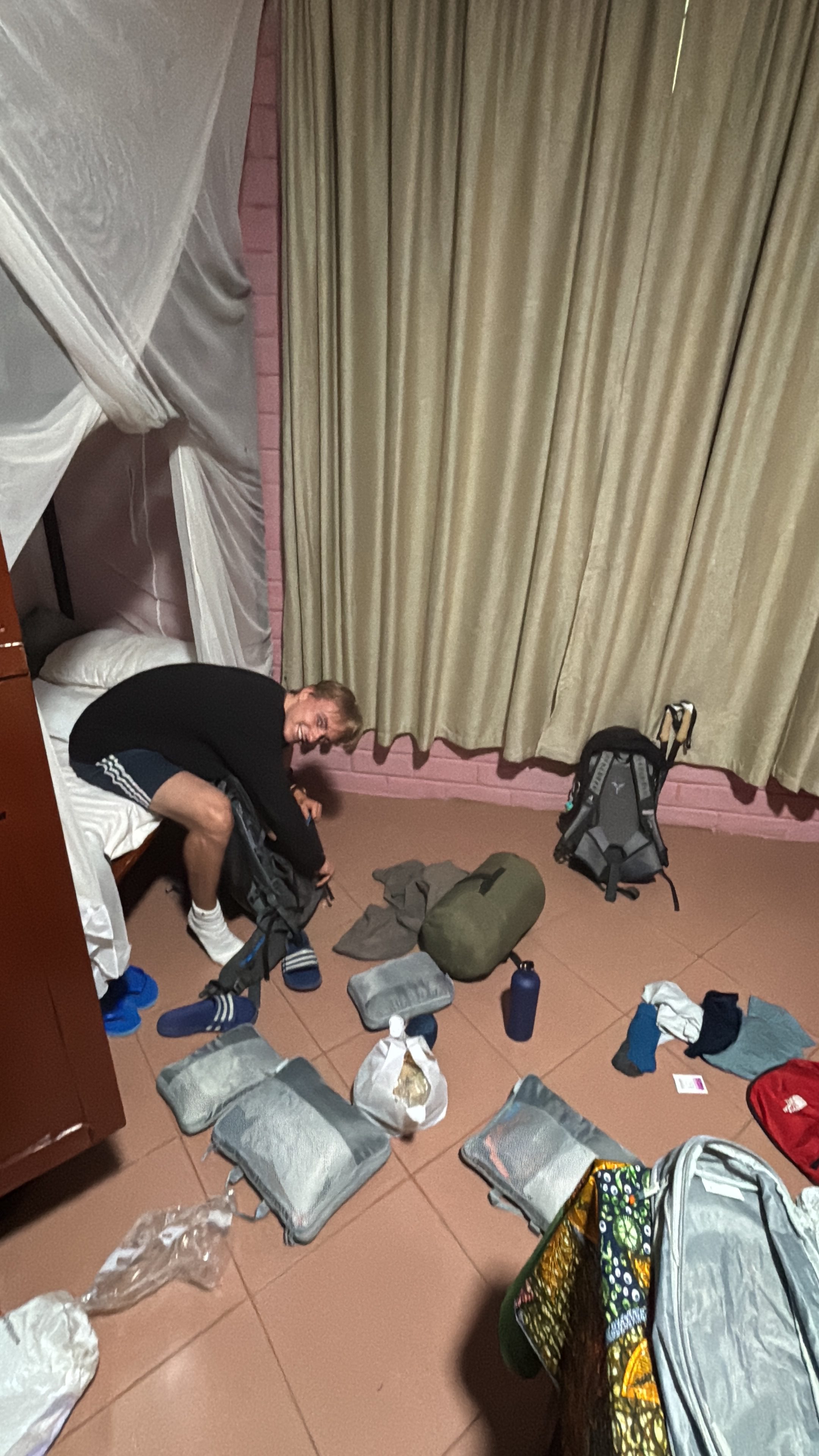
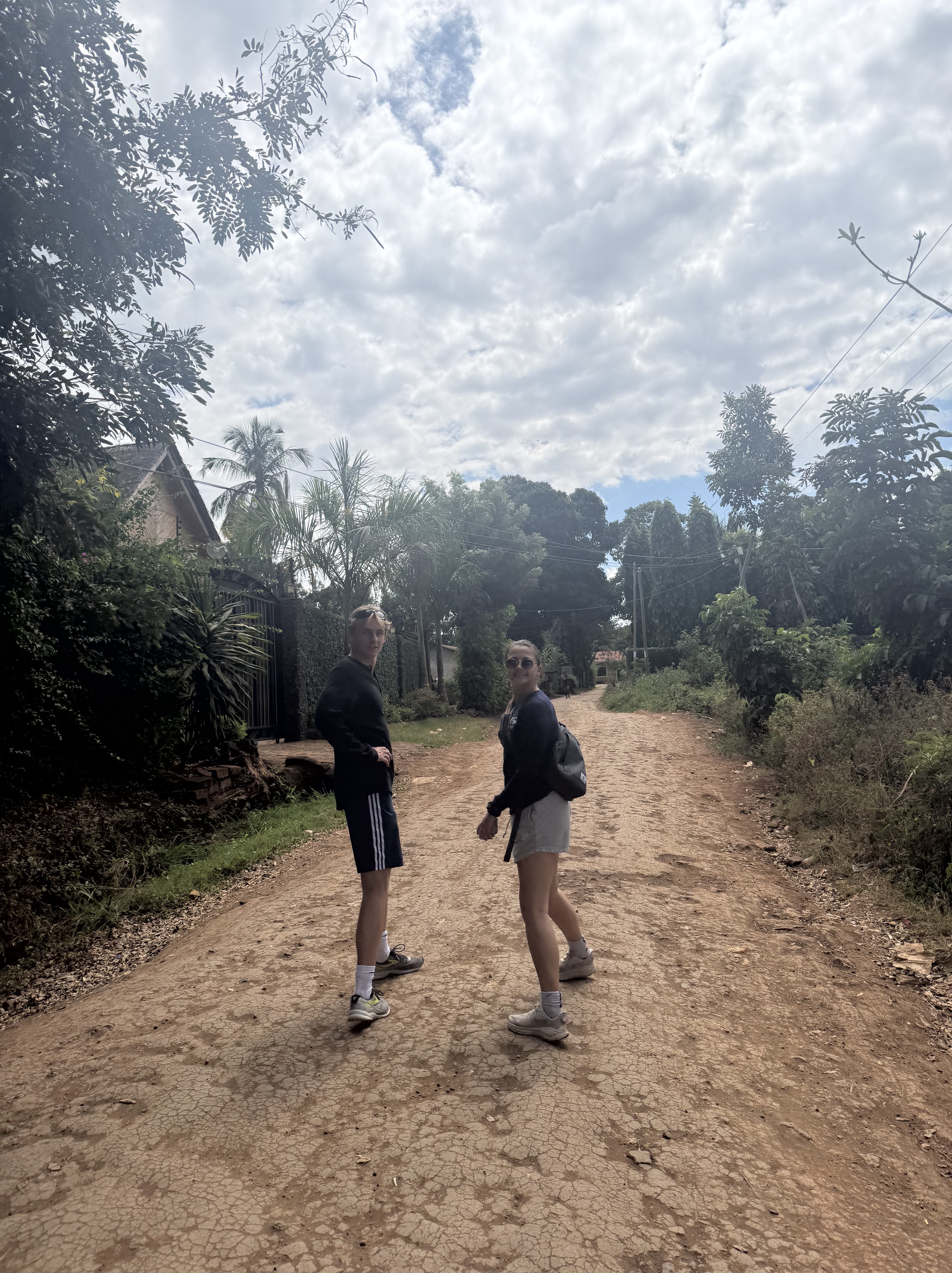
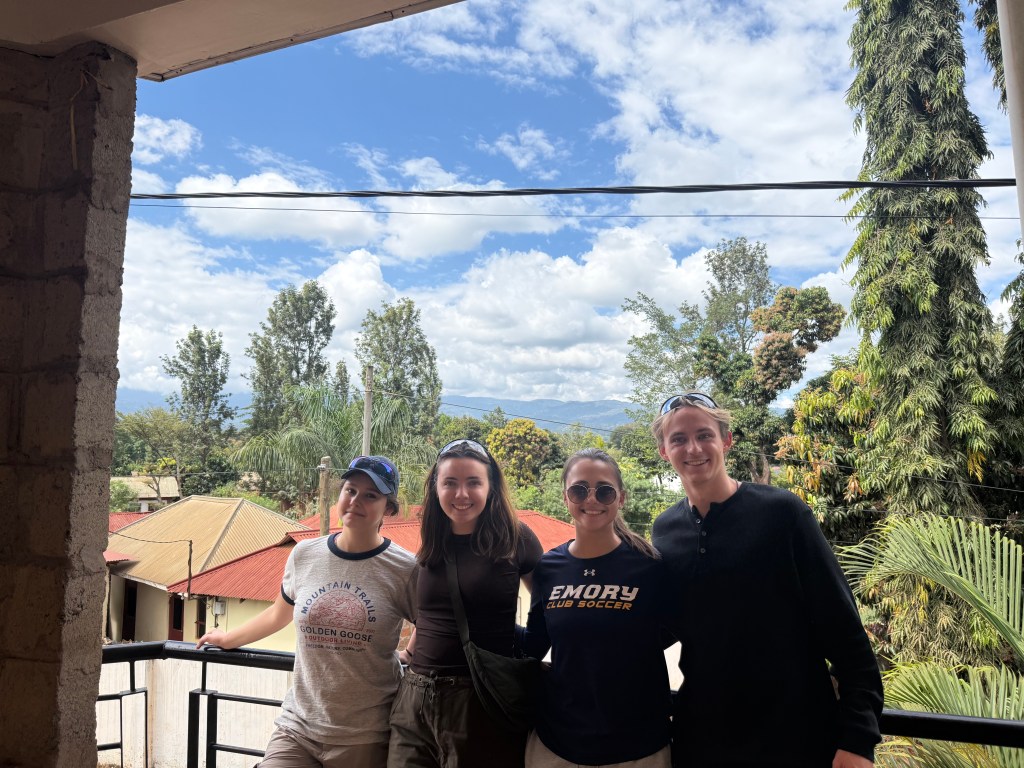
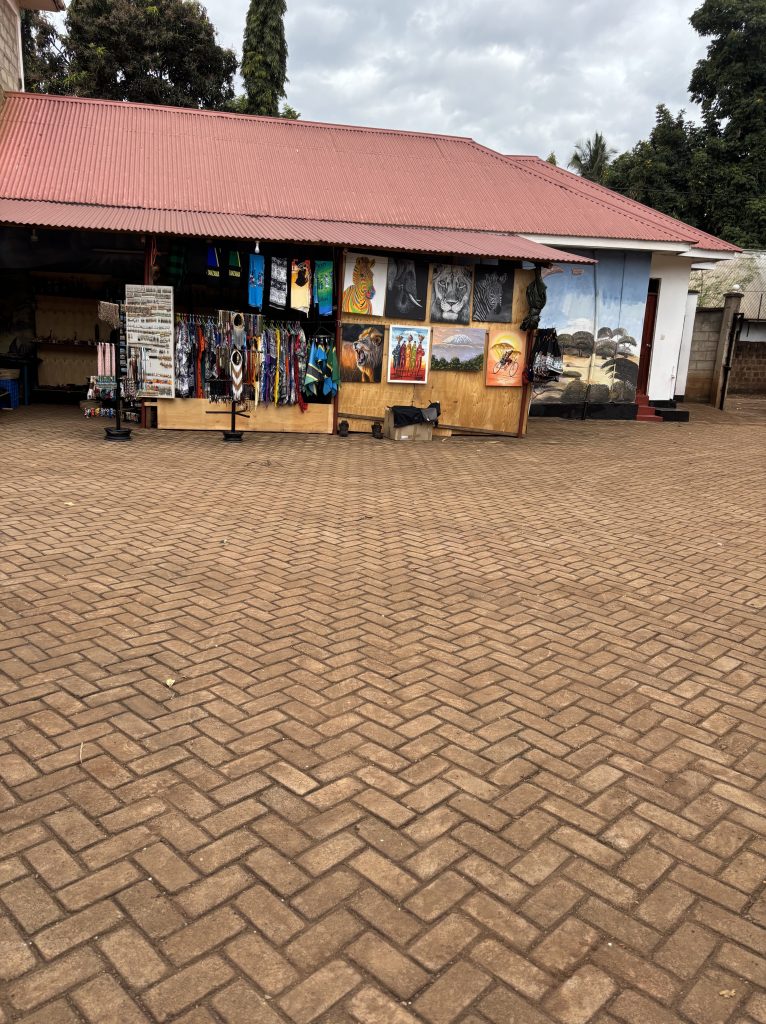
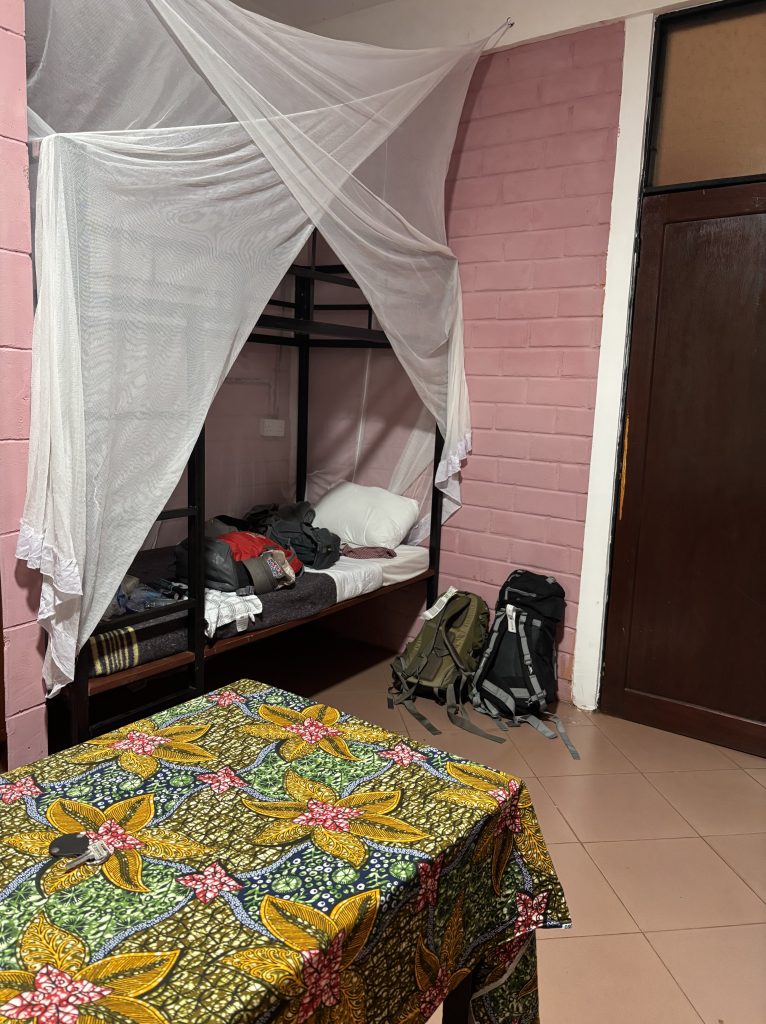
We arrived on August 31, 2026 in the afternoon to the Kilimanjaro Eco Hostel. All the nerves I experienced on the plane slowly diminished over the day and a half we had at the hostel. We met fellow groupmates, individuals from other groups who had to come down the mountain early due to injury or altitude sickness, and other hikers who had completed their expedition. When we weren’t getting briefed on the trek, renting gear, sharing meals, or walking around the nearby streets, I made sure to write down phone numbers, emergency contacts, and the general hiking itinerary. Knowing that I wouldn’t have service or electricity on the mountain encouraged me to get all important information into writing, just in case.
The night of September 31st included a big debrief – we met our head guides Godwin & Nesto, got out medical vitals checked, and learned that we were part of Dig Deep’s biggest climbing and fundraising year: 380 climbers and over 1 million pounds raised for charity. They took us for one last grocery store run for last-minute essentials.
Here’s an overview of our itinerary:
| Day | Route | Elevation | Distance |
| Day 1 – Rainforest | Machame Gate → Machame Camp | 1,811 m → 2,835 m | ~6.75 km |
| Day 2 – Moorland | Machame Camp → Shira Campsite | 2,835 m → 3,750 m | ~5.3 km |
| Day 3 – Semi-Desert | Shira Campsite → Lava Tower → Barranco Camp | 3,750 m → 4,600 m → 3,960 m | ~10.75 km |
| Day 4 – Alpine Desert | Barranco Camp → Karanga Camp → Barafu Camp | 3,960 m → 4,673 m | ~8.5 km |
| Day 5 – Summit Attempt | Barafu Camp → Uhuru Peak → Mweka Camp | 4,673 m → 5,895 m → 3,100 m | ~18 km total (5 km up + 13 km down) |
| Day 6 – Rainforest Descent | Mweka Camp → Mweka Gate | 3,100 m → 1,640 m | ~9 km |
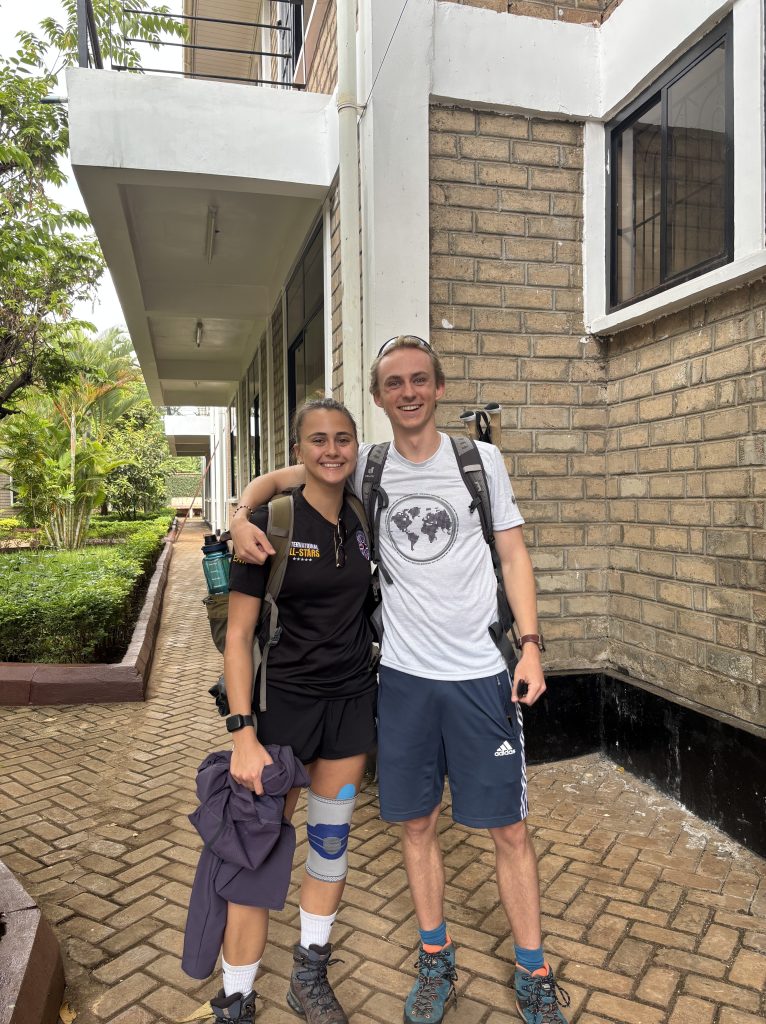
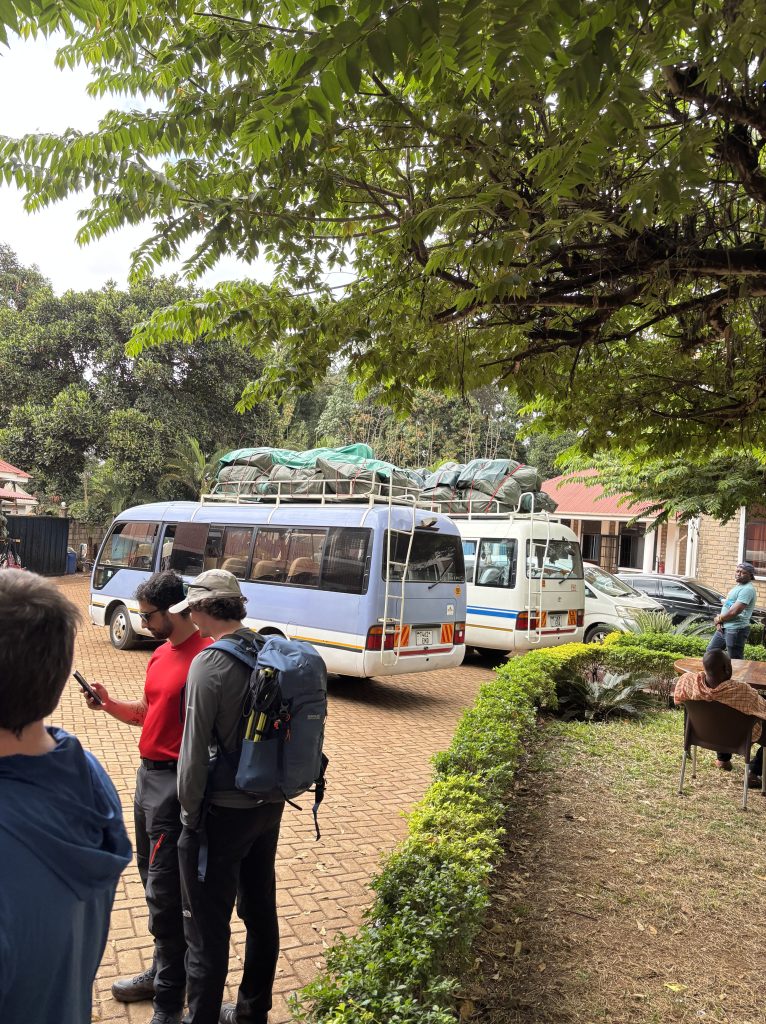
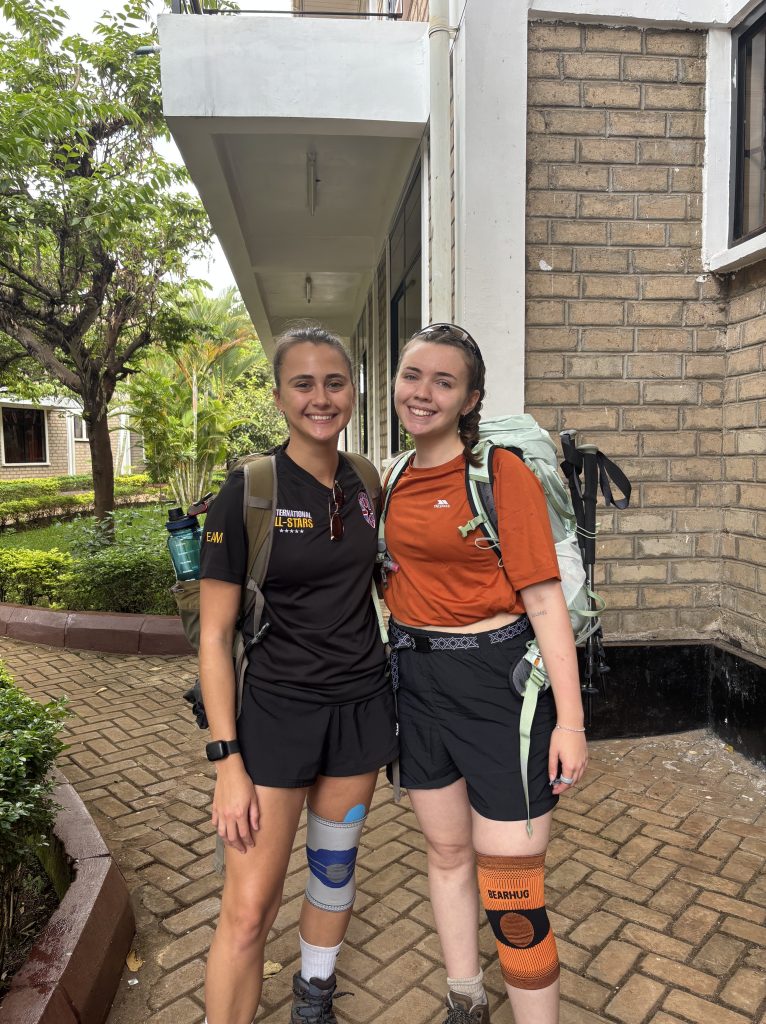
Day 1 – Machame Gate to Machame Camp
We drove an hour from the hostel to the Machame Gate, packed into a van with all of our gear on our laps and roped to the top of the bus. We checked in, received our park pass, and went through security scanners. While waiting for everyone to get through the check-in procedure, the group buzzed with excitement, anticipation, and disbelief. How were we finally here?!
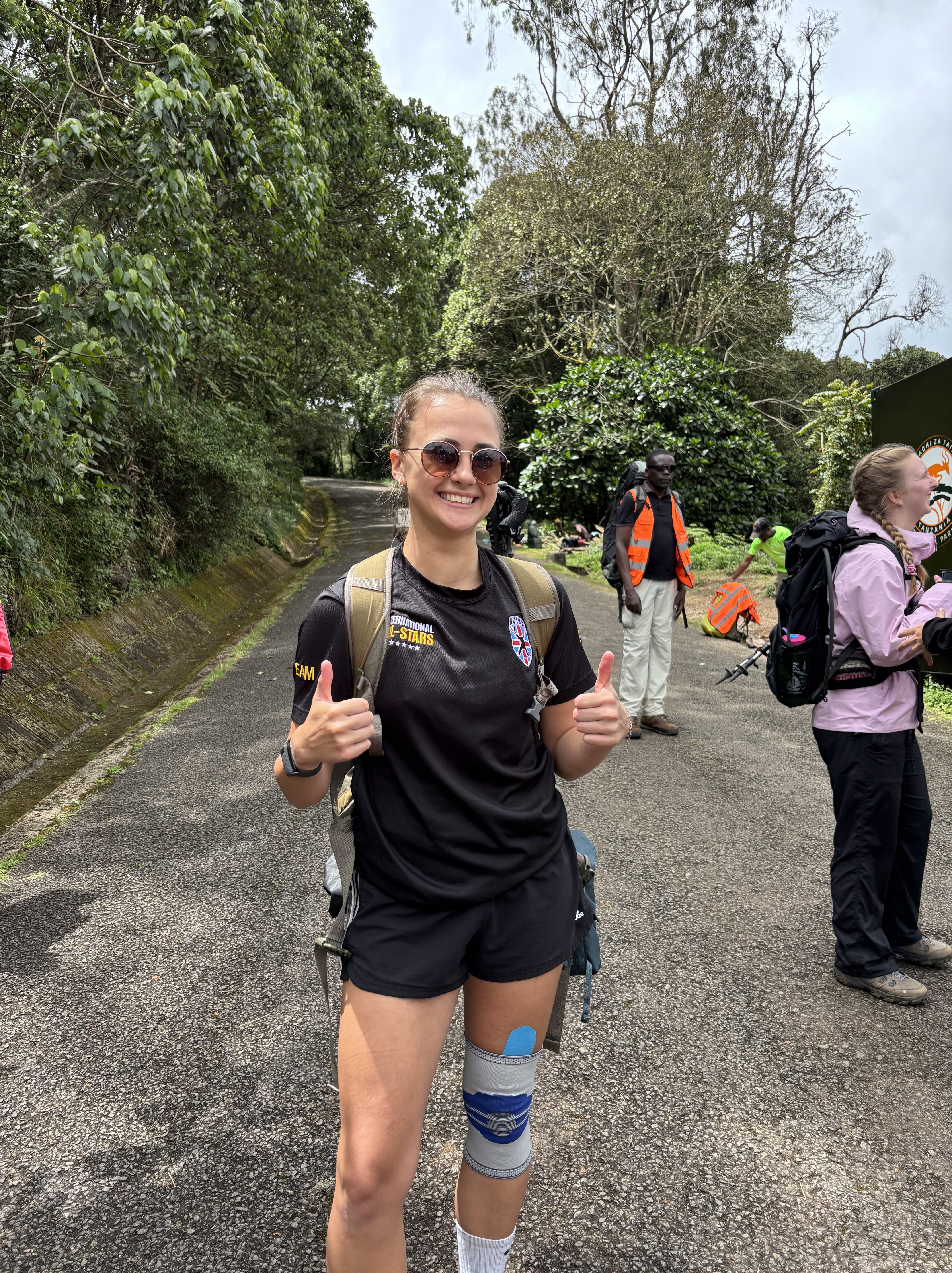
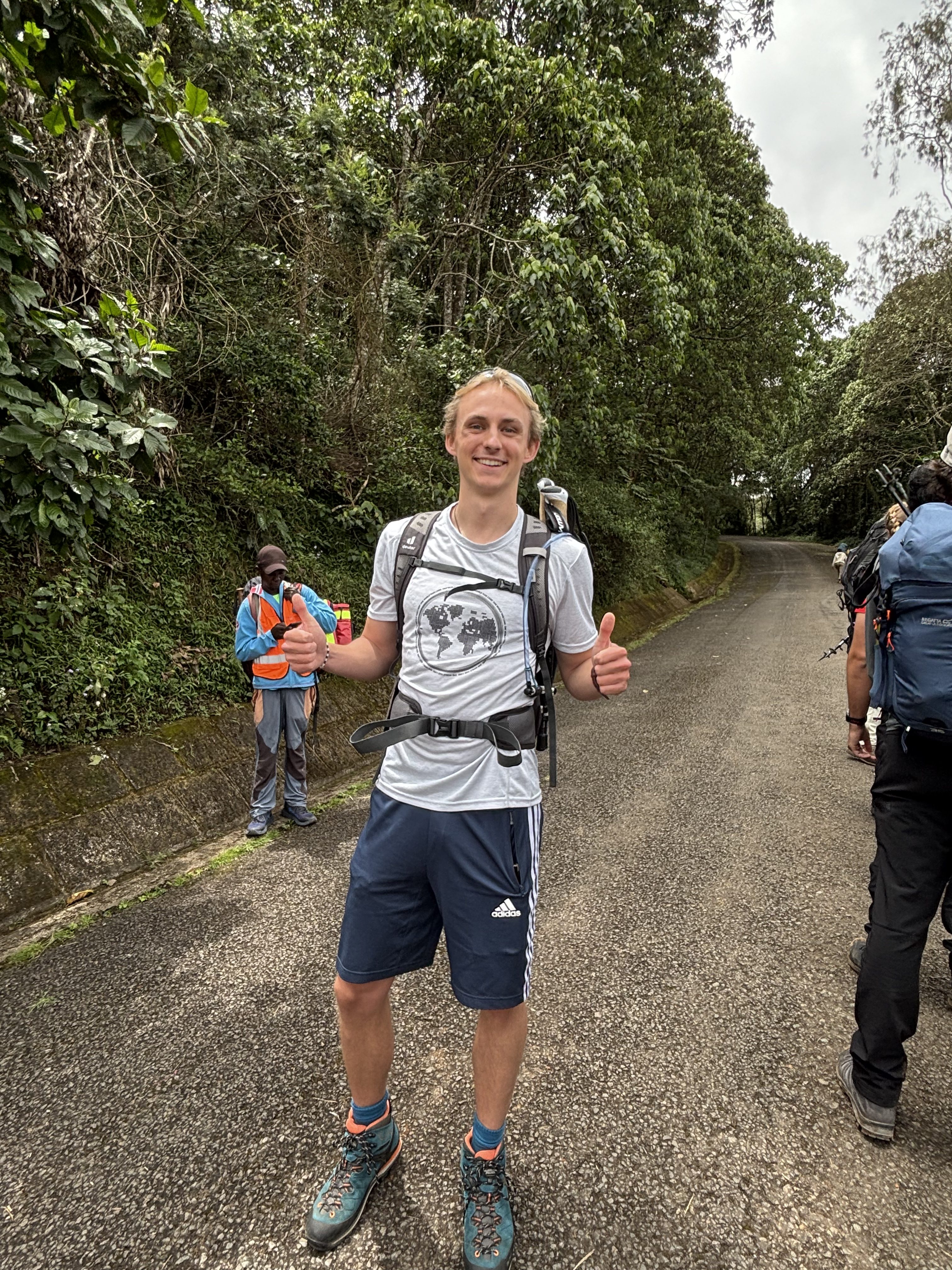
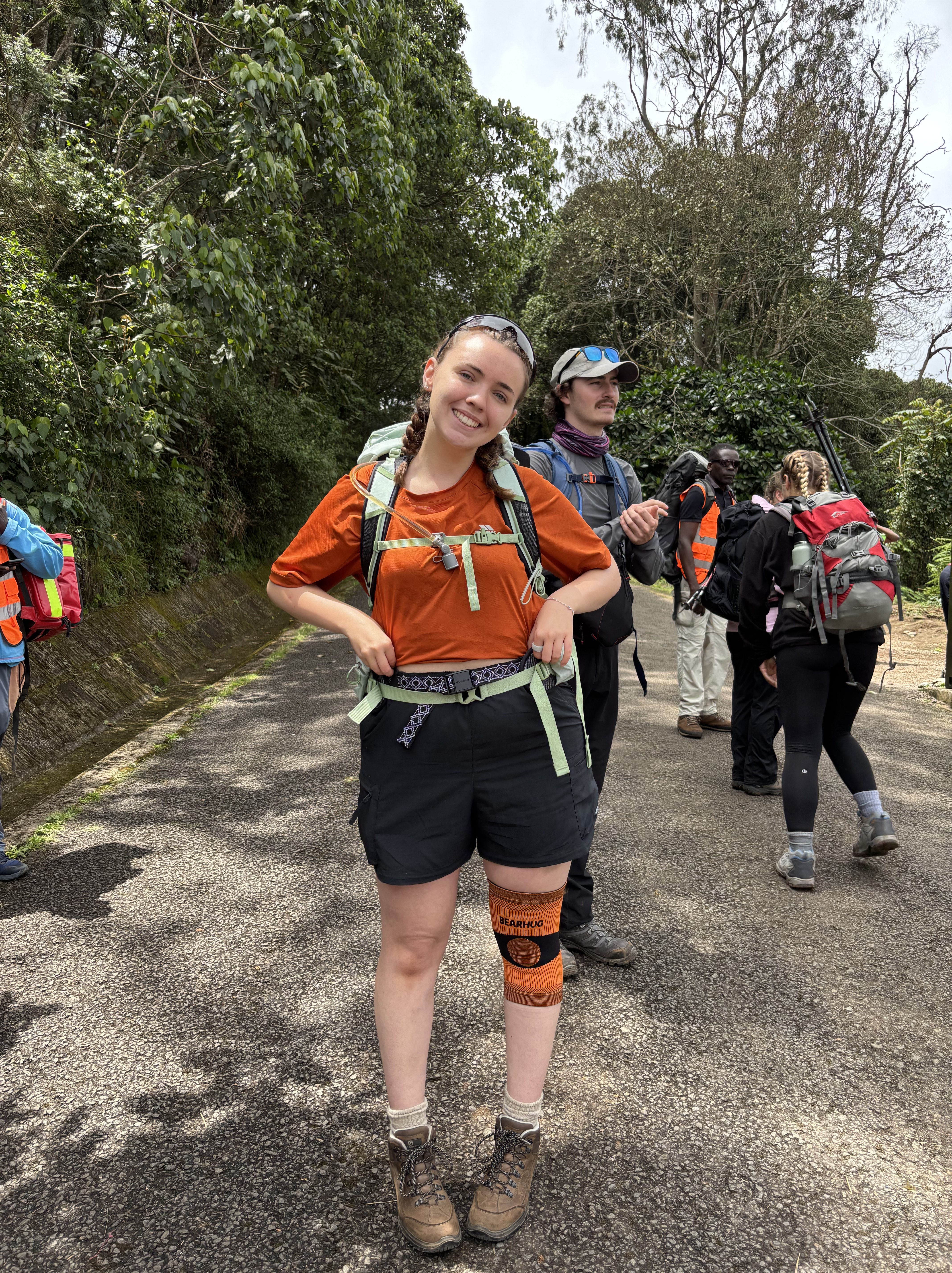
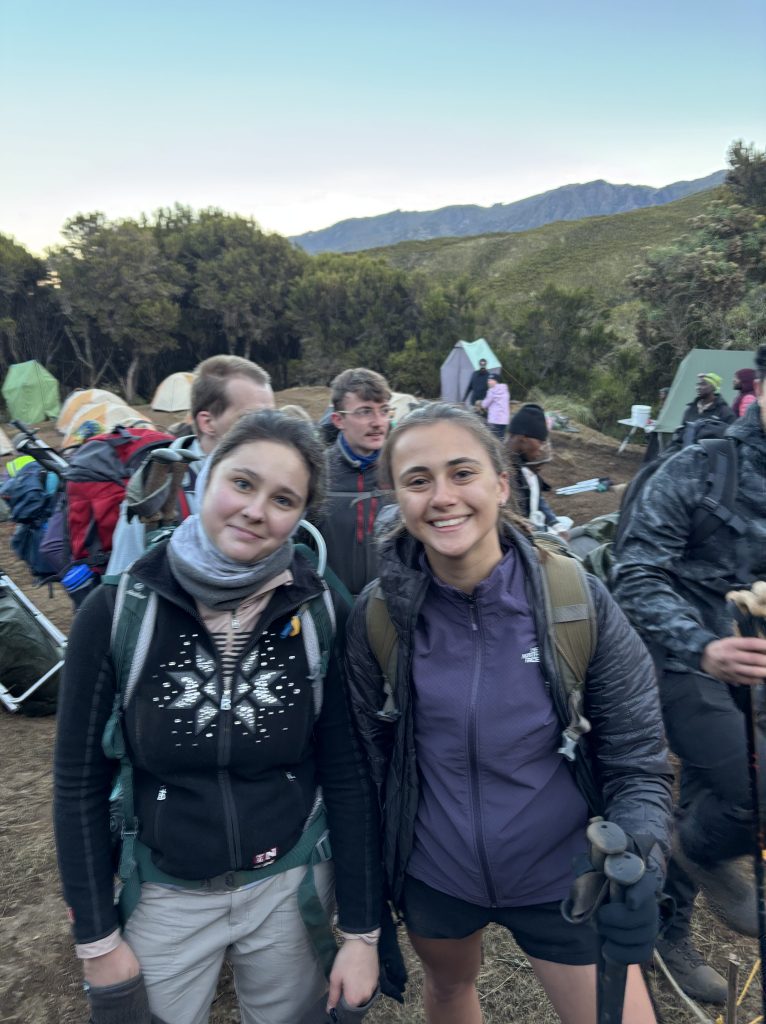
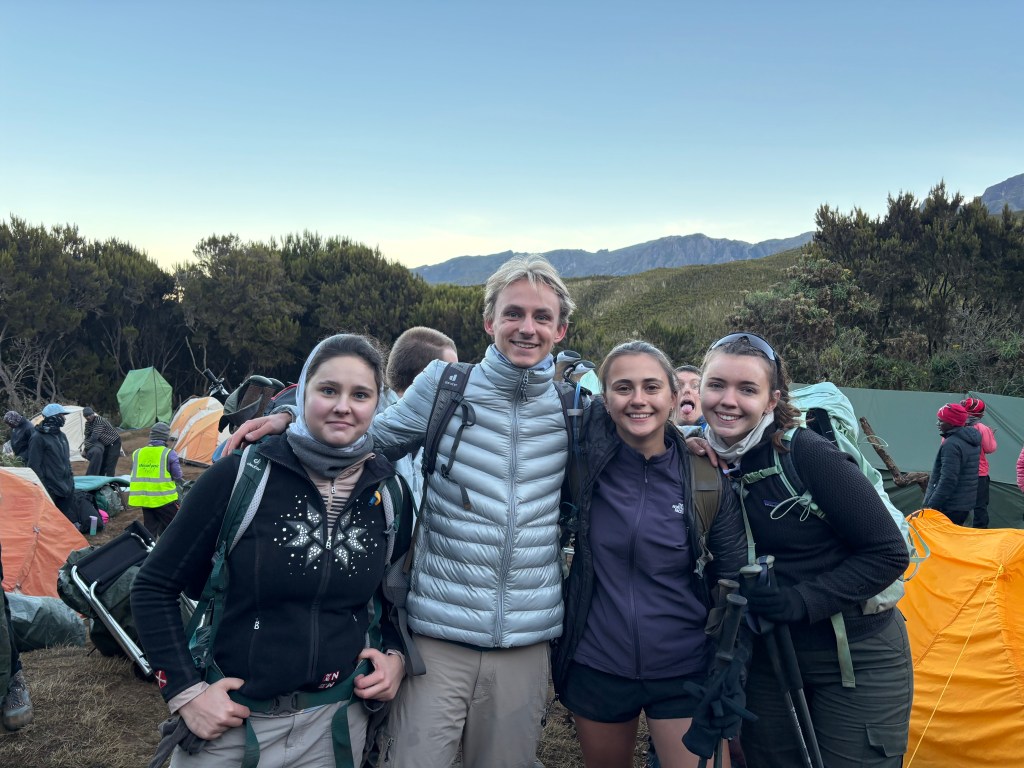
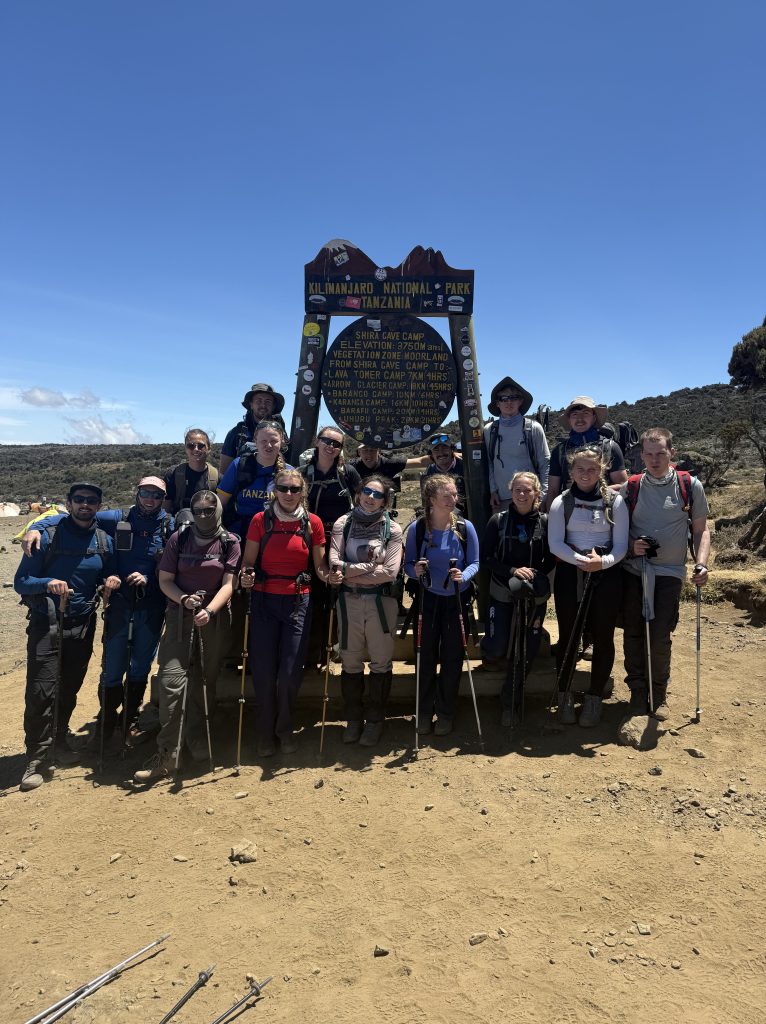
Pictures at Mweka Gate before our ascent. Hello Lukas and Nicole, two fellow PGs from St As.
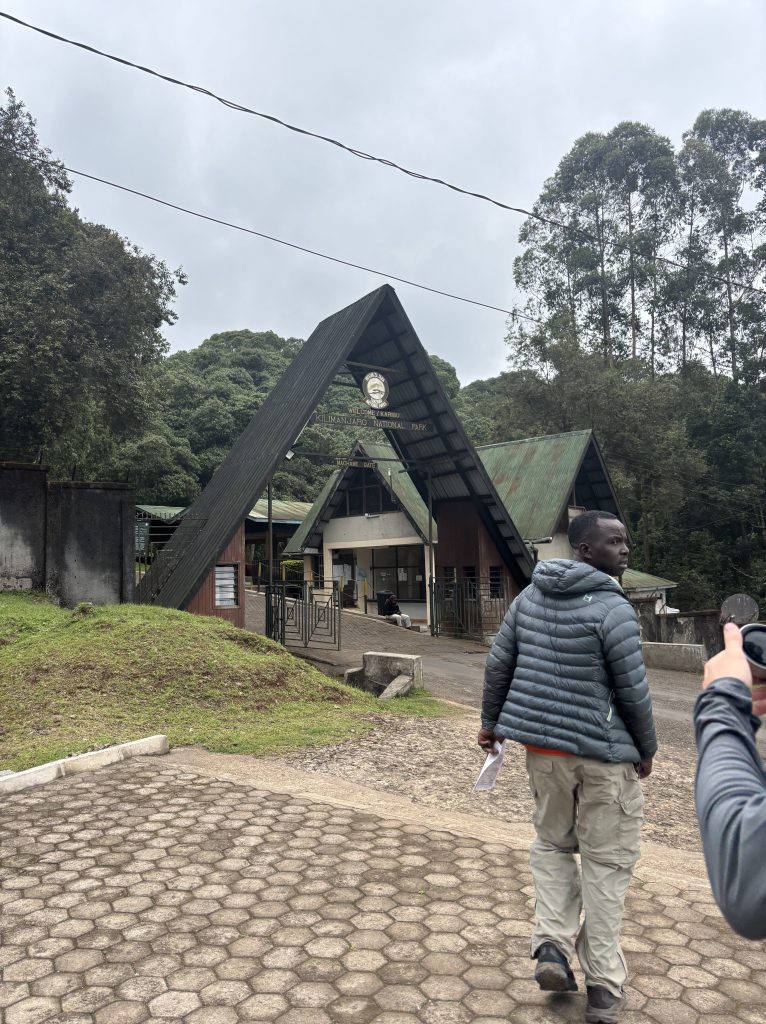
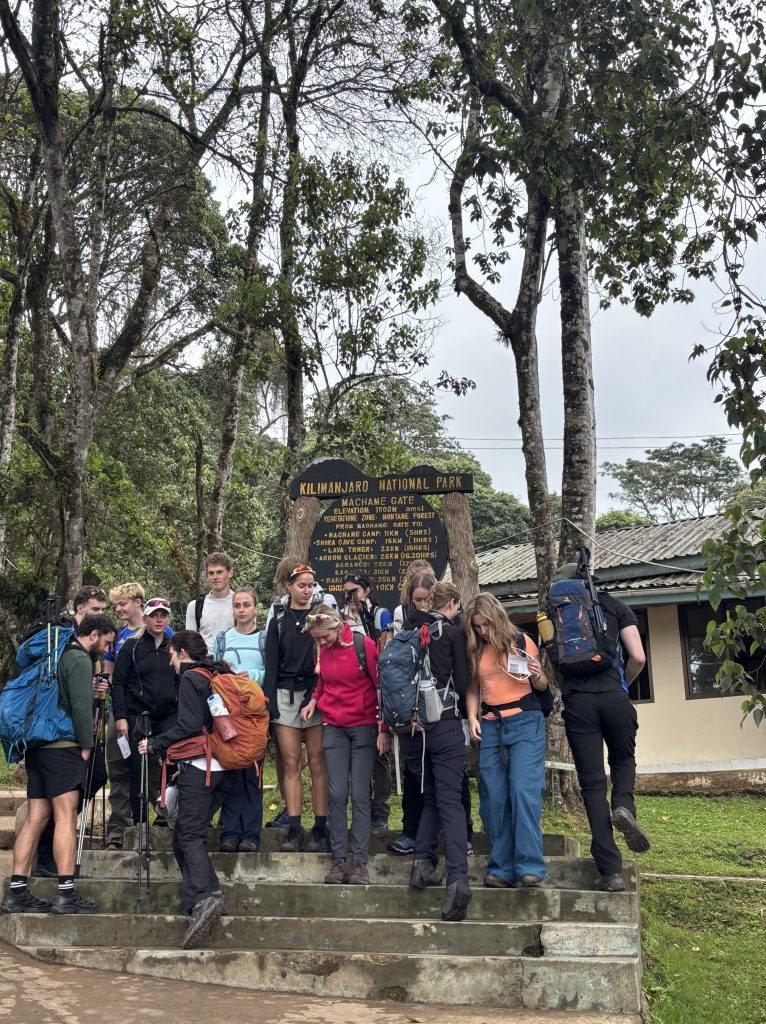
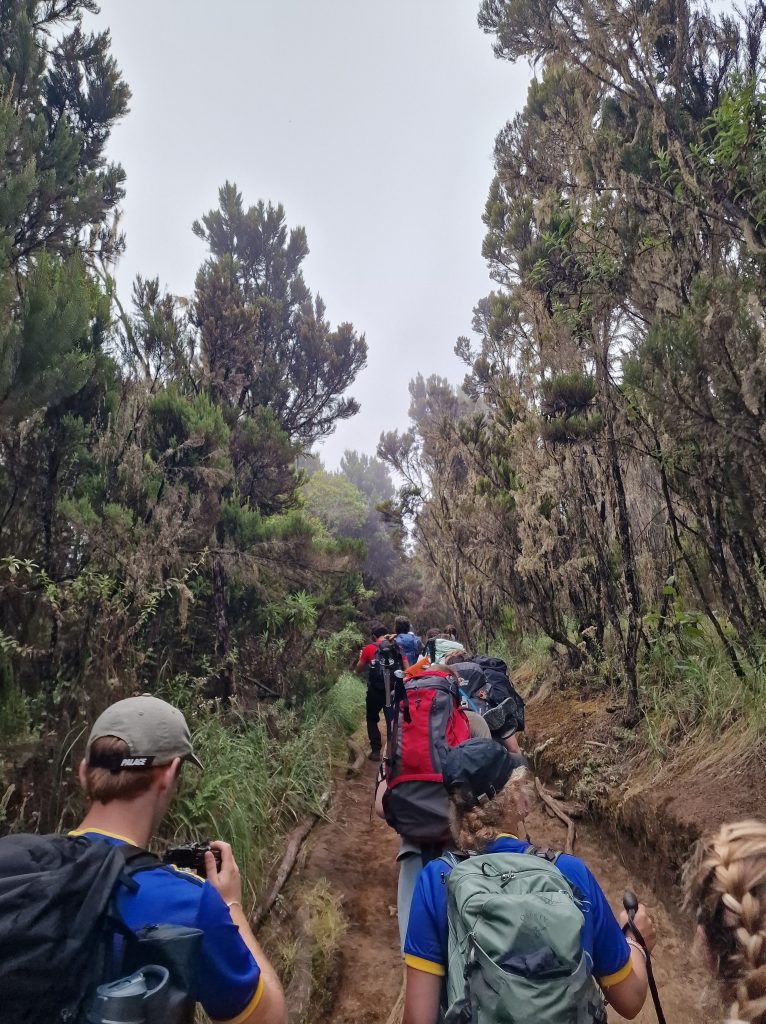
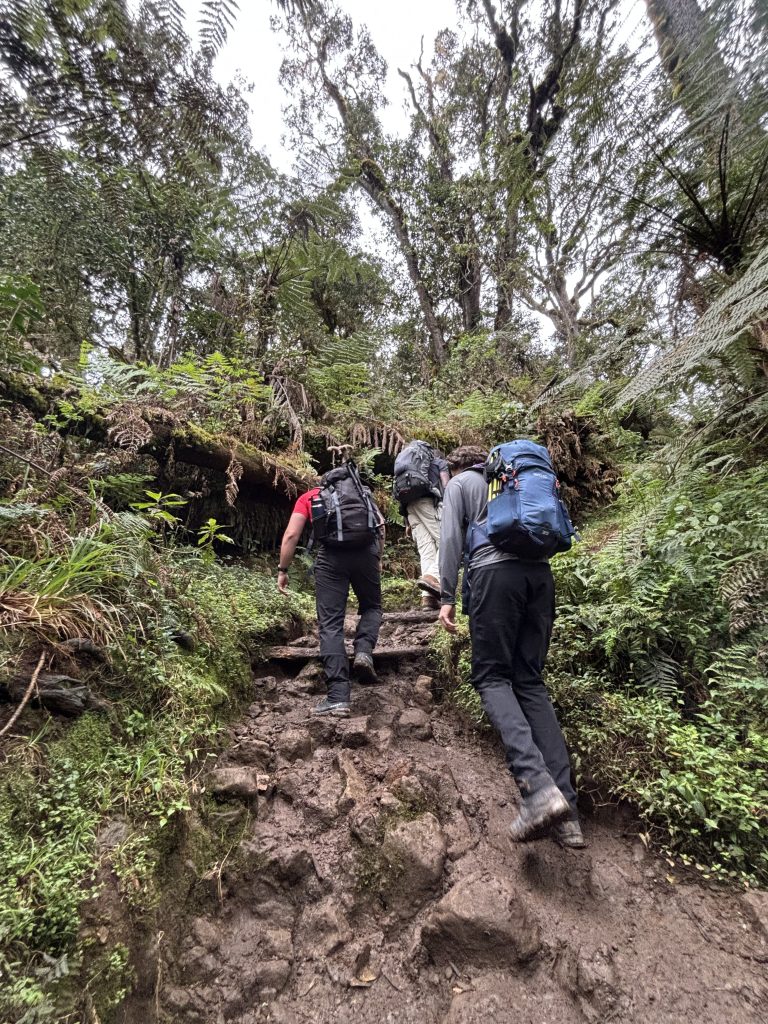
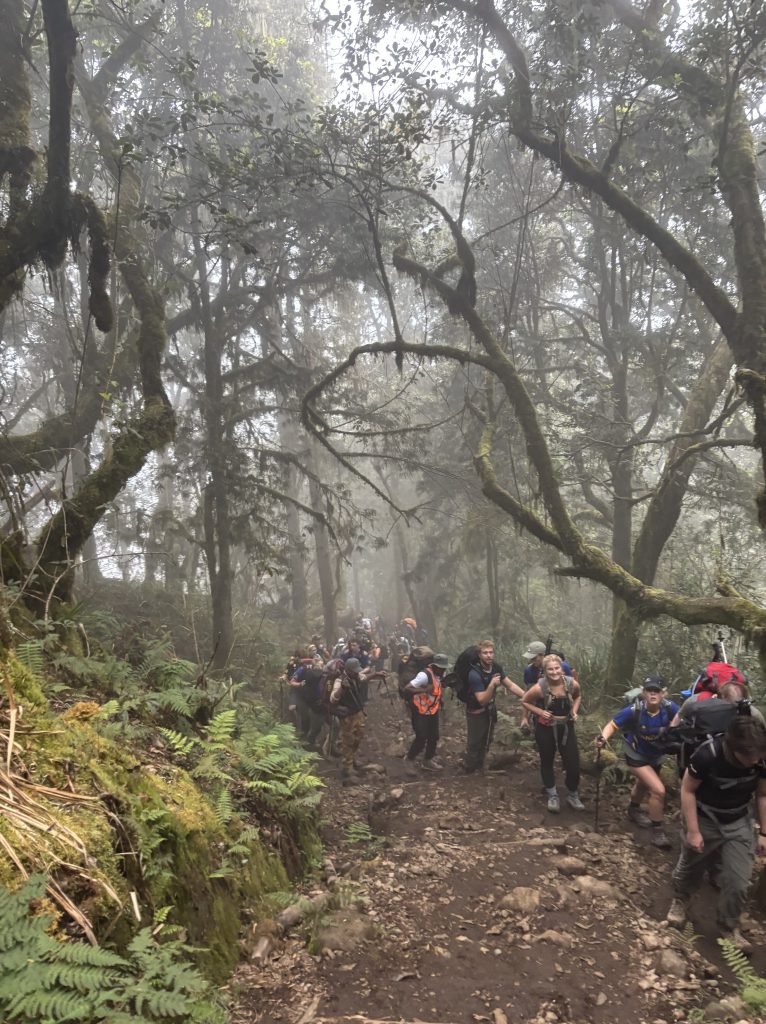
The trail begins as a pavement path, eventually turning into a standard narrow dirt trail. For the entire first day, we hiked through the rainforest. My only prior exposure to the rainforest was in one part of Costa Rica, where it rained practically all day everyday. So, I expected to be soaking wet and slogging up the trail in raingear. But, lucky for us, the largest amount of dampness came from general mist and walking through the clouds. I was comfortable in shorts, tshirt, and a light jacket. The trail was steadily uphill and muddy. The surroundings felt like a mystical storybook, especially when walking through the clouds.
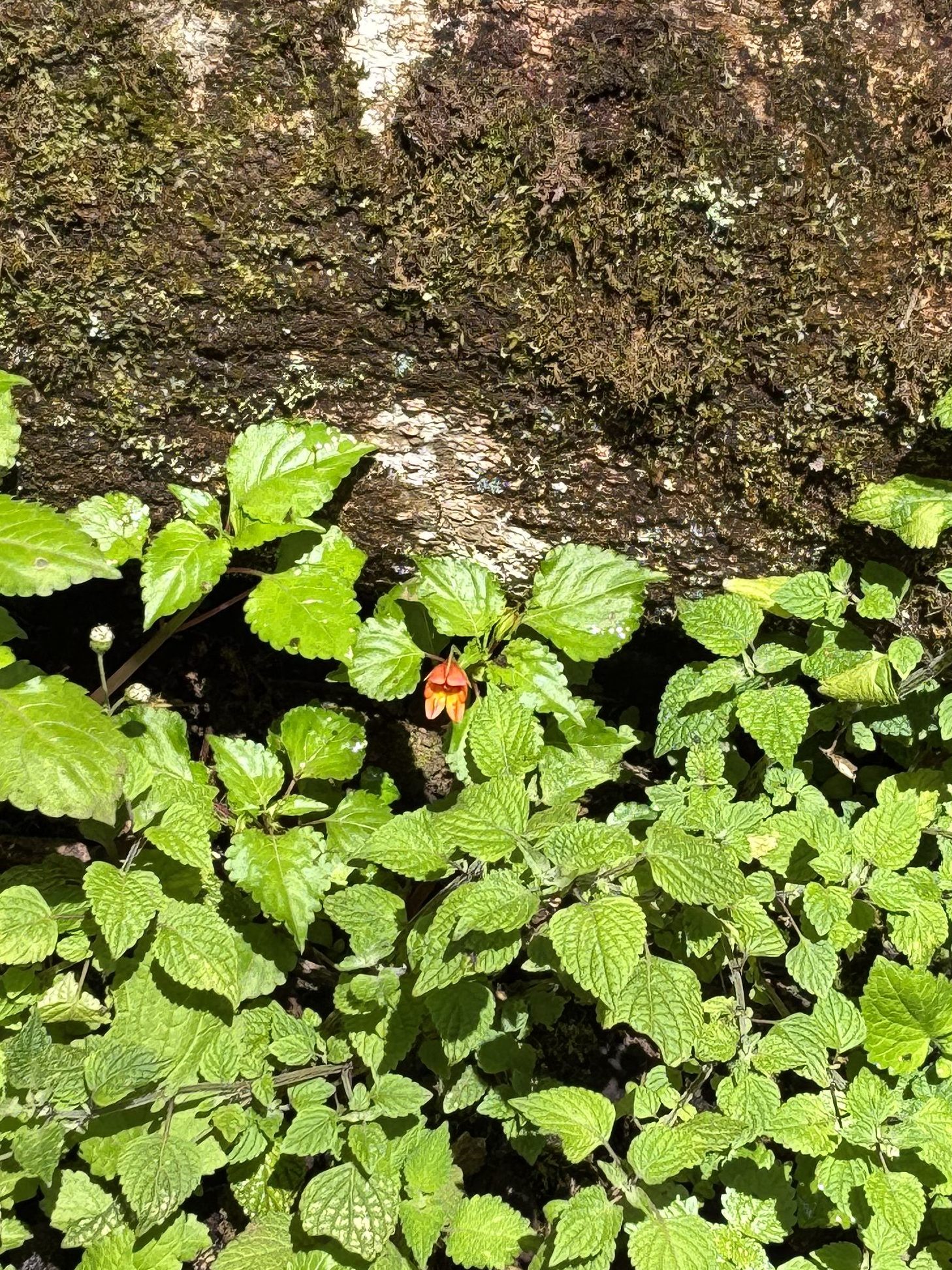
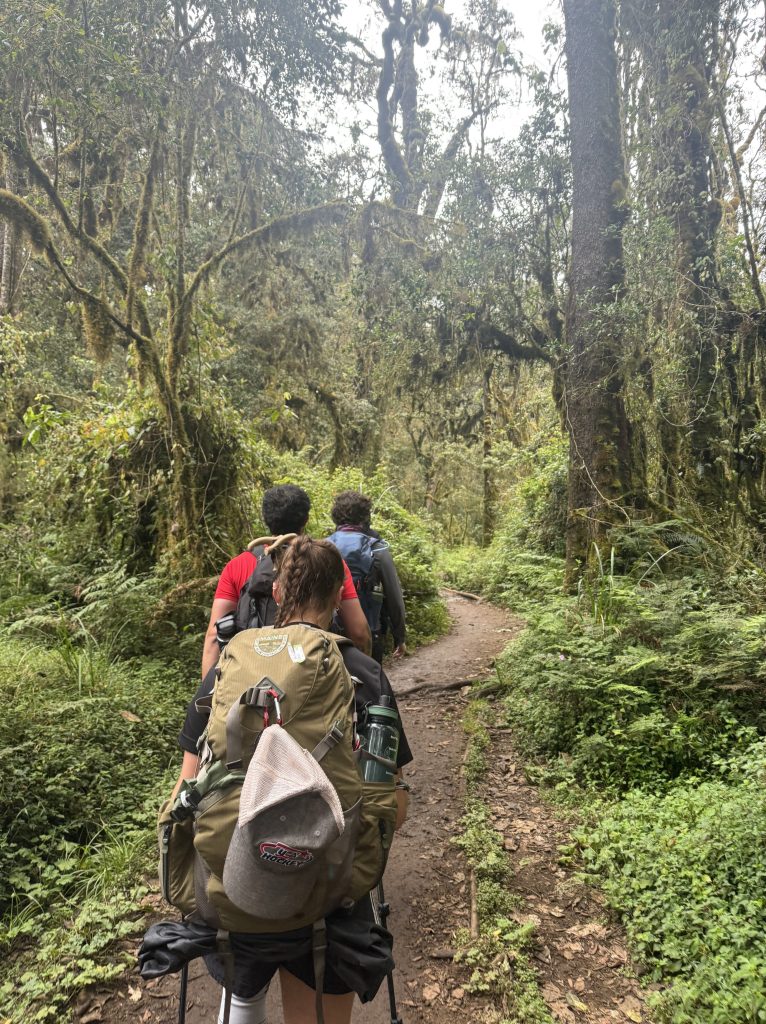
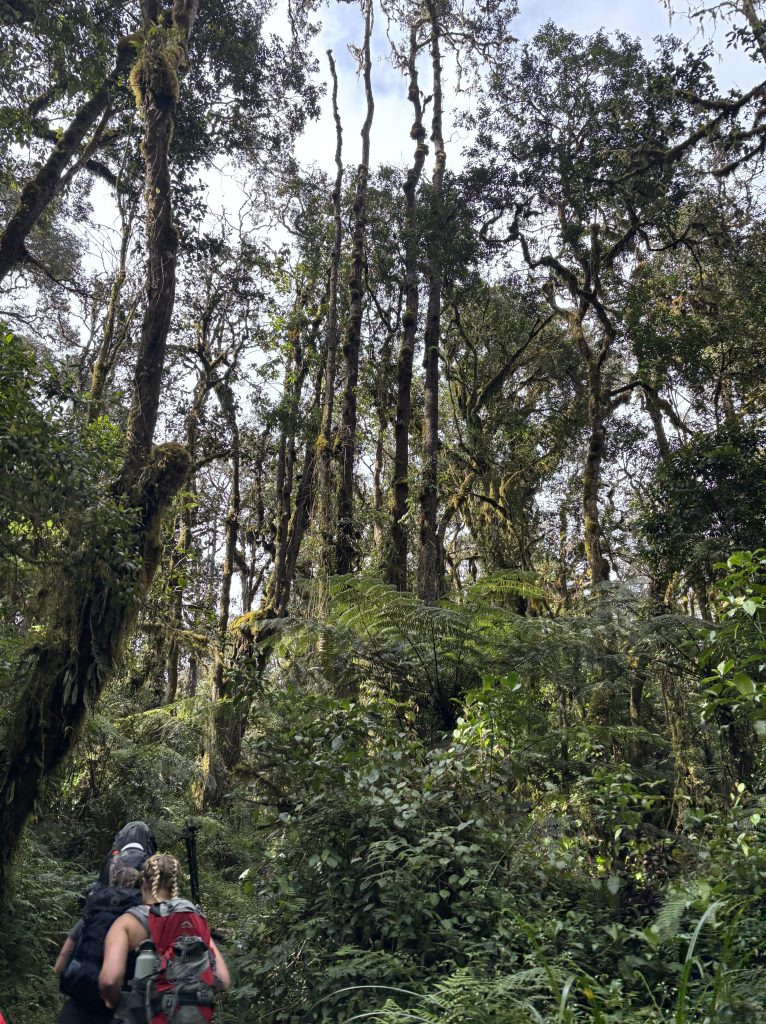
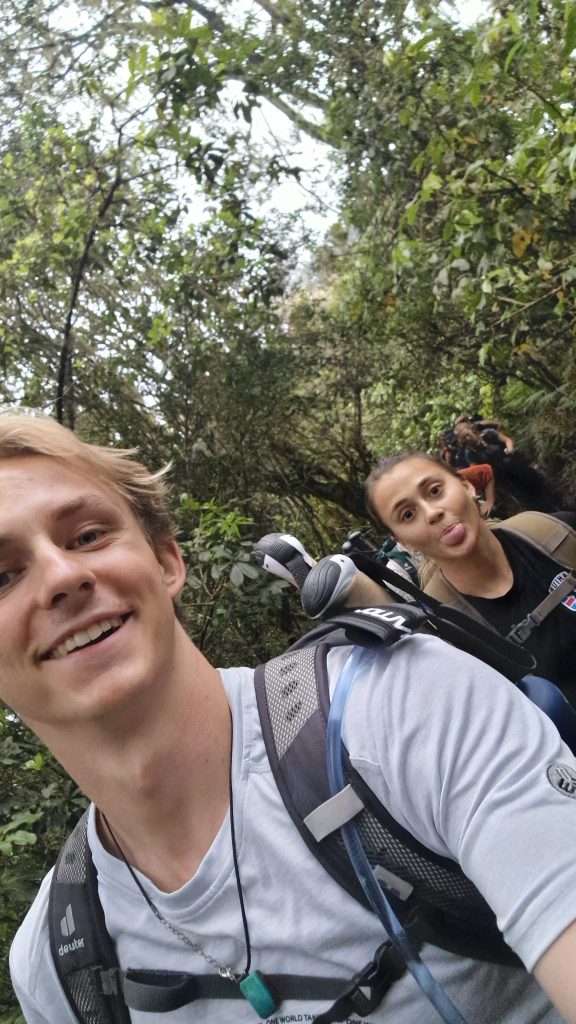
Left: a flower only found on Kili. Center: Photo credit to Lukas. Right & below: scenery! hiking!
We arrived at Machame camp around sunset, so they instructed us to quickly change into warm sleeping clothes and meet in the Mess Tent for tea and snacks. Pre-dinner snacks every day included popcorn, hot chocolate, and tea. Thanks to Aunt Annie’s advice, I brought a surplus of cleaning wipes. Because we did not have shower access for the entire trek, the small things to keep yourself feeling fresher and cleaner, especally after a full day of hiking, can make the biggest difference. I continued this cleaning routine throughout the journey. Highly reccomend.
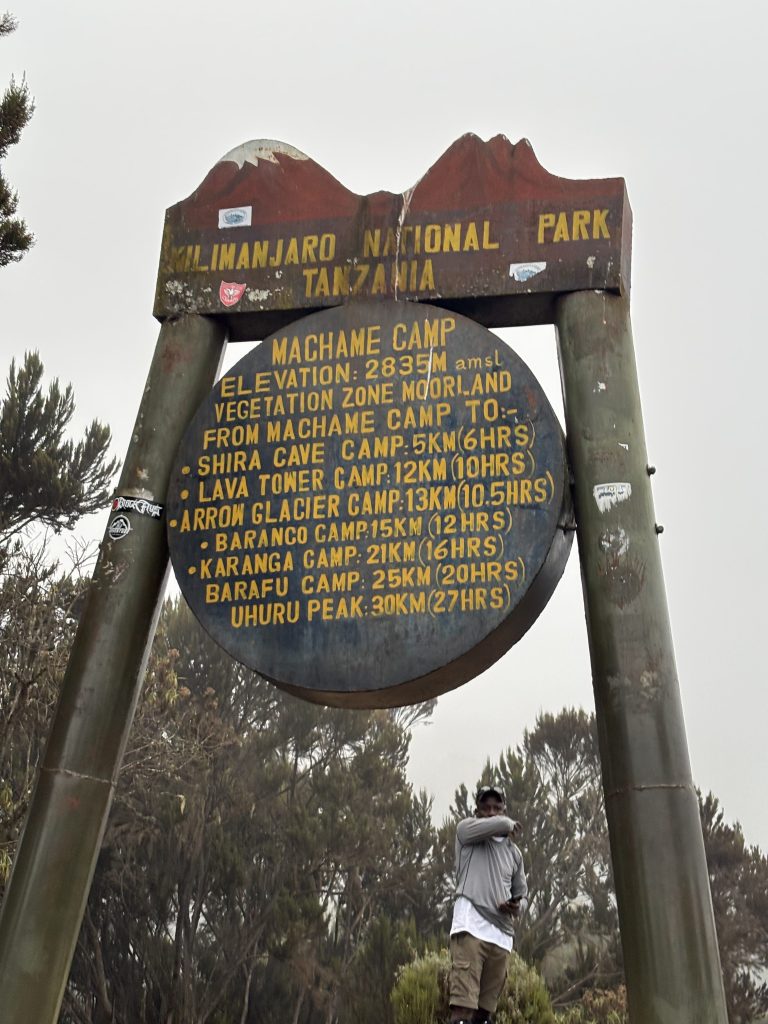
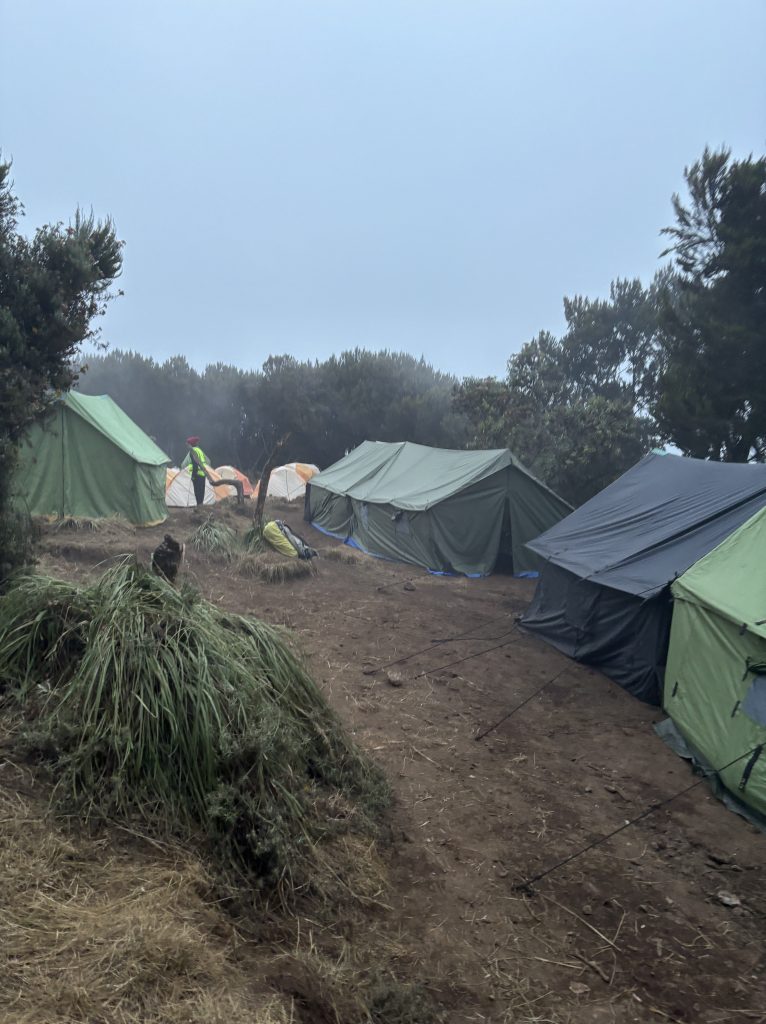
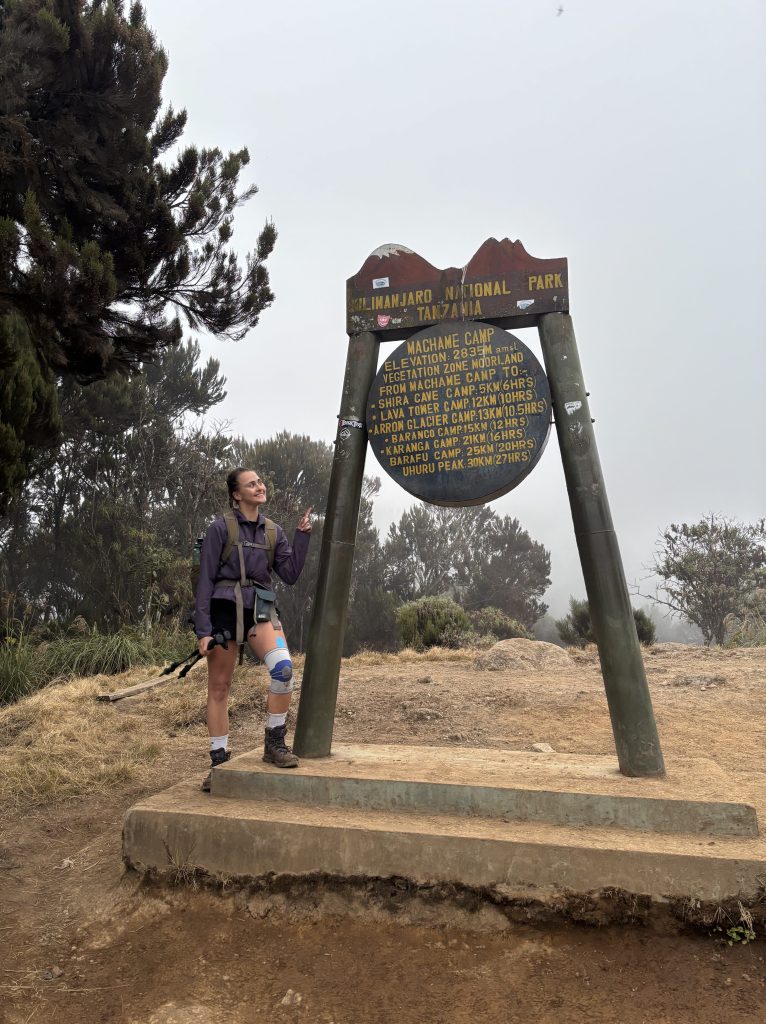
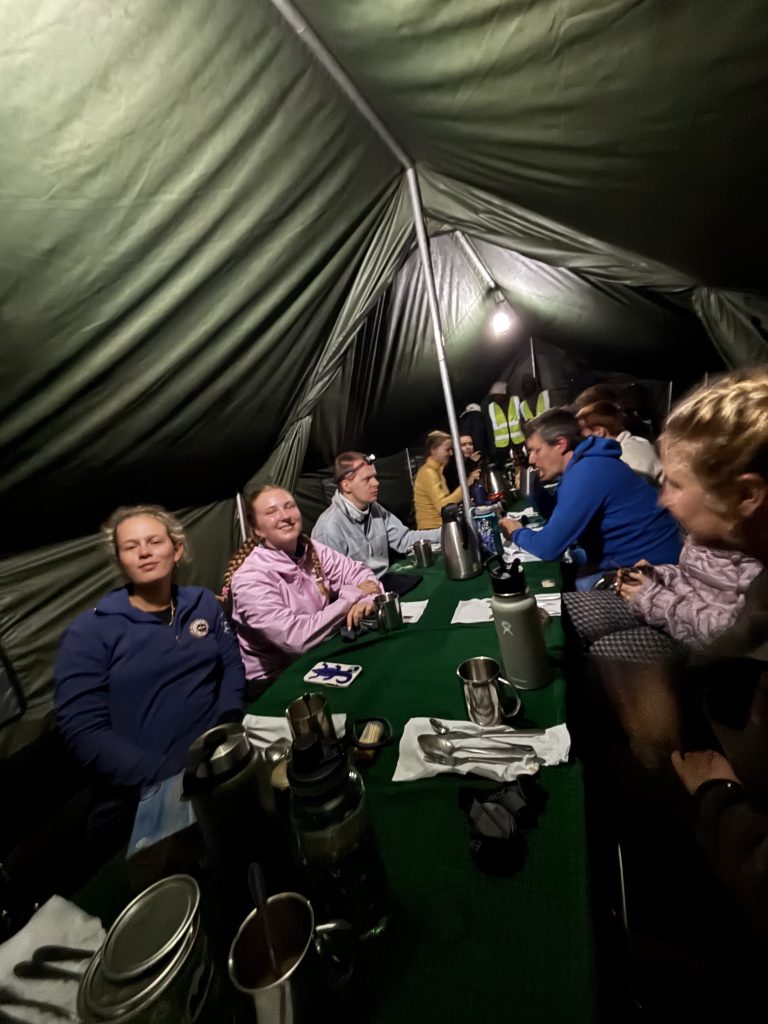
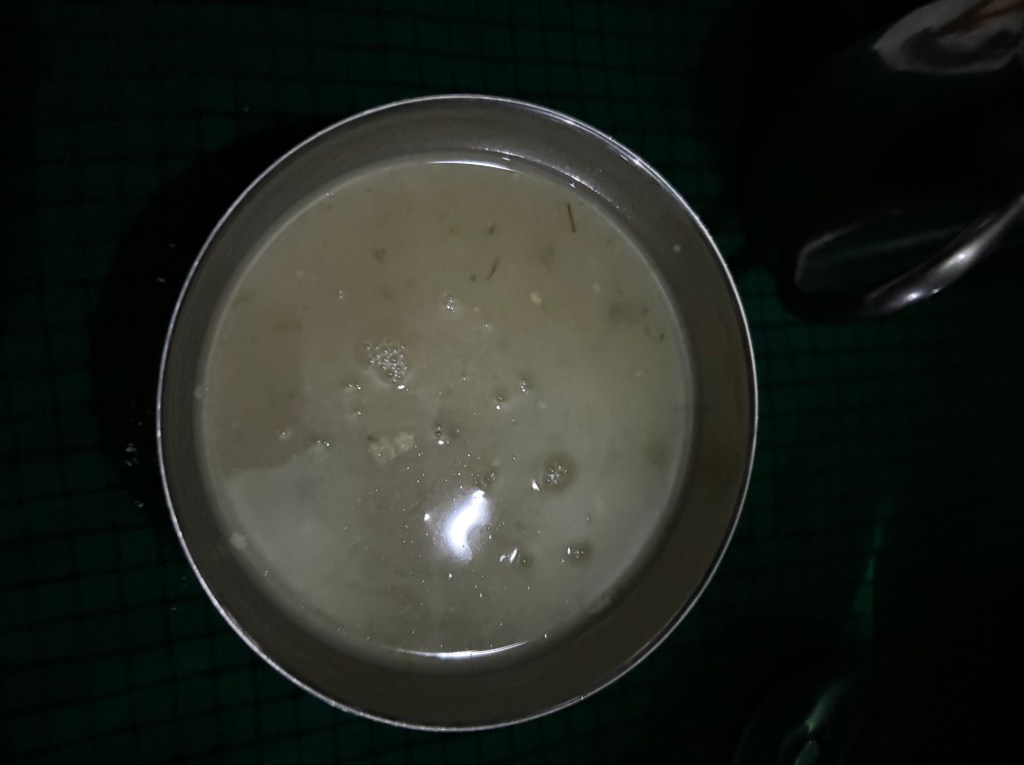
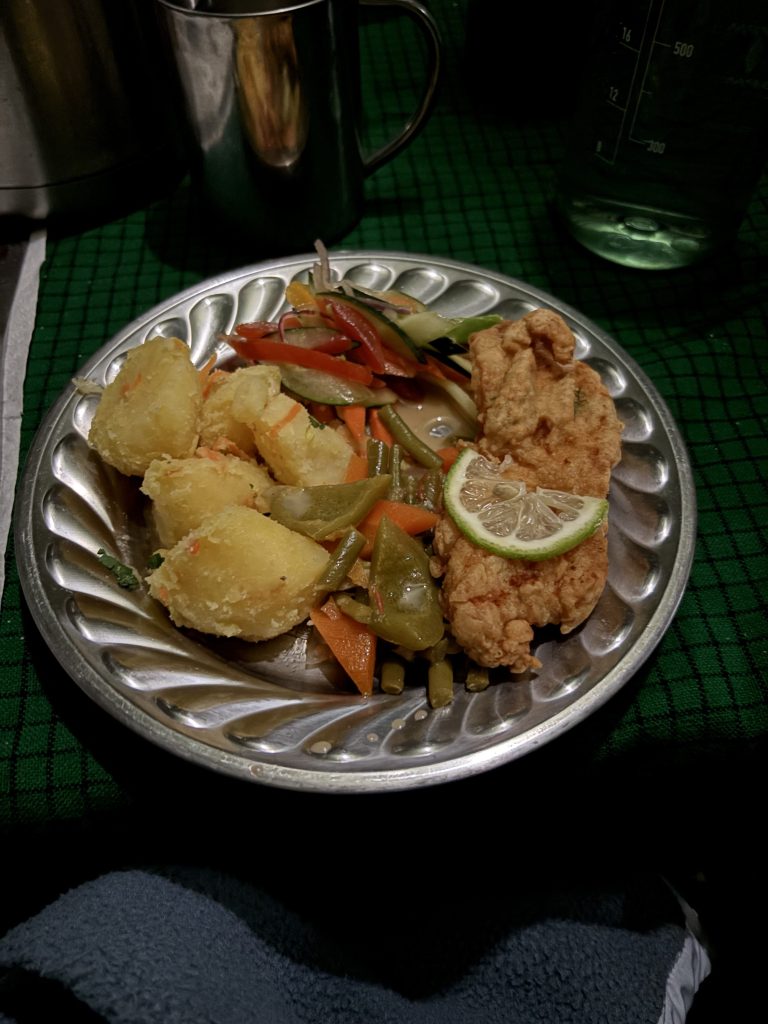
Hello, Machame Camp! We slept in the cloudline, how cool. Below – inside the mess tent for tea, snacks, and meals. We enjoyed cucumber soup, fish, vegetables, and potatos on this first day.
Day 2 – Machame Camp to Shira Cave Camp
Lukas and I were woken up at 5am by our dear porters who brought us tea and coffee in bed. Most mornings went as follows: porters knock on our tent door, I reluctantly arise from my sleeping bag and grab two cups of boiling hot tea, Lukas and I struggle to gain consciousness in the pitch black, while sipping the hot liquid. I let my tea cool while putting in my contacts, again in the pitch black. We have 20ish minutes to change, pack up our day bags, roll our sleeping bags, and arrive ready for breakfast at the mess tent. Our group majorly struggled after night one to get out on time. We were supposed to get on the trail by 6:00am, but the group was ready only at around 6:30…. we got incrementally better over the days.
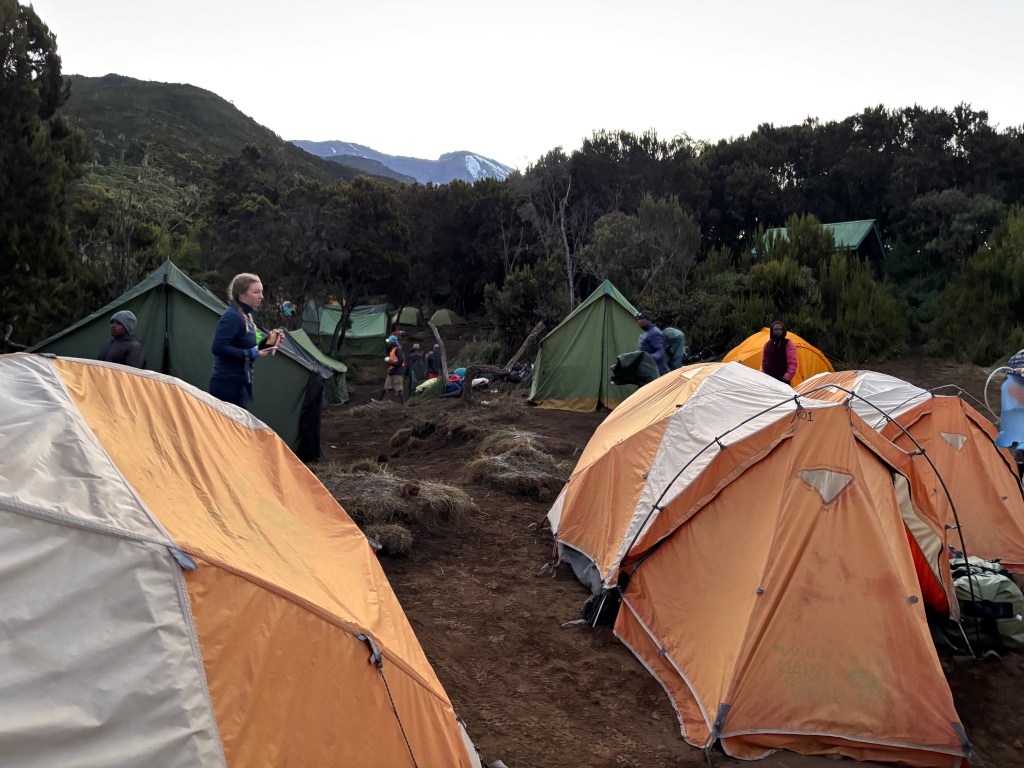
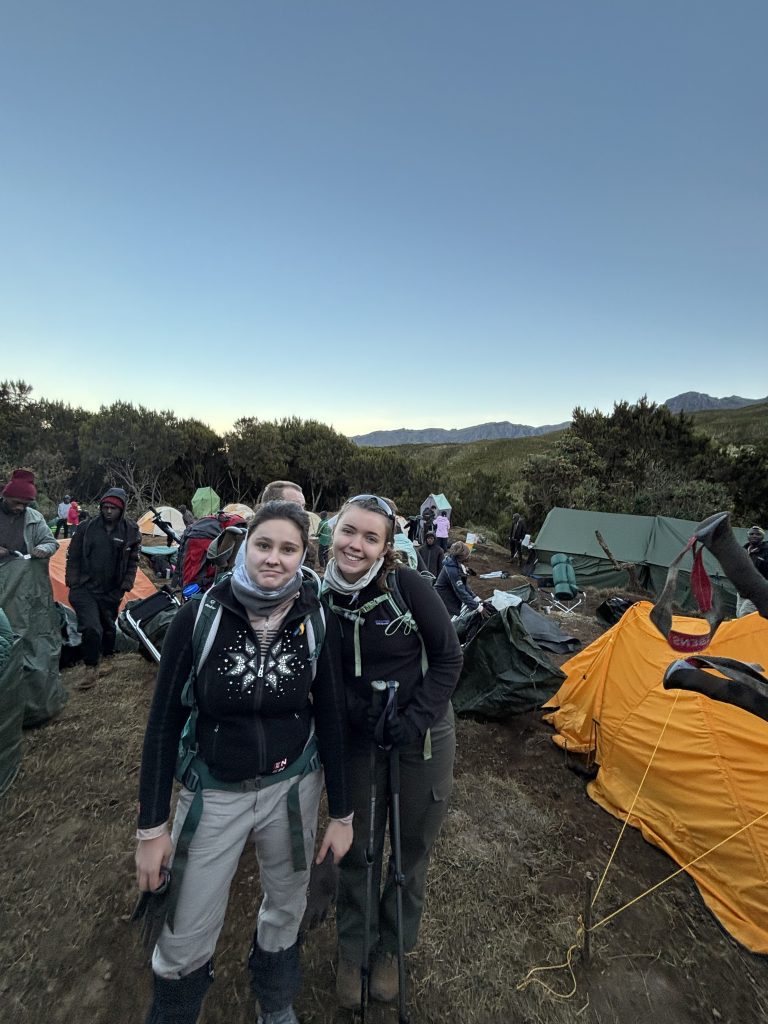
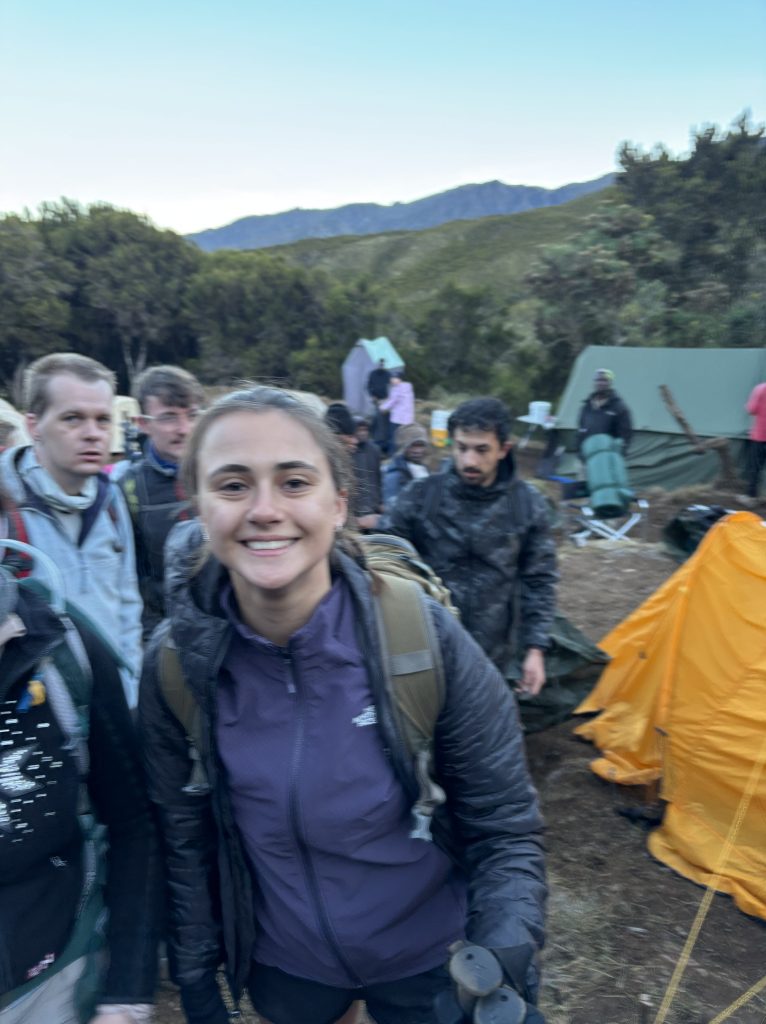
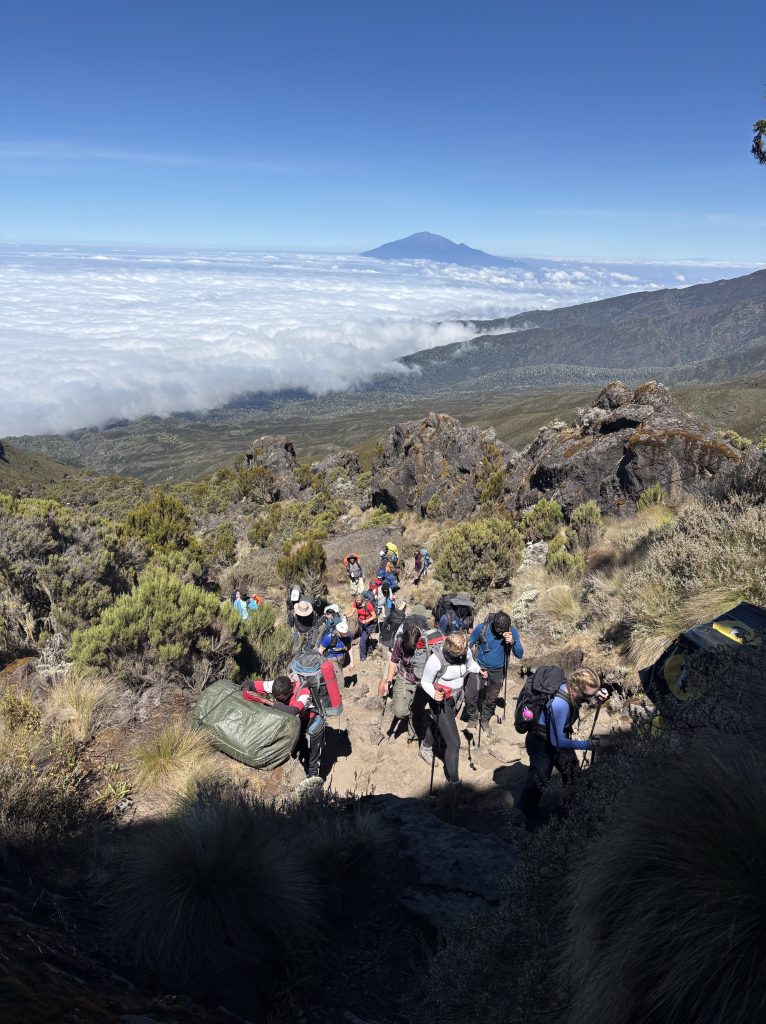
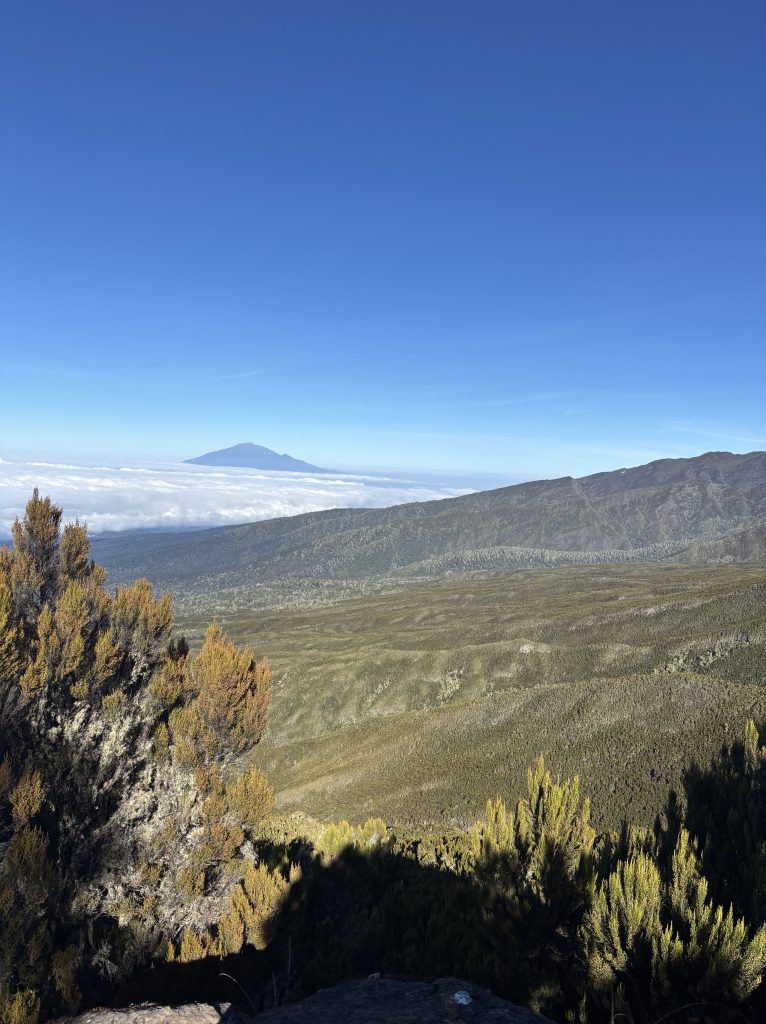
For what our hike to Shira Camp lacked in distance, we made up in elevation. Most of the trail was climbing up massive boulders and navigating a ridge. My stairmaster training served me well, and I began to use hiking poles for the first time. The poles helped spread out the impact and weight and kept me sturdy on my feet. We quickly left the lush desert – the trees became shorter, grasses more sparse. During the breaks, we could look down at Machame camp through the cloudline, and eventually we got an incredible view of Mt Meru, Tanzania’s second tallest mountain. My Day 2 advice – don’t look up! just keep hiking.
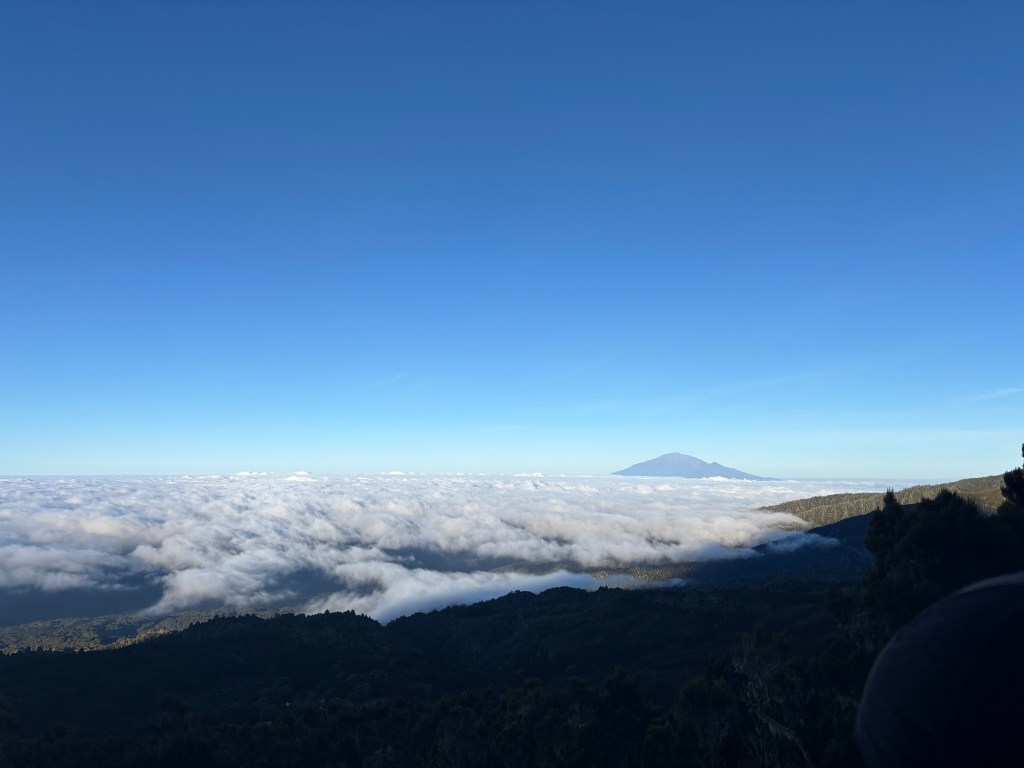
Above: Mt Meru above the cloudline. Below: hiking along the trail.
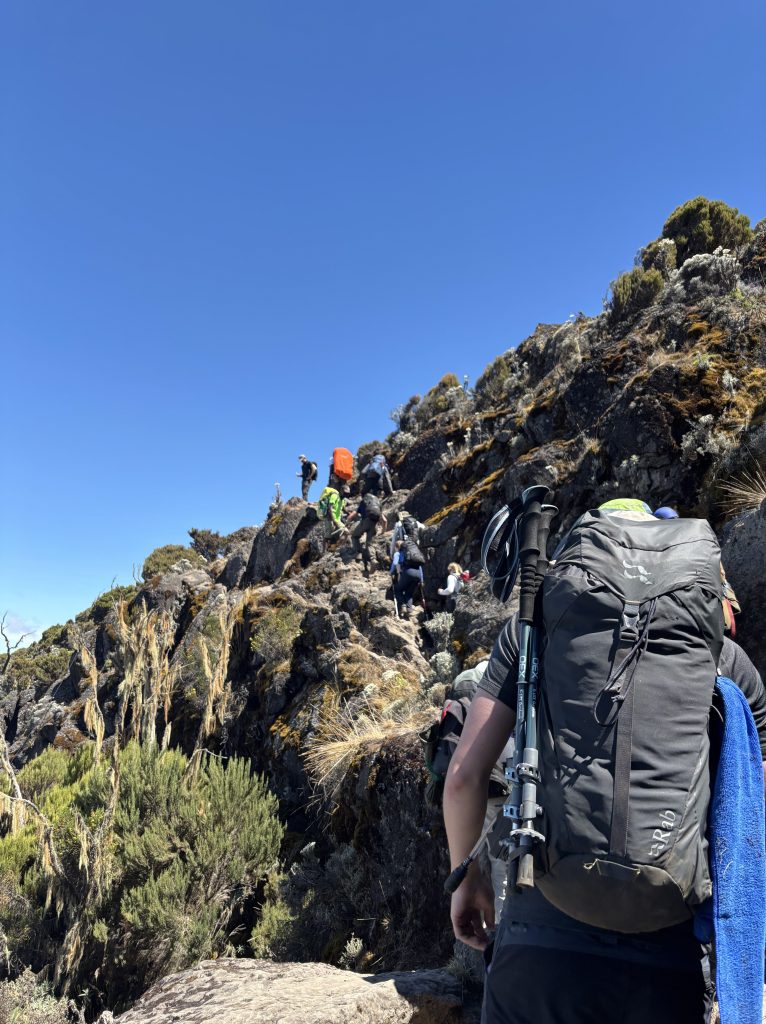
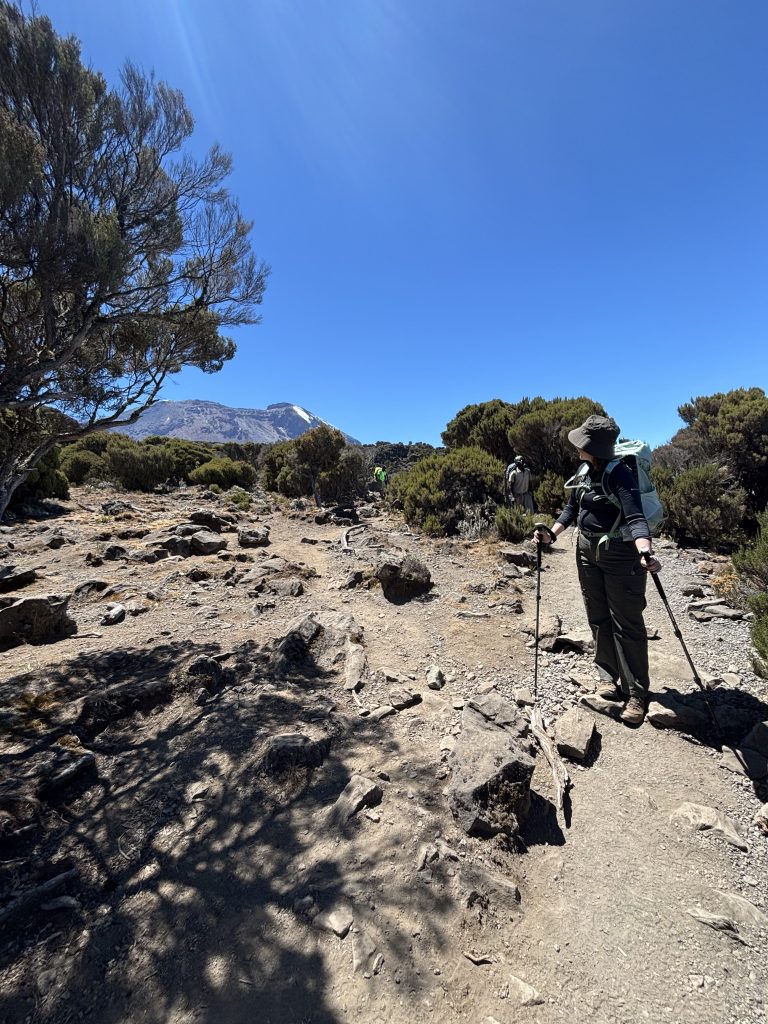
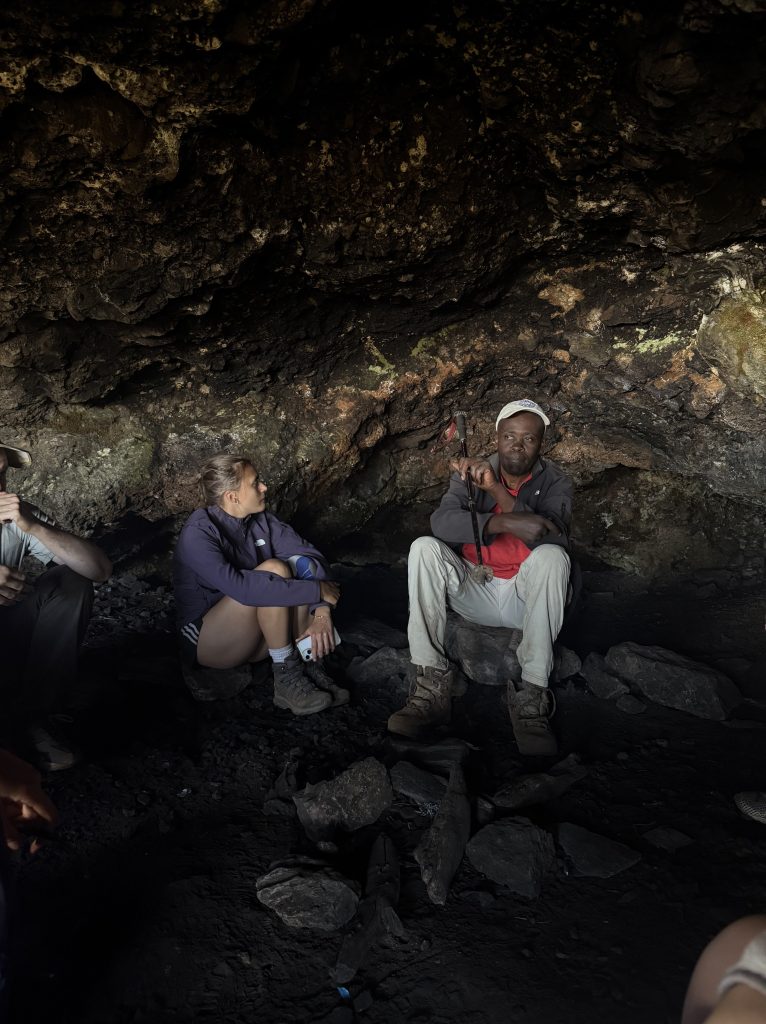
After hiking for 5-6 hours, we arrived at Shira camp around 1pm, so we had time to enjoy lunch – toasties and soup – and a semi-free afternoon. One of our guides, Joshua, took us on a walk to Shira Cave, where porters and guides used to sleep before regulations and updated restrictions on camping. I listened intently.
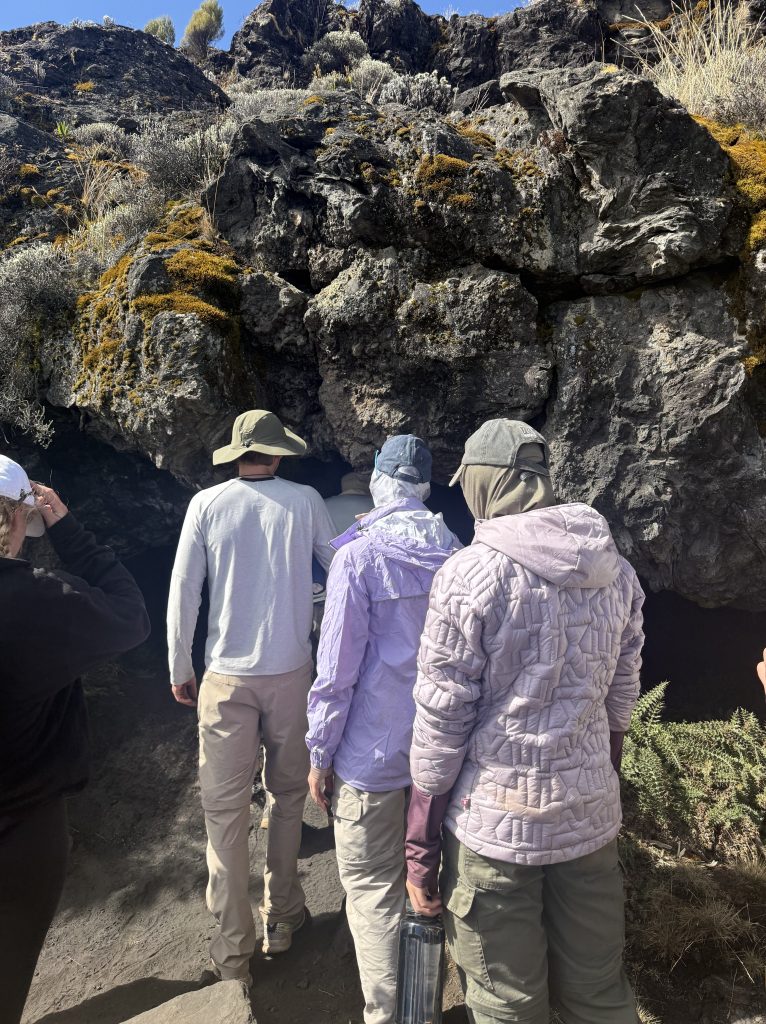
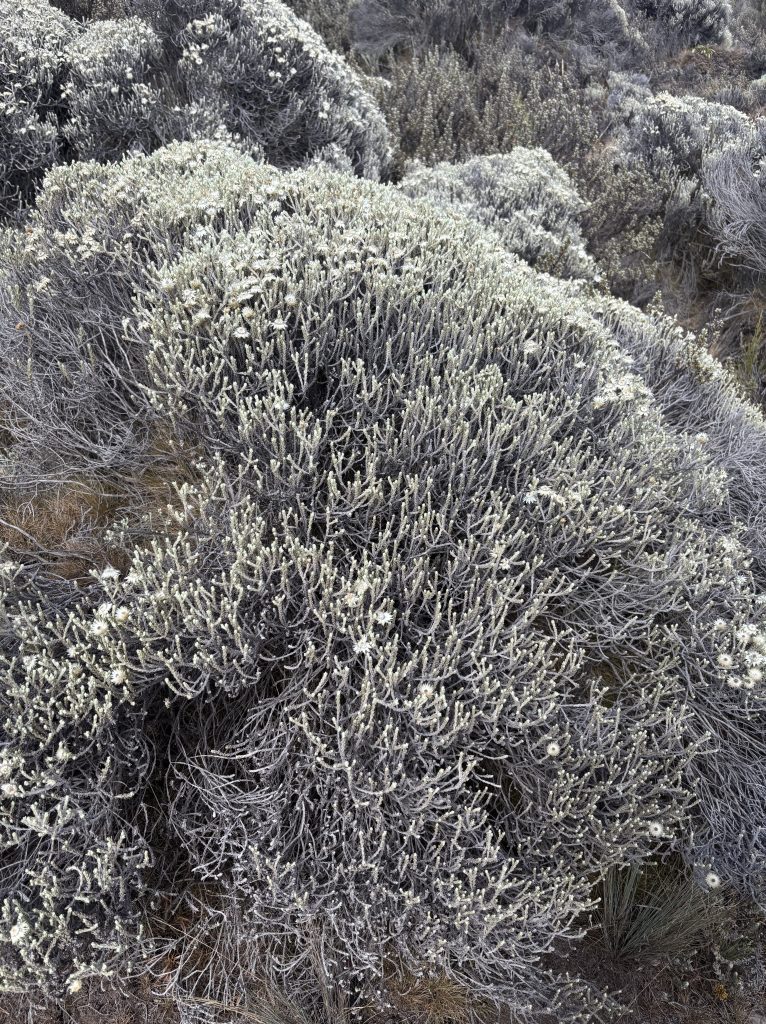
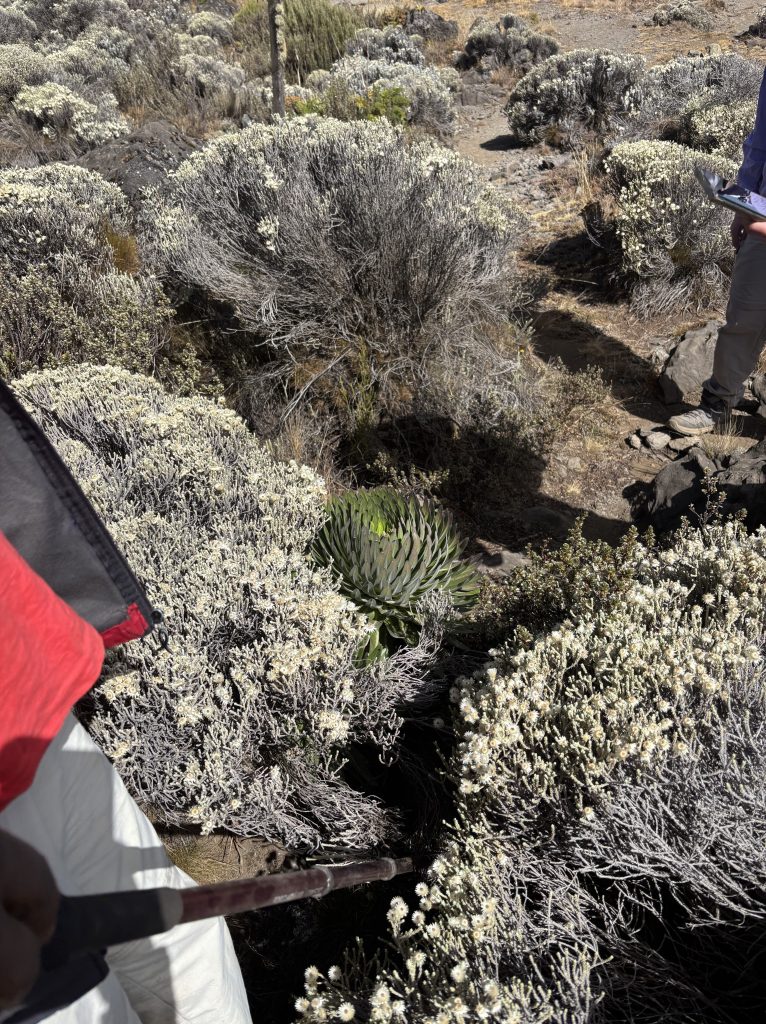
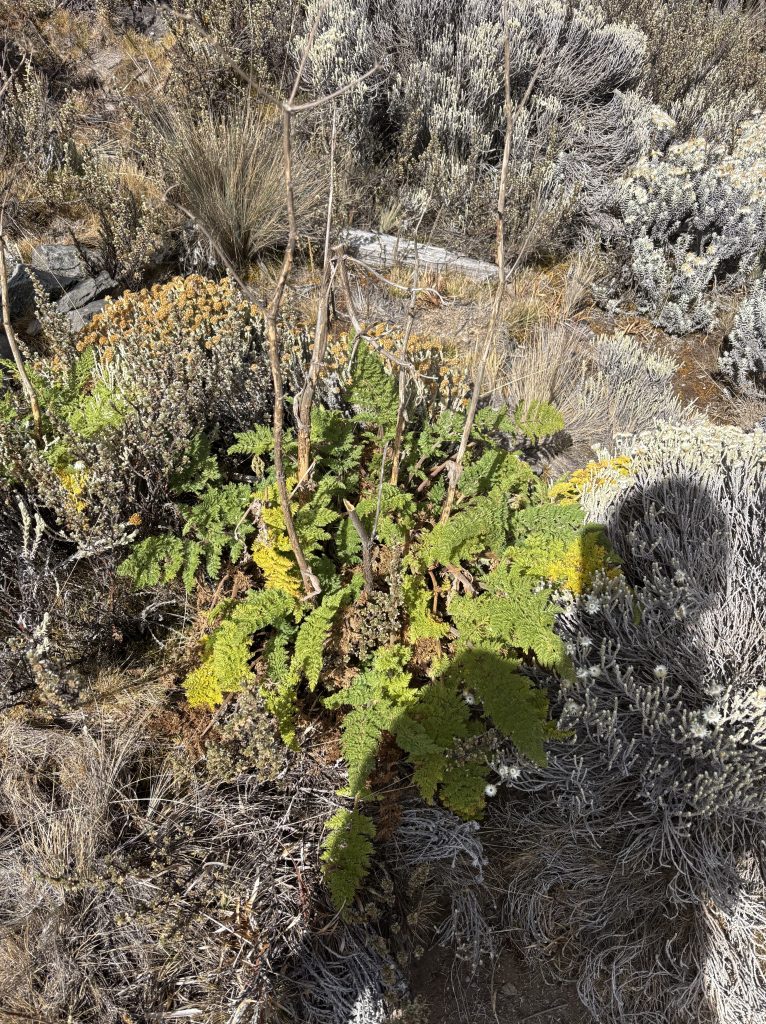
Flora and fauna around Shira Camp – Left: everlasting flowers. Center: lobelia, known for its healing properties. Right: wild carrots – they don’t actually produce vegetables, but the leaves look like carrot plants.
Before dinner, the head guides introduced us to the team of 50 porters who made this climb a reality for us. They introduced us to each team member by their position: guide, assistant guide, porter, cook, waiter, bathroom attendants, water collectors, etc. Coming into Kili, I knew it was a massive production, but meeting each of the team members and hearing their roles showed me in real time just what an operation it is. They also highlighted two female porters. Historically, the porter job is male-dominated, so they gave them a wonderful shoutout and acknowledegement as the porter community is slowly expanding. I am so thankful for all of the porters for helping to make Kili a reality for us hikers. There’s no world we could do it without their help and guidance.
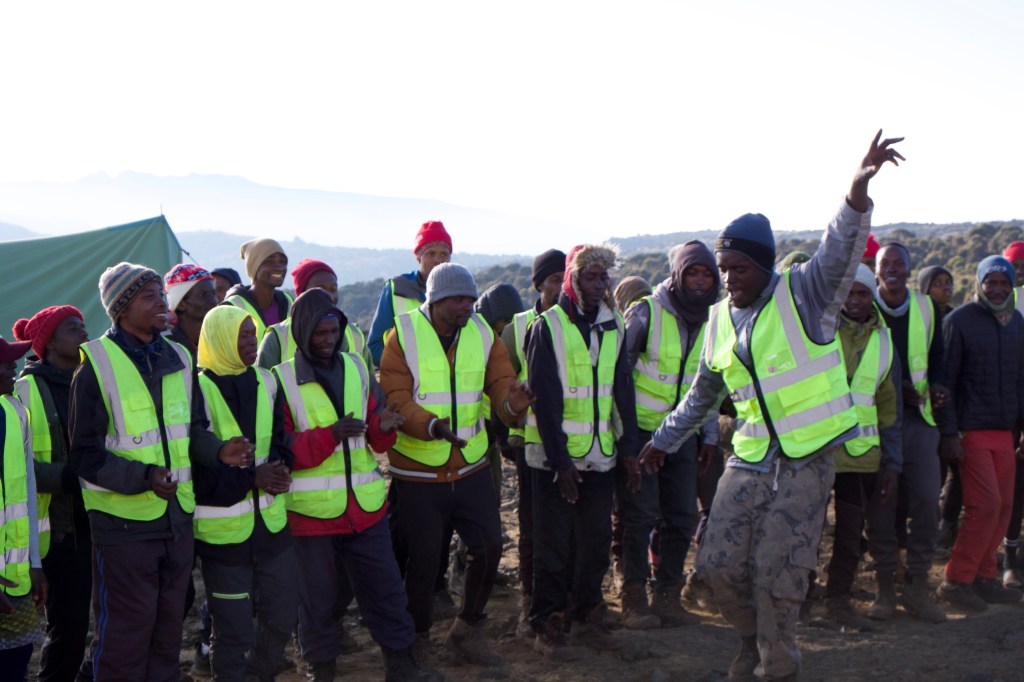
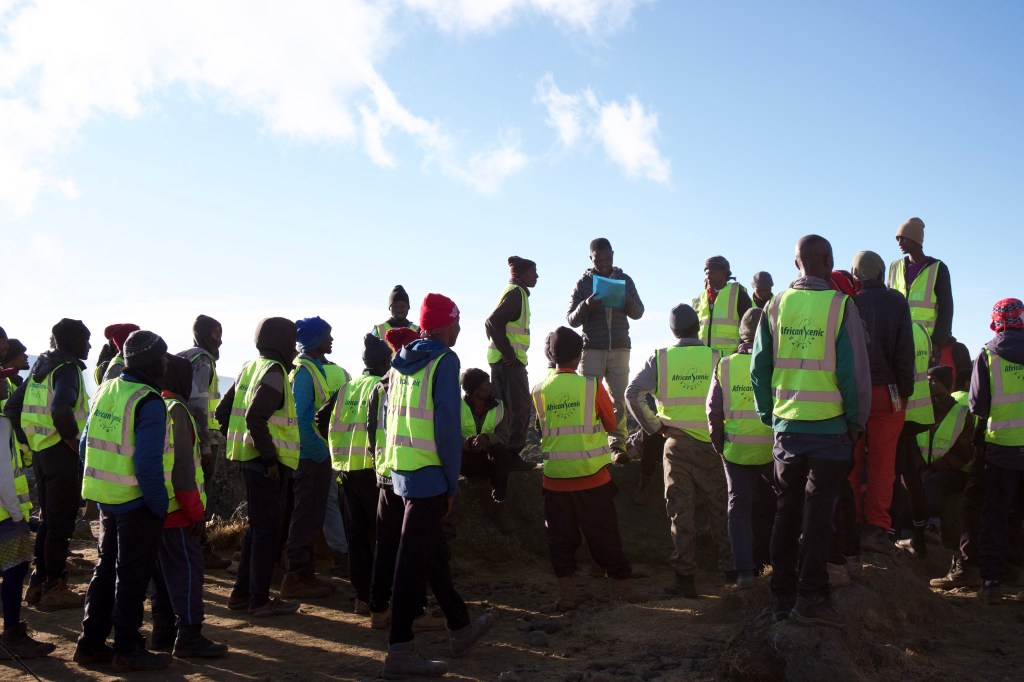
Above: Photo Credits – Griff. Porter introduction ceremony.
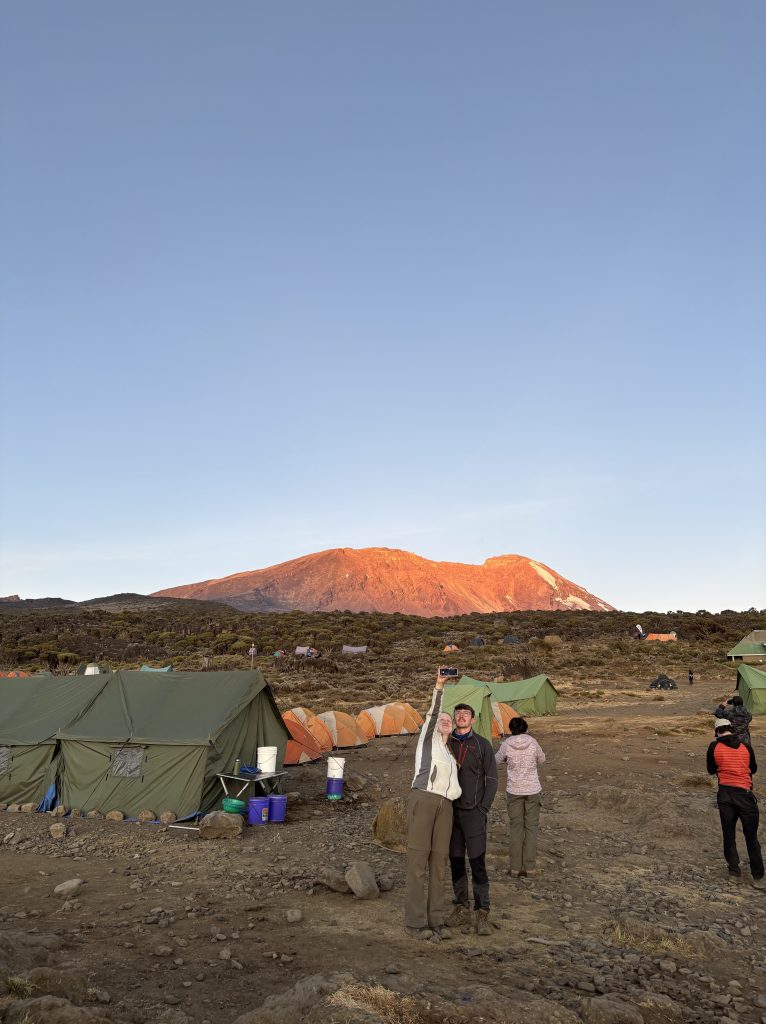
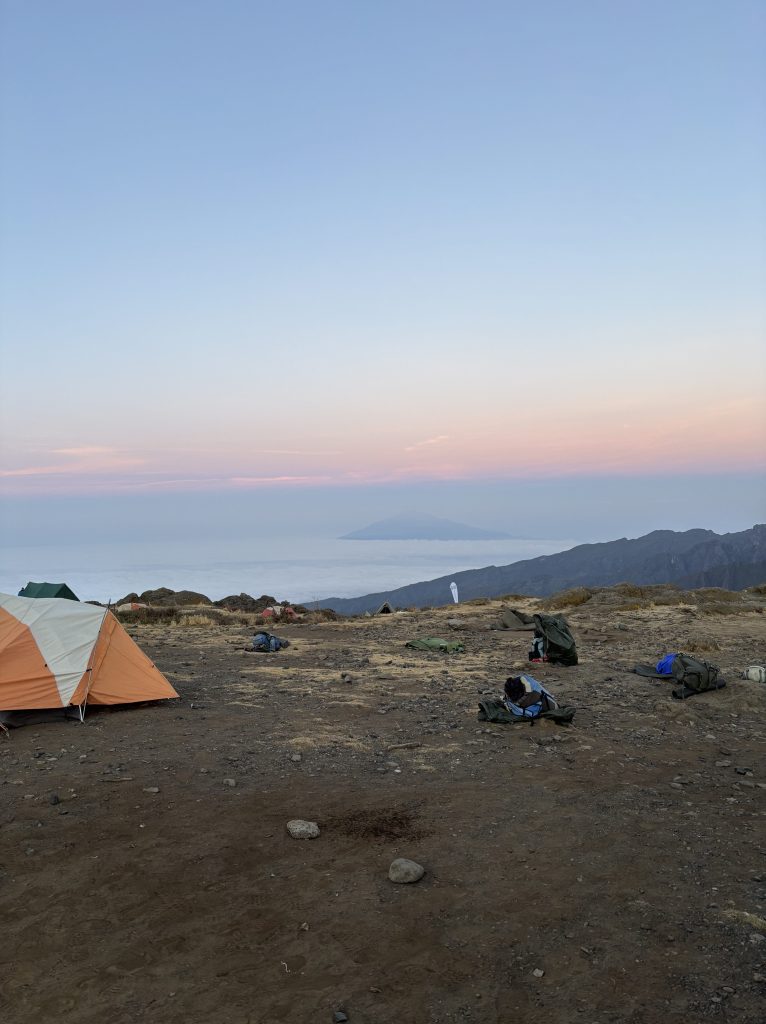
Shira camp and sunset – Kili stands in the background on the left.
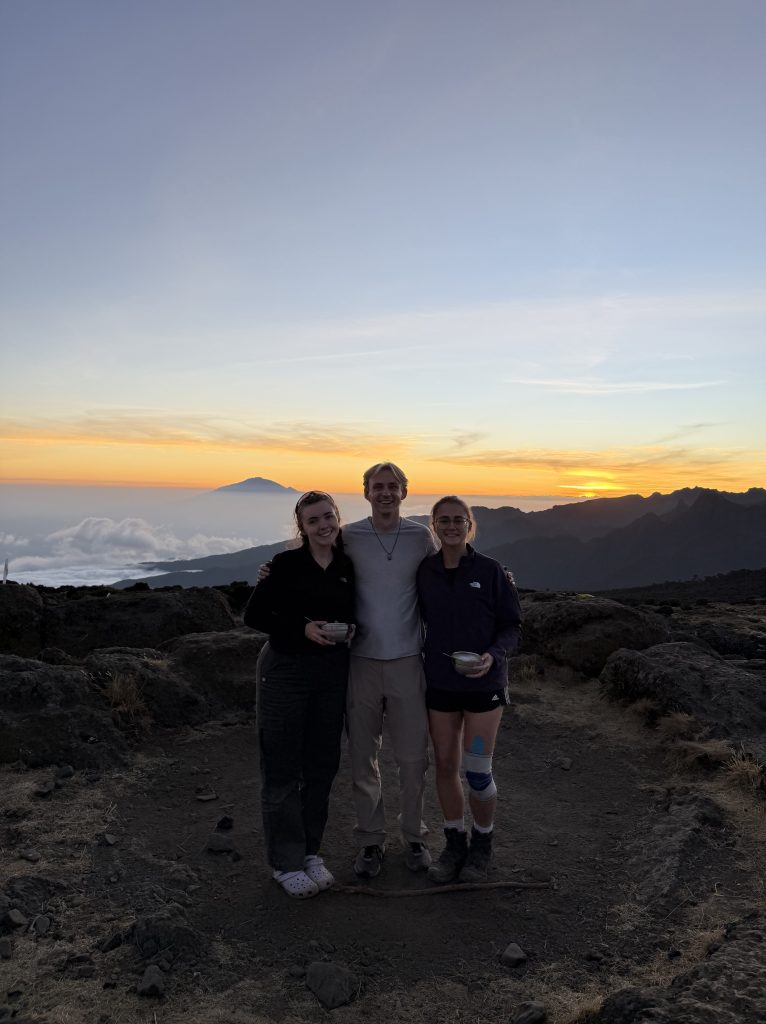
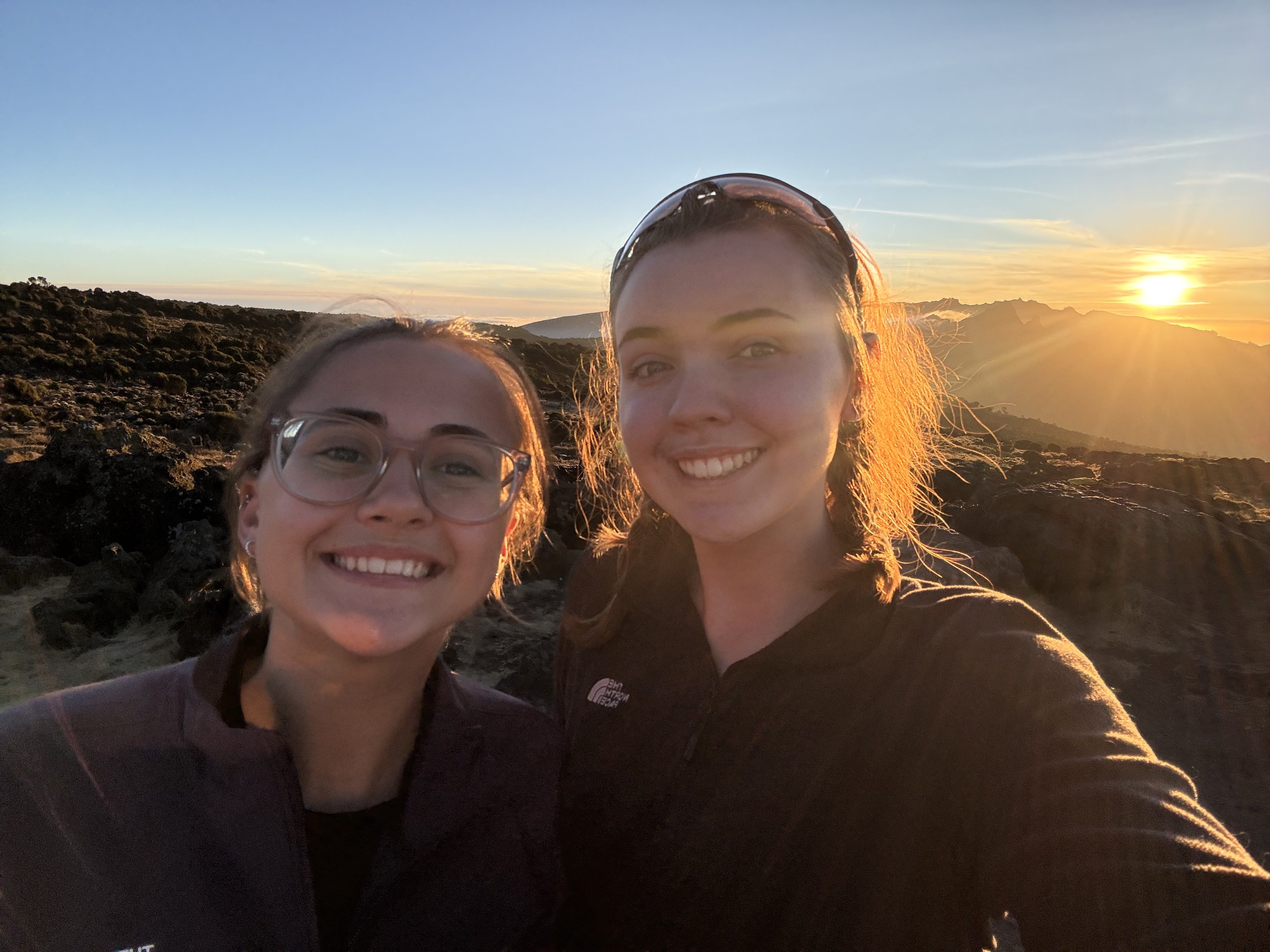
Day 3 – Shira Camp to Barranco Camp
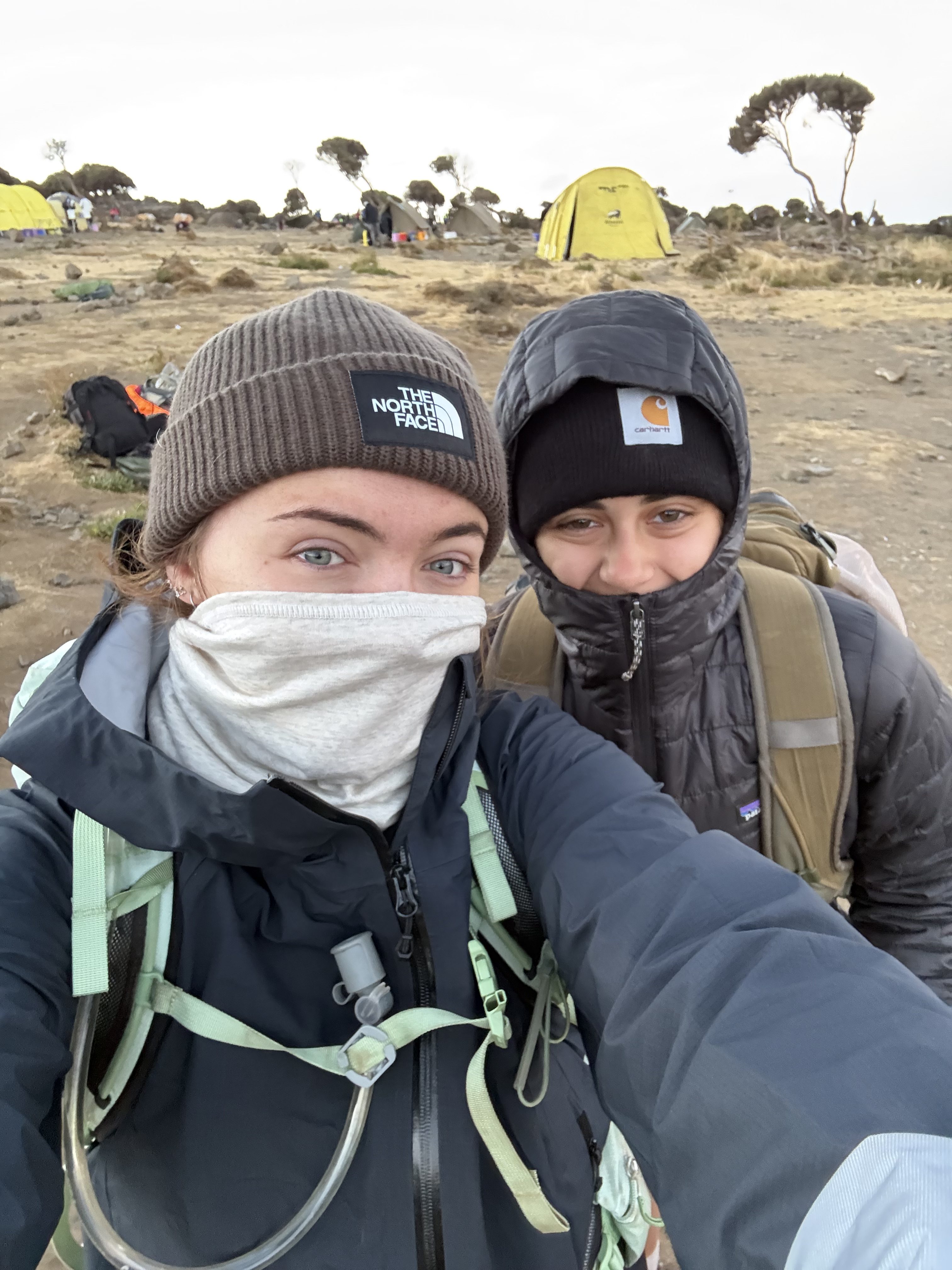
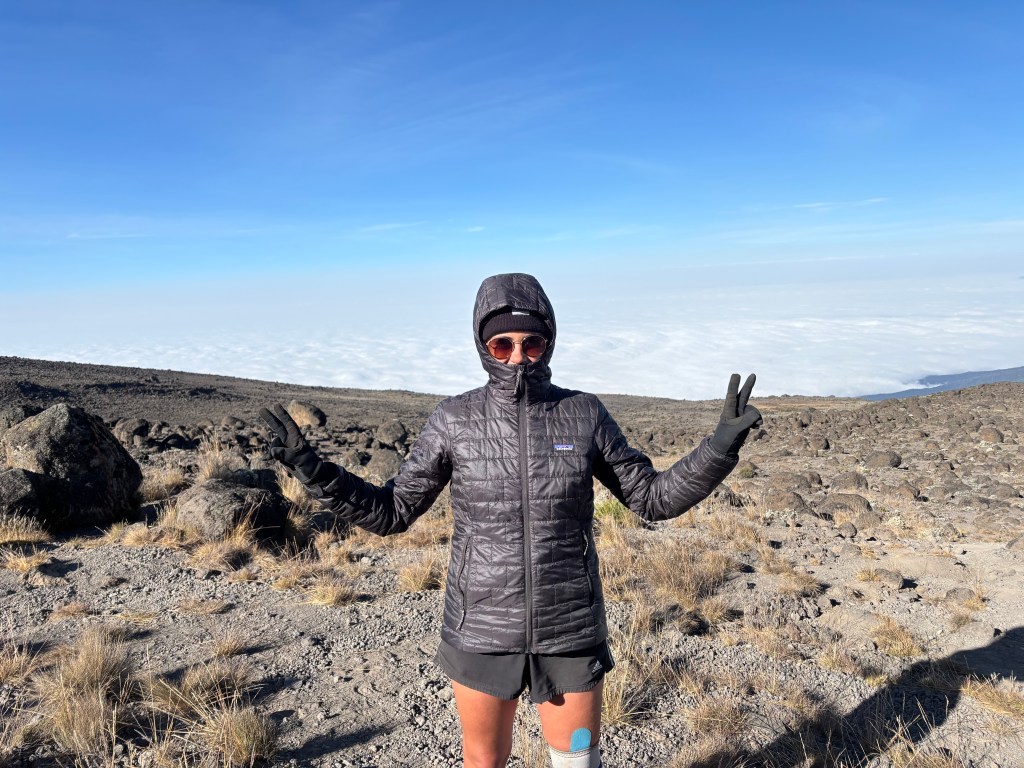
We arose before the sunrise, again. The night was significantly colder than in the rainforest. We got bundled up to head out on the trail toward Lava Tower. The motto for today was climb high for altitude acclimitization and sleep low to recover. I became known in the group as that crazy person who wore shorts in the freezing cold. I genuinely didn’t see any issue with it, but several of the guides asked our medic Pierre to check in with me, privately, to make sure I was okay. I assured him and the guides that my legs were, in fact, just fine. I don’t know if it was playing soccer in New England or Monday Rundays through the North End during Ice Hockey season in the dead of winter or shoveling the driveway in several feet of snow that prepared me, but my fellow hikers and porters looked at me like I was insane. Well, that was until the late morning sun hit and their hiking pants trapped all their hiking heat and in the afternoon, post lunch, when we started descending. I heard a whole lot of “Okayyyy, I think you were onto something.”
The hike from Shira Camp to Lava Tower took around four hours through the Alpine Desert. The landscapes certainly lived up to the biome’s name. We trekked through rocks, dust, bushes, and sand.
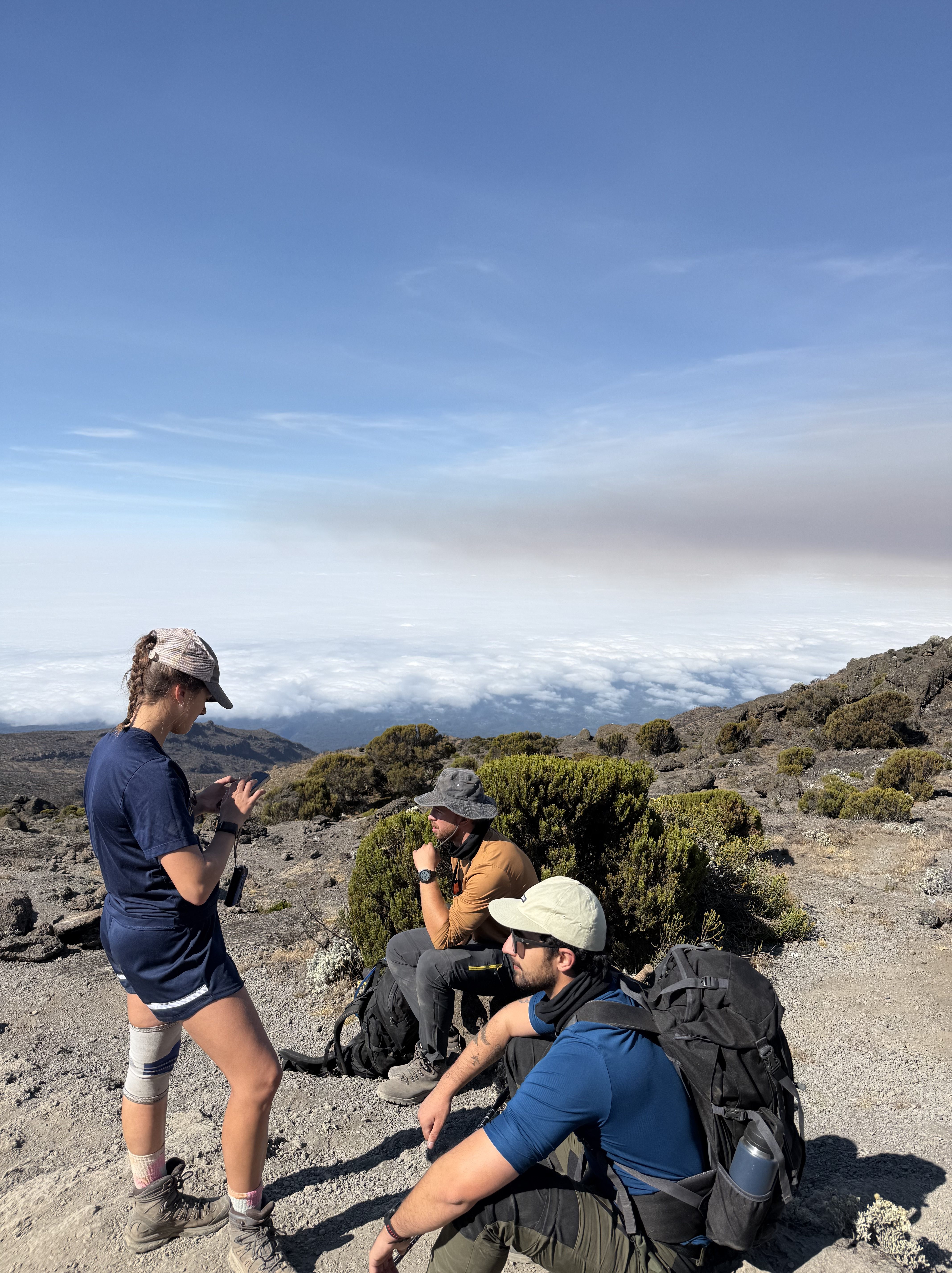
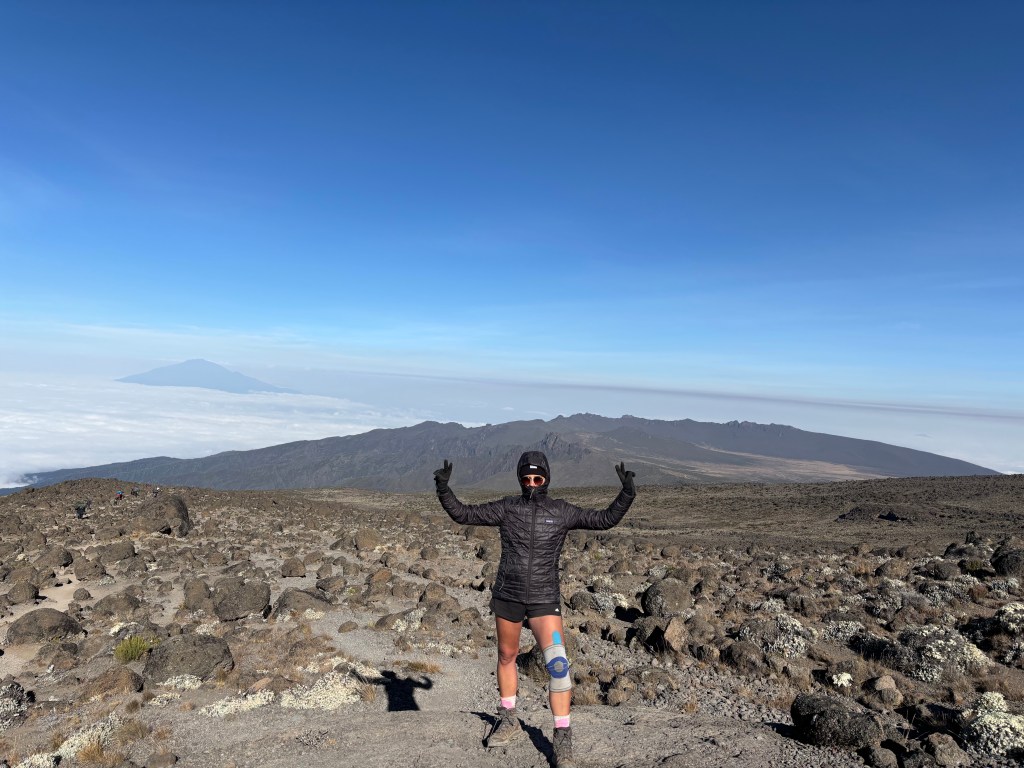
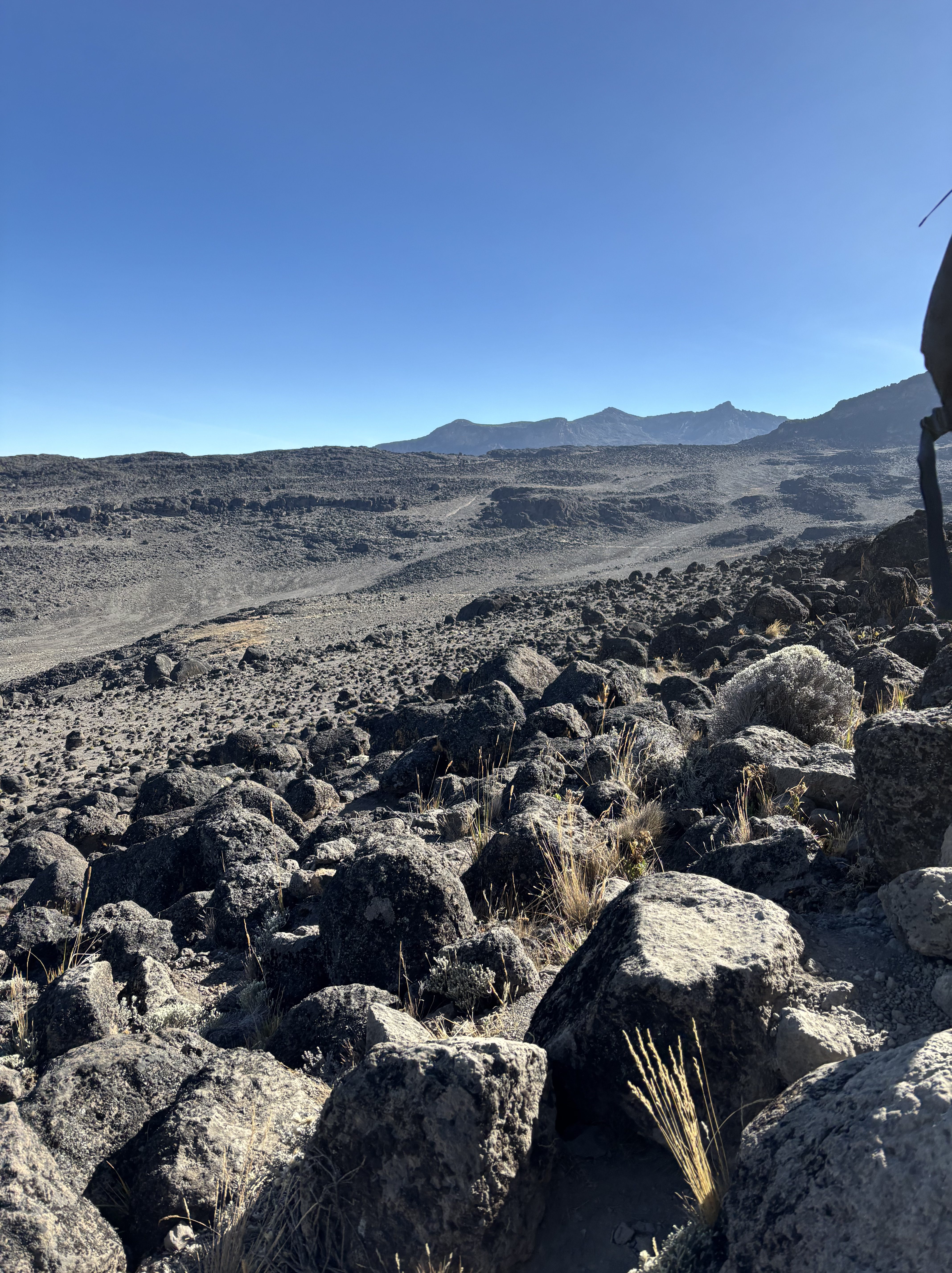
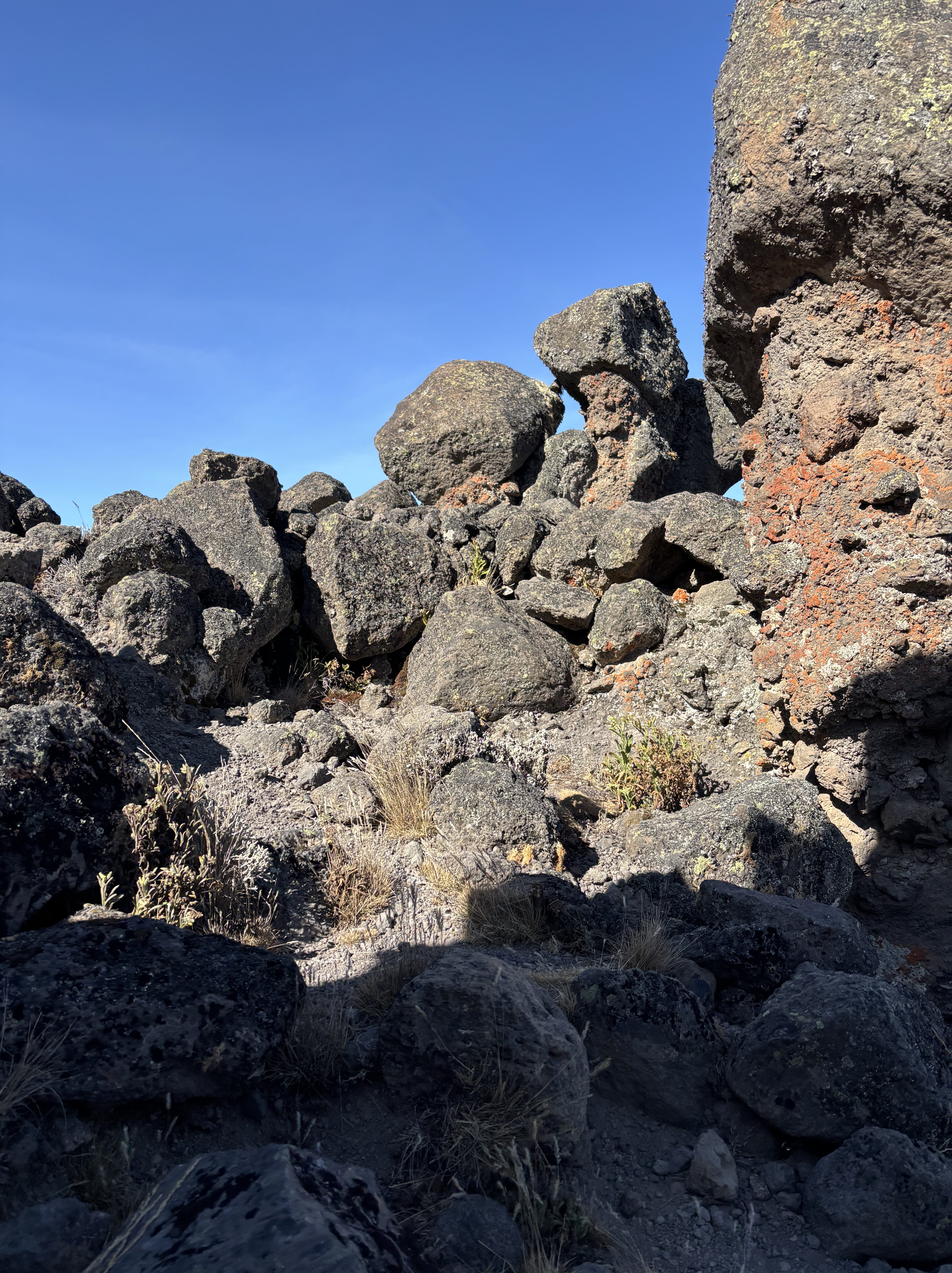
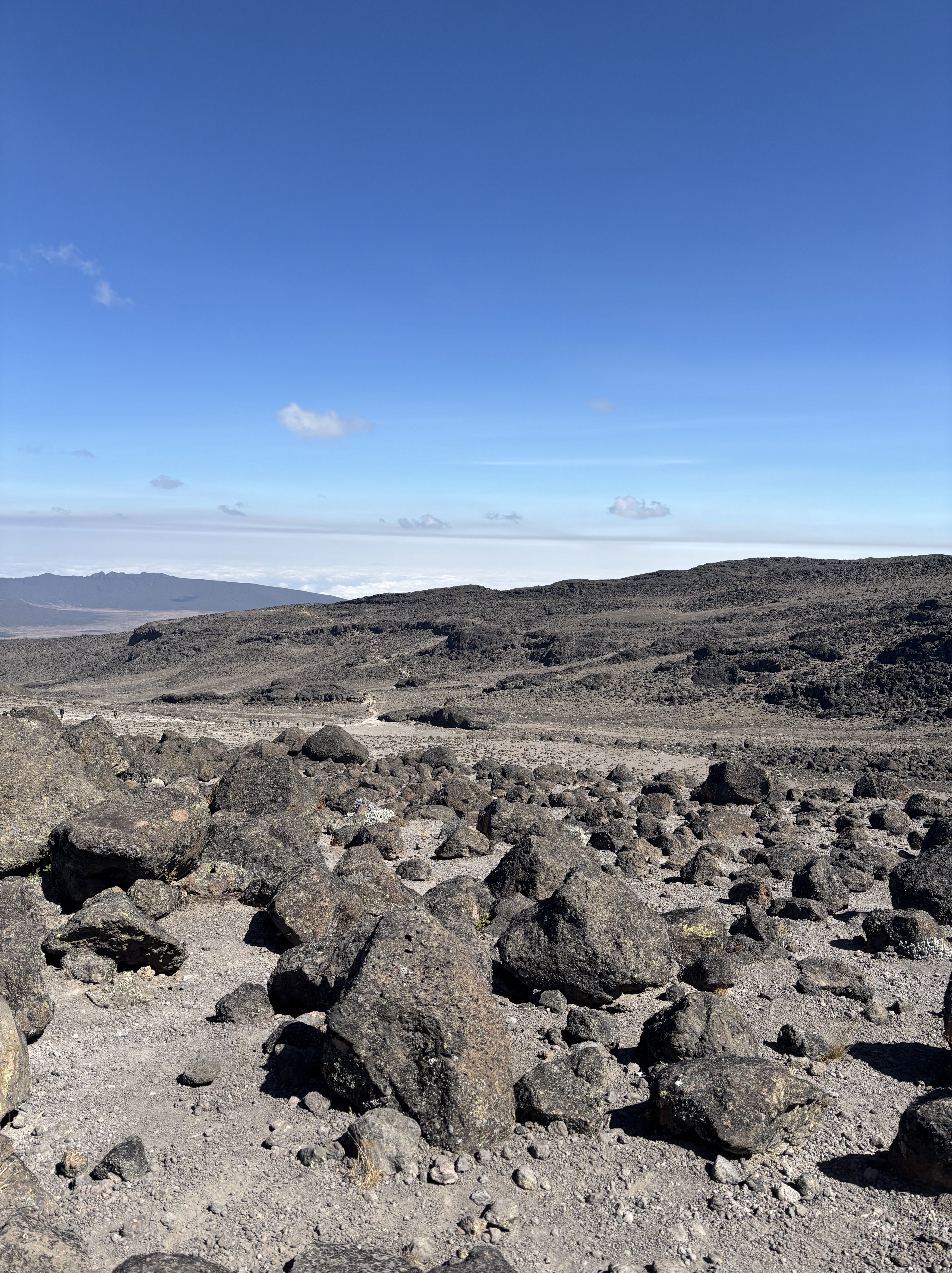
At Lava Tower, we enjoyed a hearty lunch. I tried what they call “african soup” which was some sort of banana soup for the first time – to my surprise, I enjoyed the mixture of meat, potatos, banana, and broth. The banana somehow did not dominate the flavor profile, and I felt adequately fueled for the rest of the day. Originally, the group was so stay at Lava Tower for a bit to acclimatize our bodies a bit; however, our guides caught wind (no pun intended) of a massive wind storm coming our way. Since we were quite exposed, they did not want to risk camp disasters or injured persons. We packed up swiftly and began our descent.
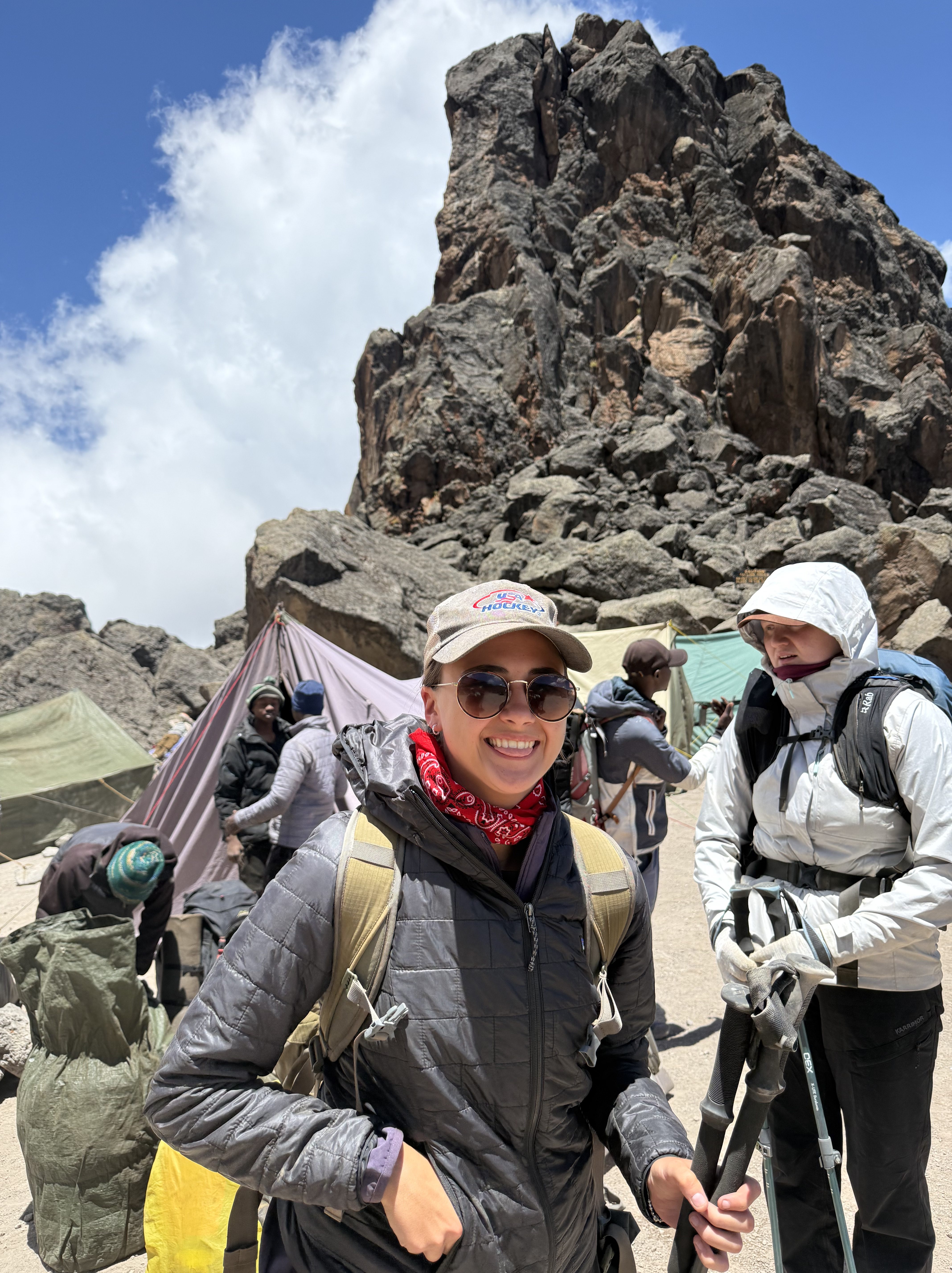
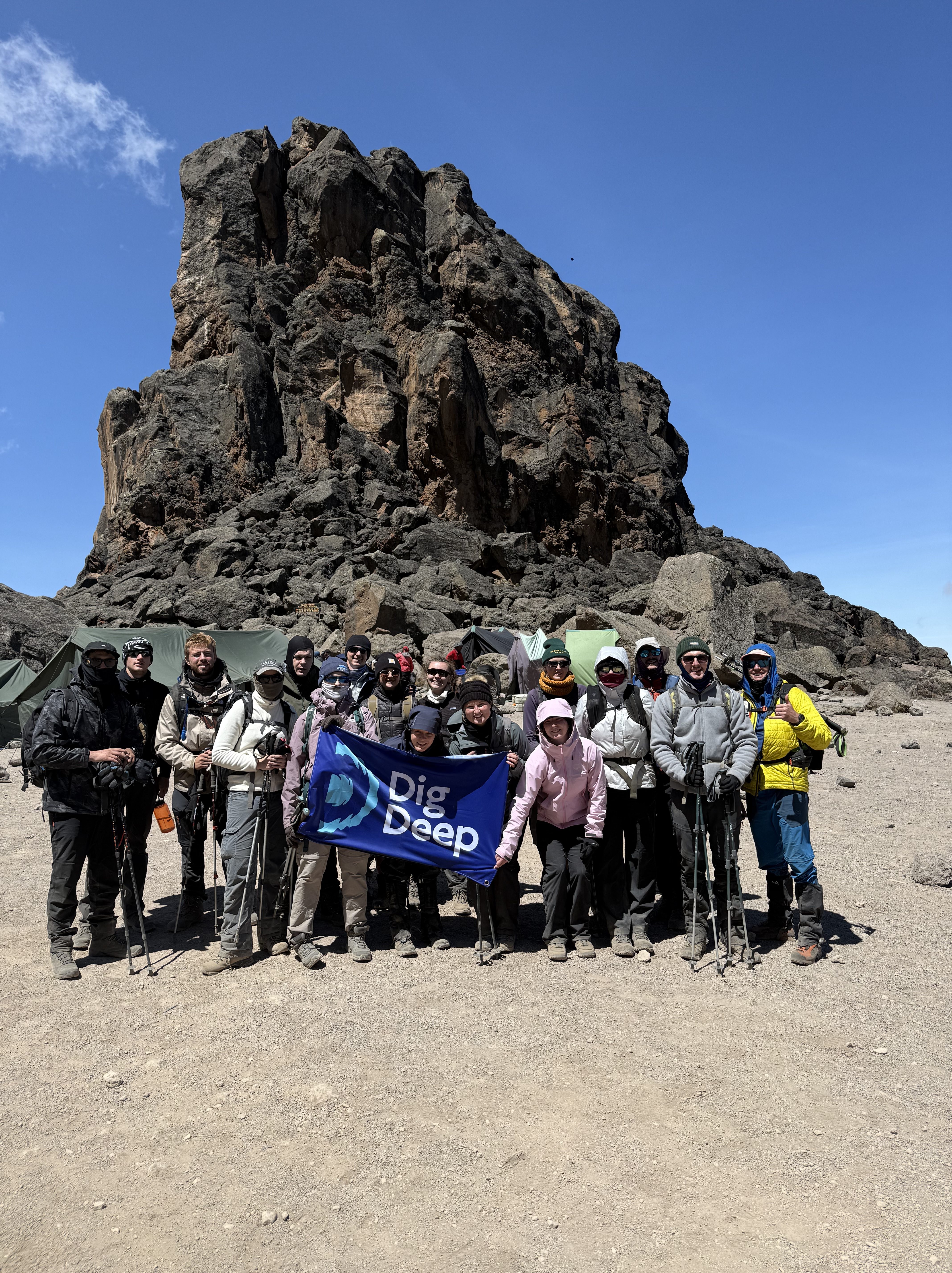
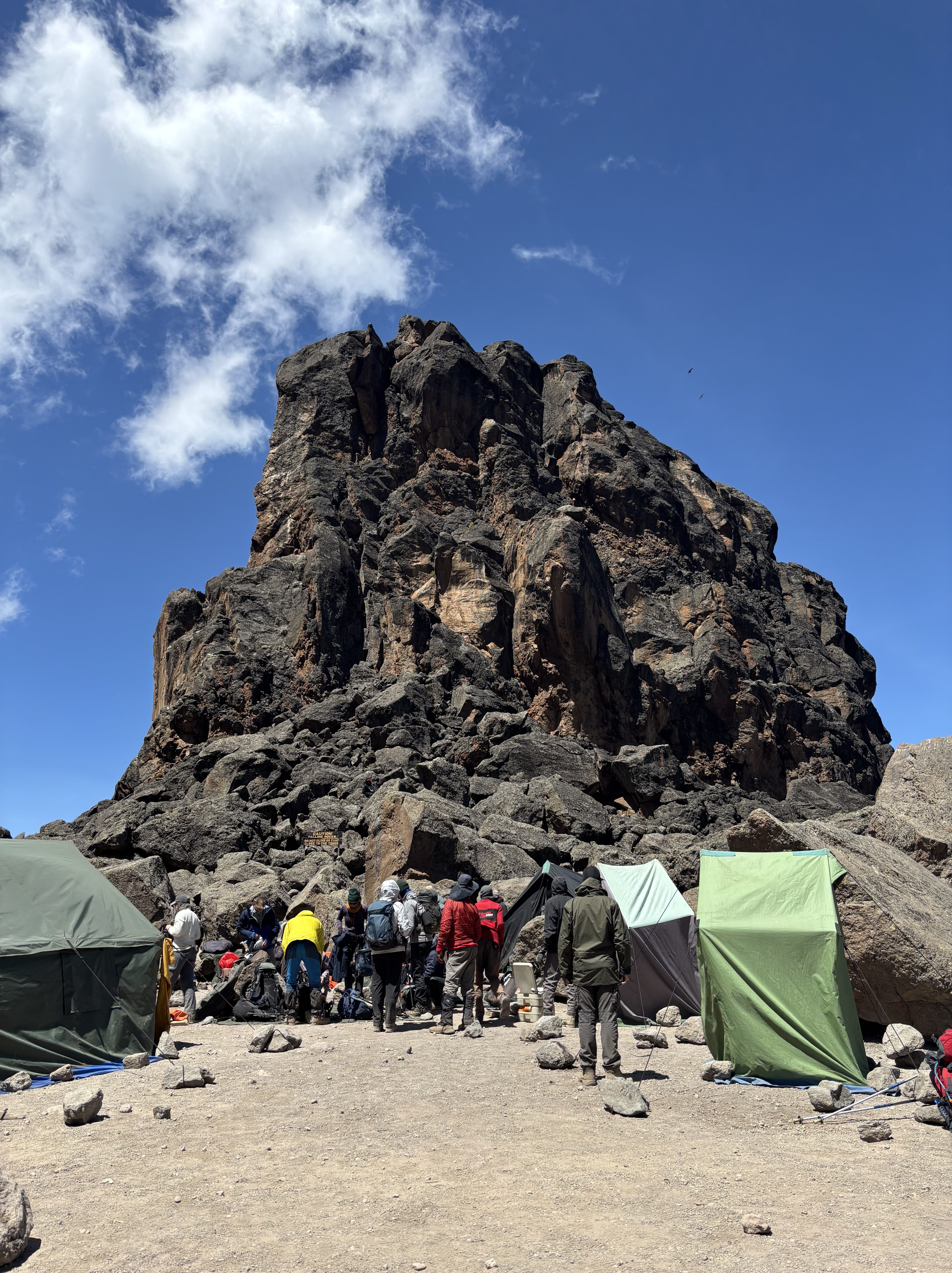
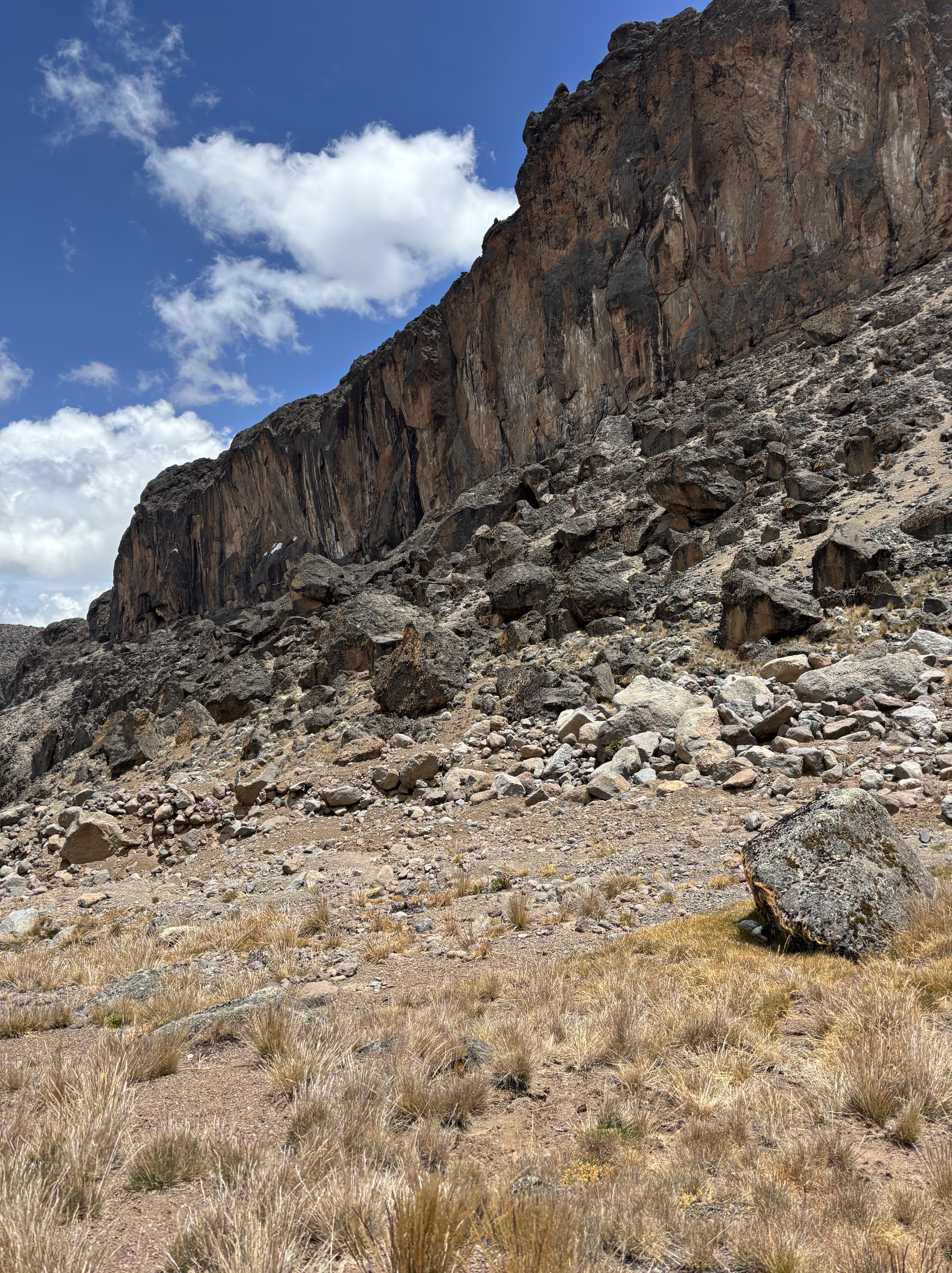
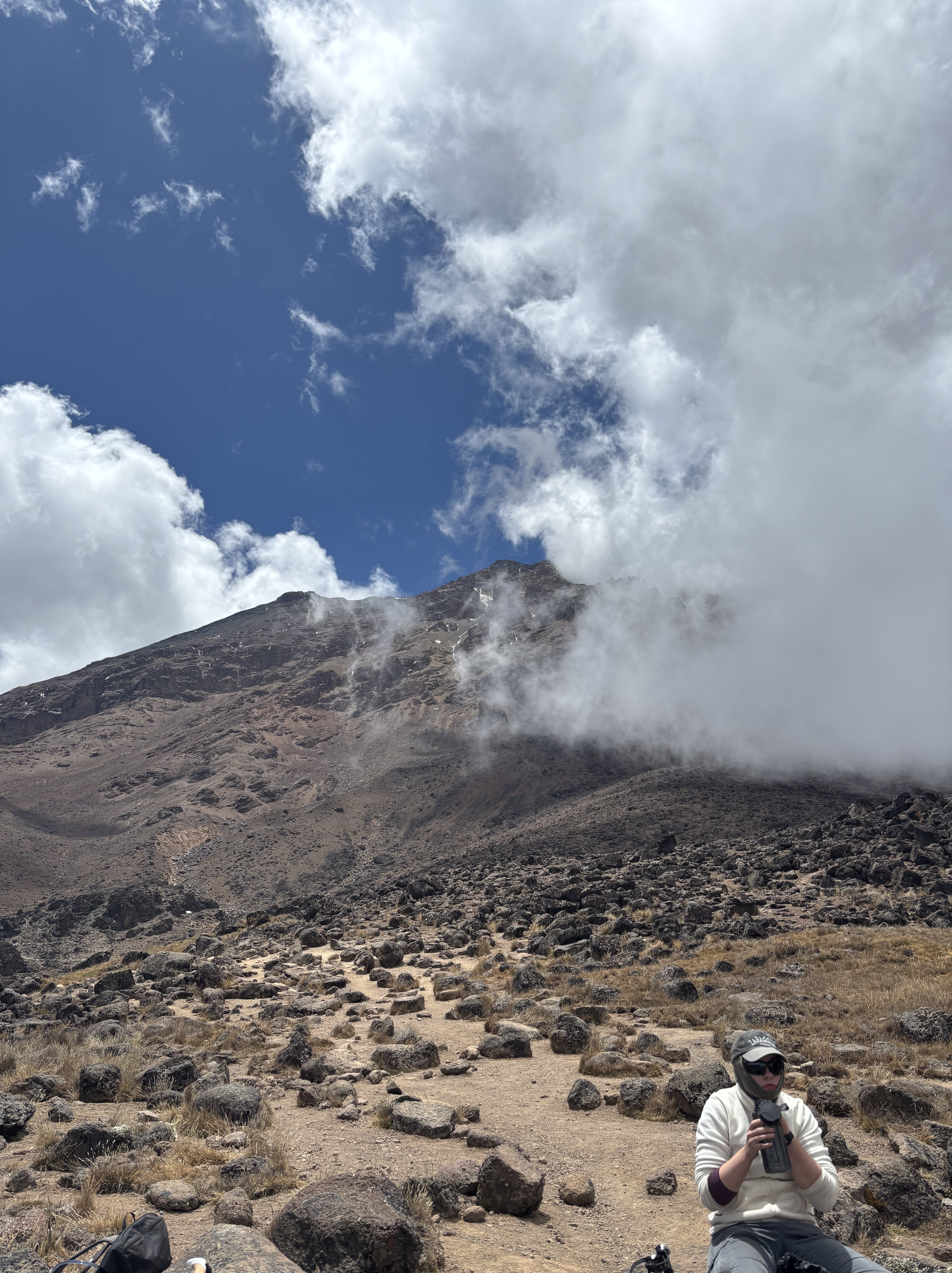
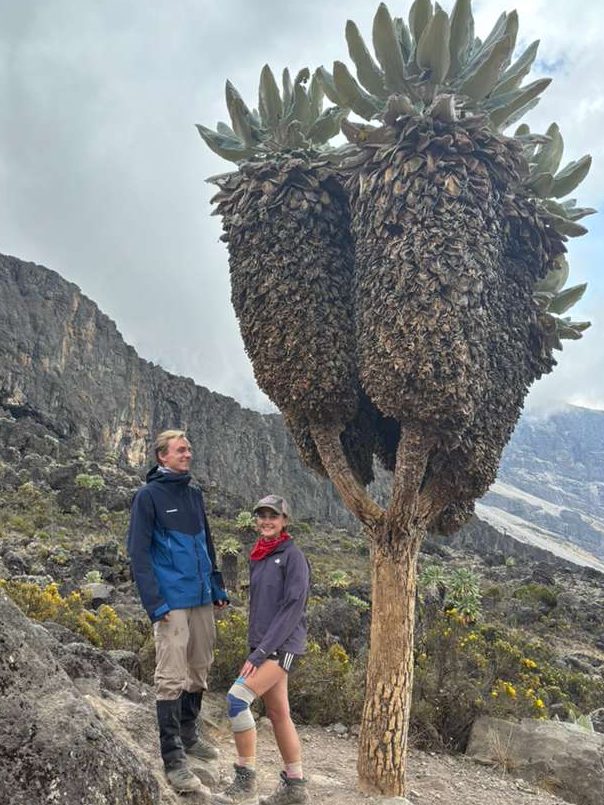
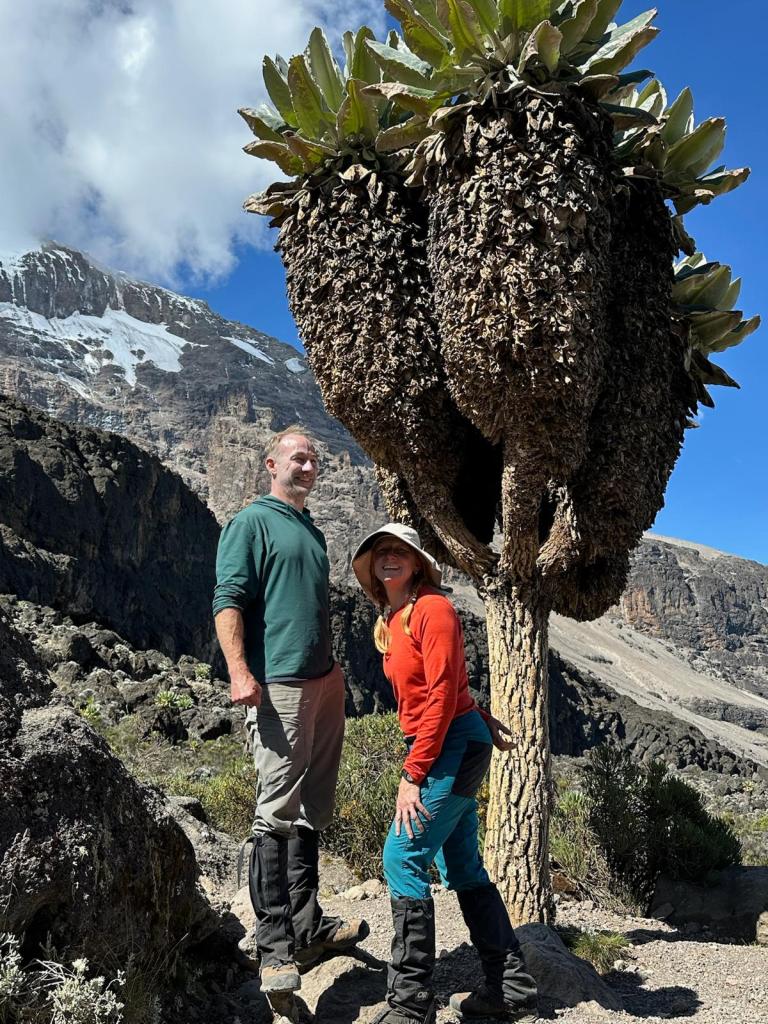
We spent the next 3-4km descending, climbing through dry rock terrain. The uneven terrain forces you to pay attention to the trail without much reward of the view. We traversed East to get to Barranco Camp. 30-45 minutes before camp, our team came across the famous Giant Groundsels.1 Three generations of Martins, starting with Nana and Moose in 1984, Aunt Margot and Uncle Andy in 2024, and now Lukas and I in 2026 have recreated the same picture by the same plant!
At Barranco camp, clouds passed through the campsite. We had some down time to clean up, conduct medical checks, and chill around the campsite.
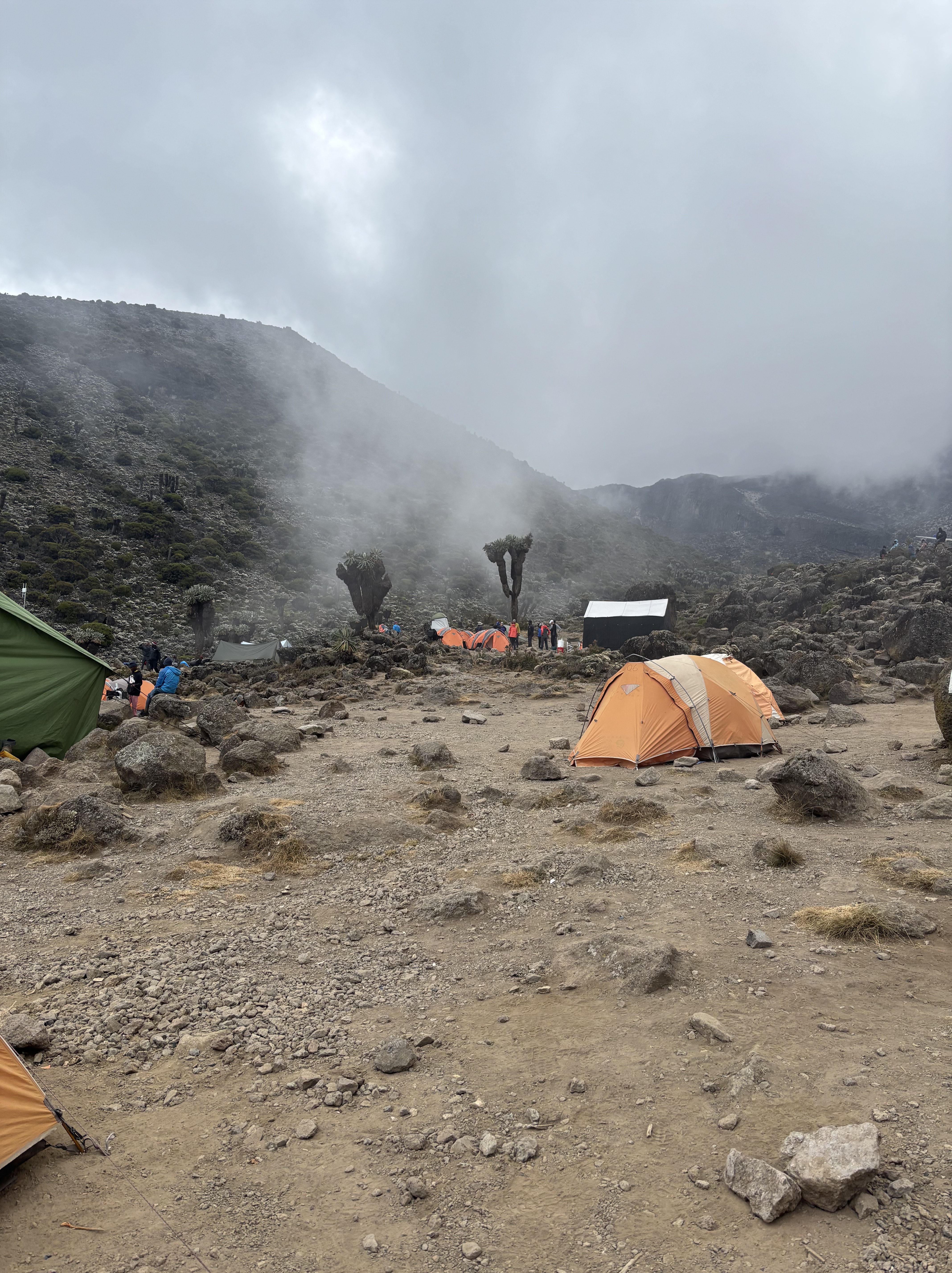
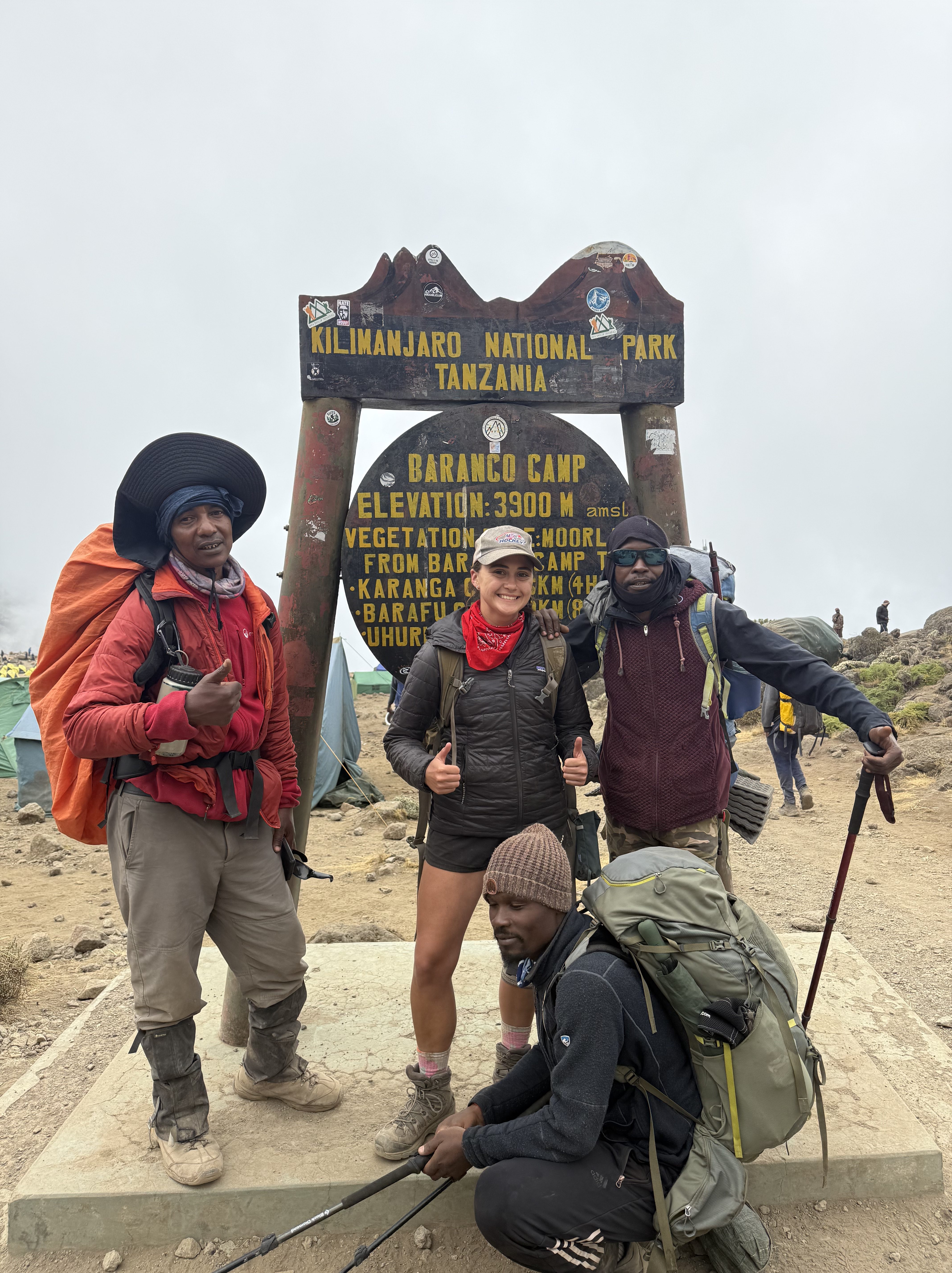
Left: Clouds passing through Barranco Camp. Right: Godwin, me, King of the Jungle, and León.
Nightly preparations before Day 4 were extremely important because Day 4 would be our second longest hiking day and involved the only semi-technical part of Kilimanjaro. Once I had packed for the next day, Nicole and I attempted to take pictures of the night sky. Unless there were clouds above us, all the nights on Kili offered spectacular, unblocked views of the Milky Way and surrounding constellations. One day, I’ll learn more about astrophotography and be able to capture a bit of the night sky’s glory.
Day 4 – Barranco Camp to Karanga Camp to Barafu Camp
Rise and shine! We’ve got a big day ahead of us. We left Barranco Camp a bit earlier than others days in an attempt to beat the other groups to the wall. The wall is 257m or 857 feet tall.2 The climb is not technical by a real climber’s standards, but the “trail” is quite narrow and can get easily congested with hikers and porters. We wanted to avoid as much traffic as possible. At tricky passages shimmying across narrow ledges, the guides stood on either side to offer a helping, stablizing hand or gentle lift. Climbing up the rock face while the sun rose was the most exhilirating part yet! I had several moments of pure awe, looking over the campsite and glancing up at Kilimanjaro. I remained vigilant with my breathing because although its easy to regulate the breath when trekking step by step, going up big boulders and steps required more effort and could easily knock me out of breath due to the altitude. Adrenaline and awe powered me up the wall, and the views at the top of the mountain were backlit, but spectacular. Getting up Barranco felt like the first big milestone up the mountain.
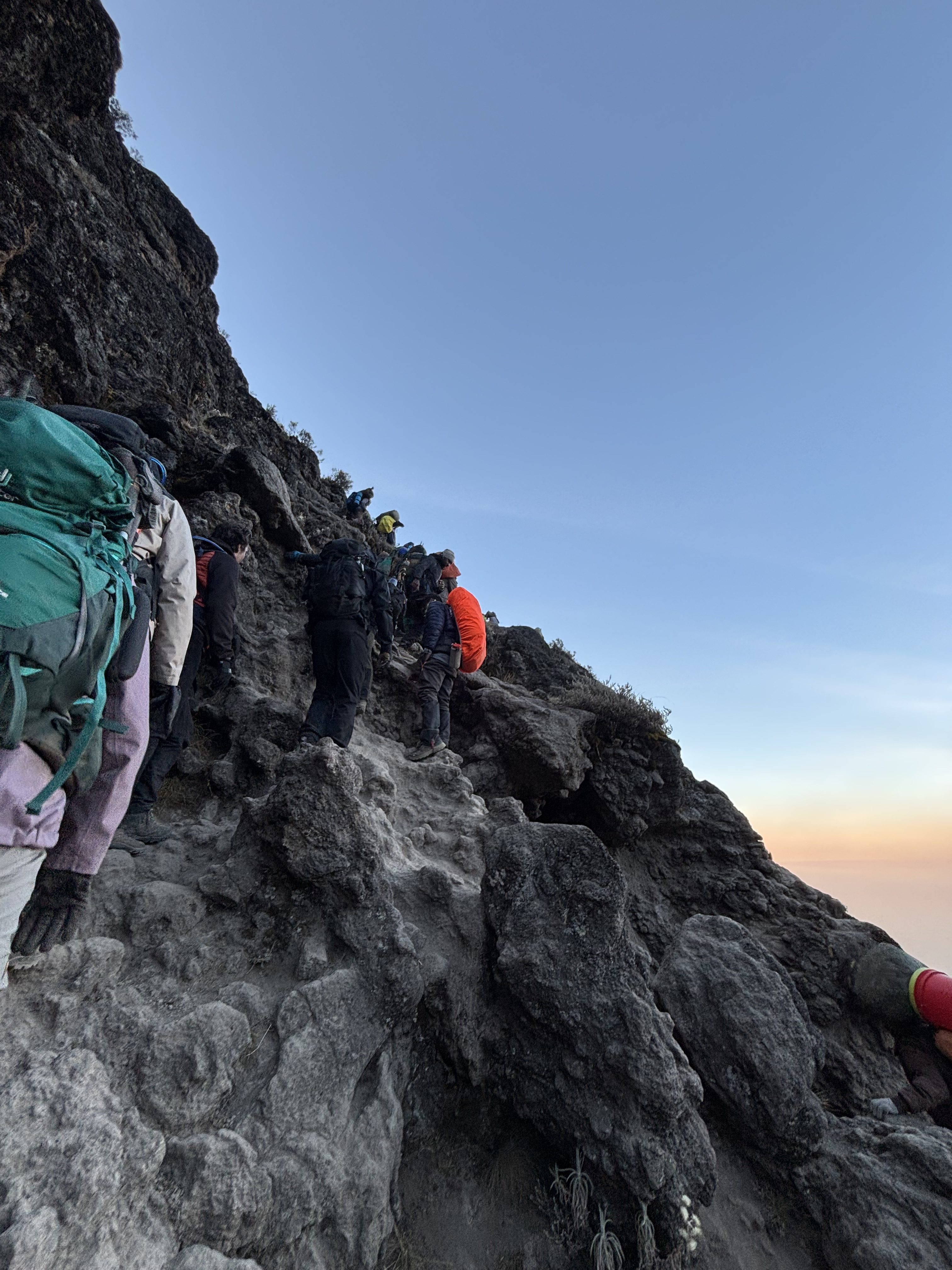
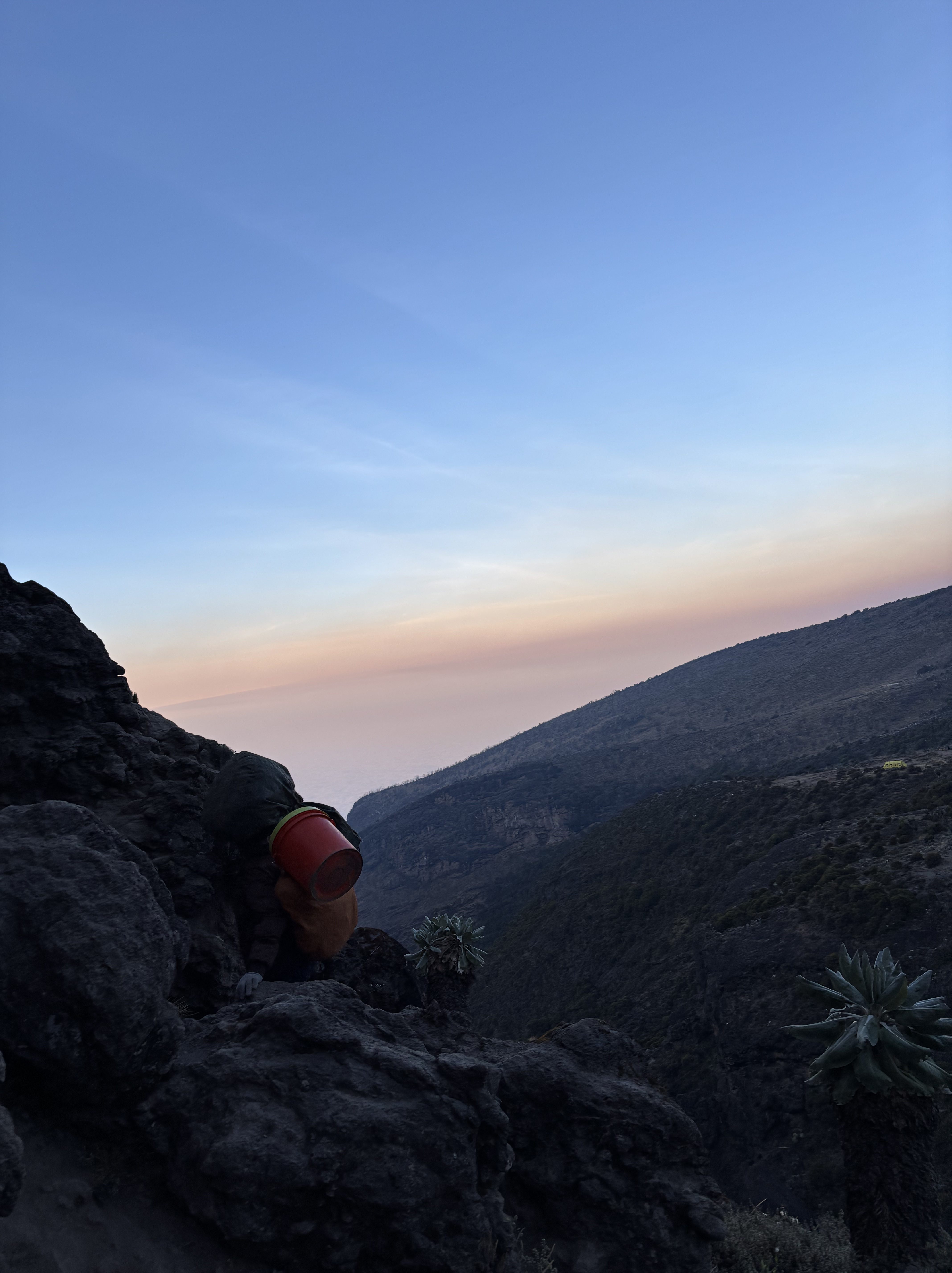
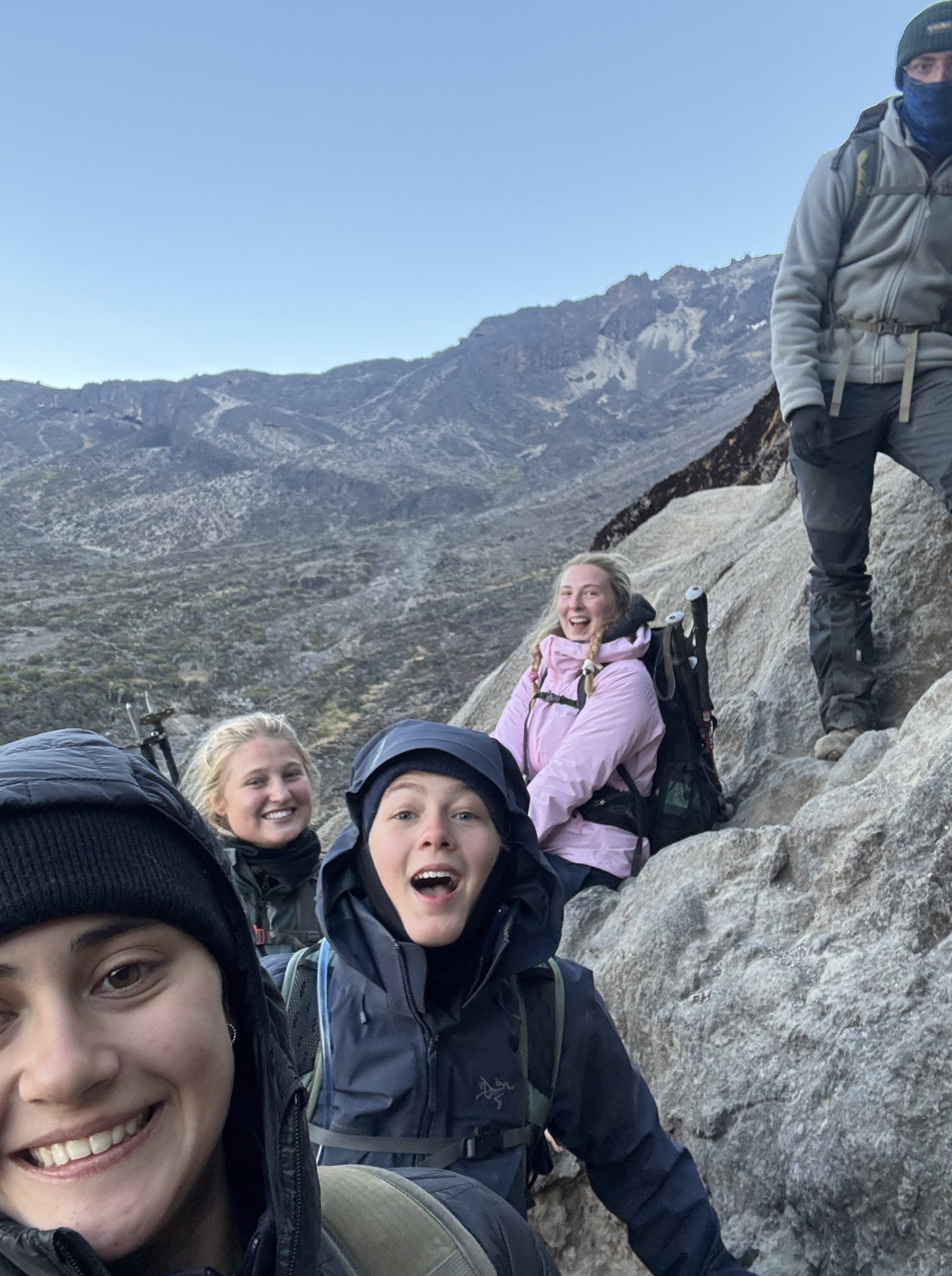
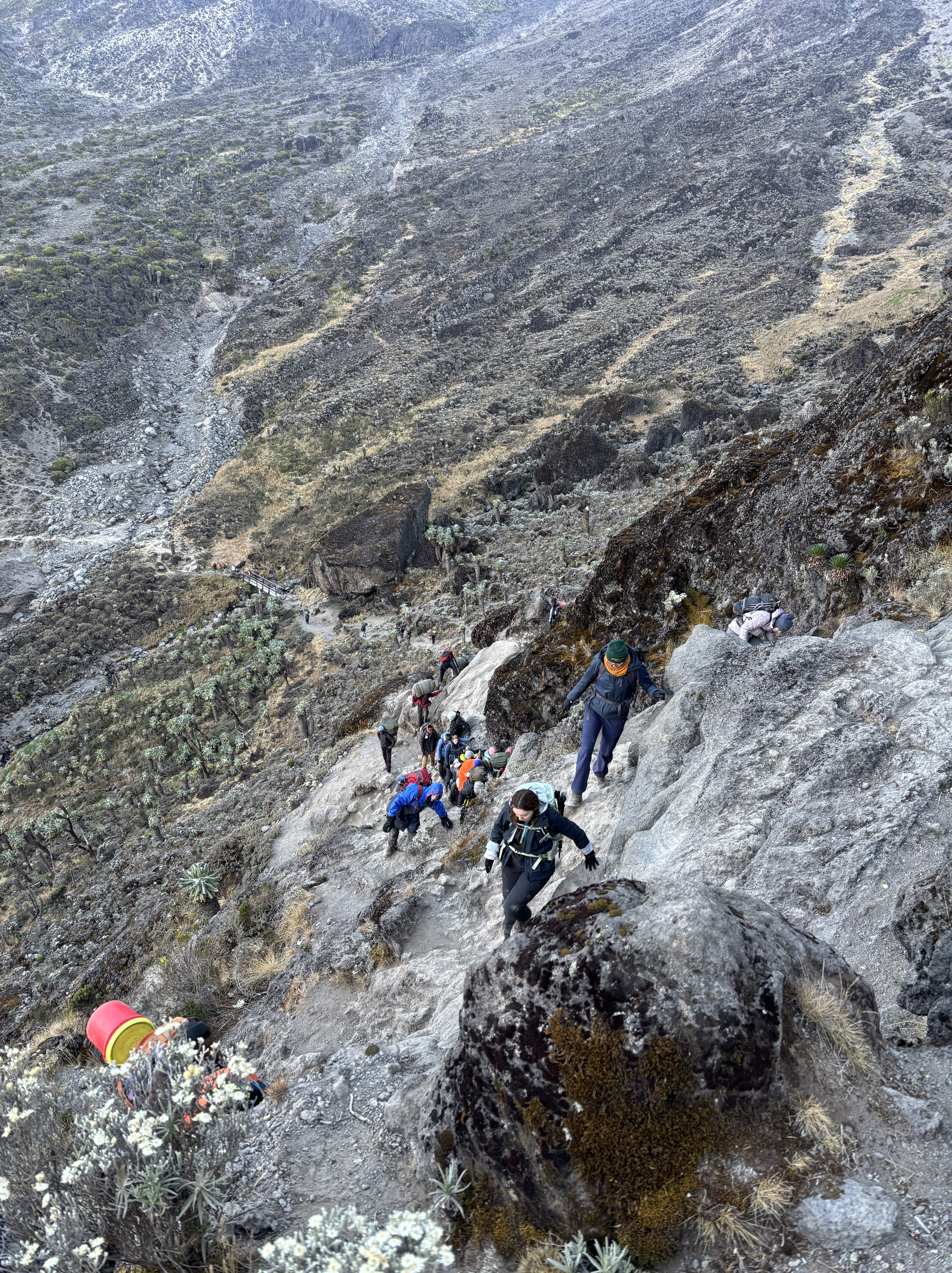
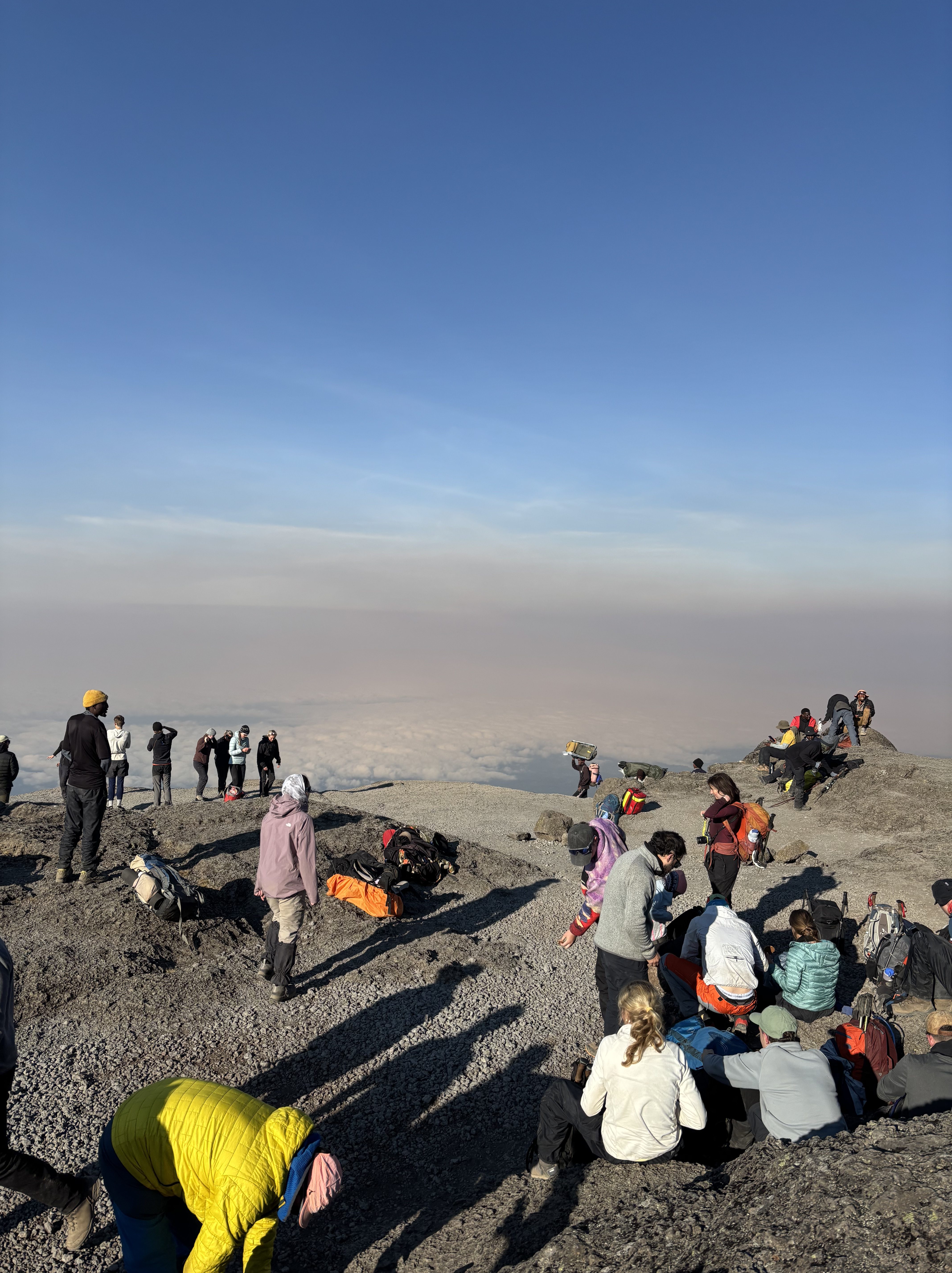
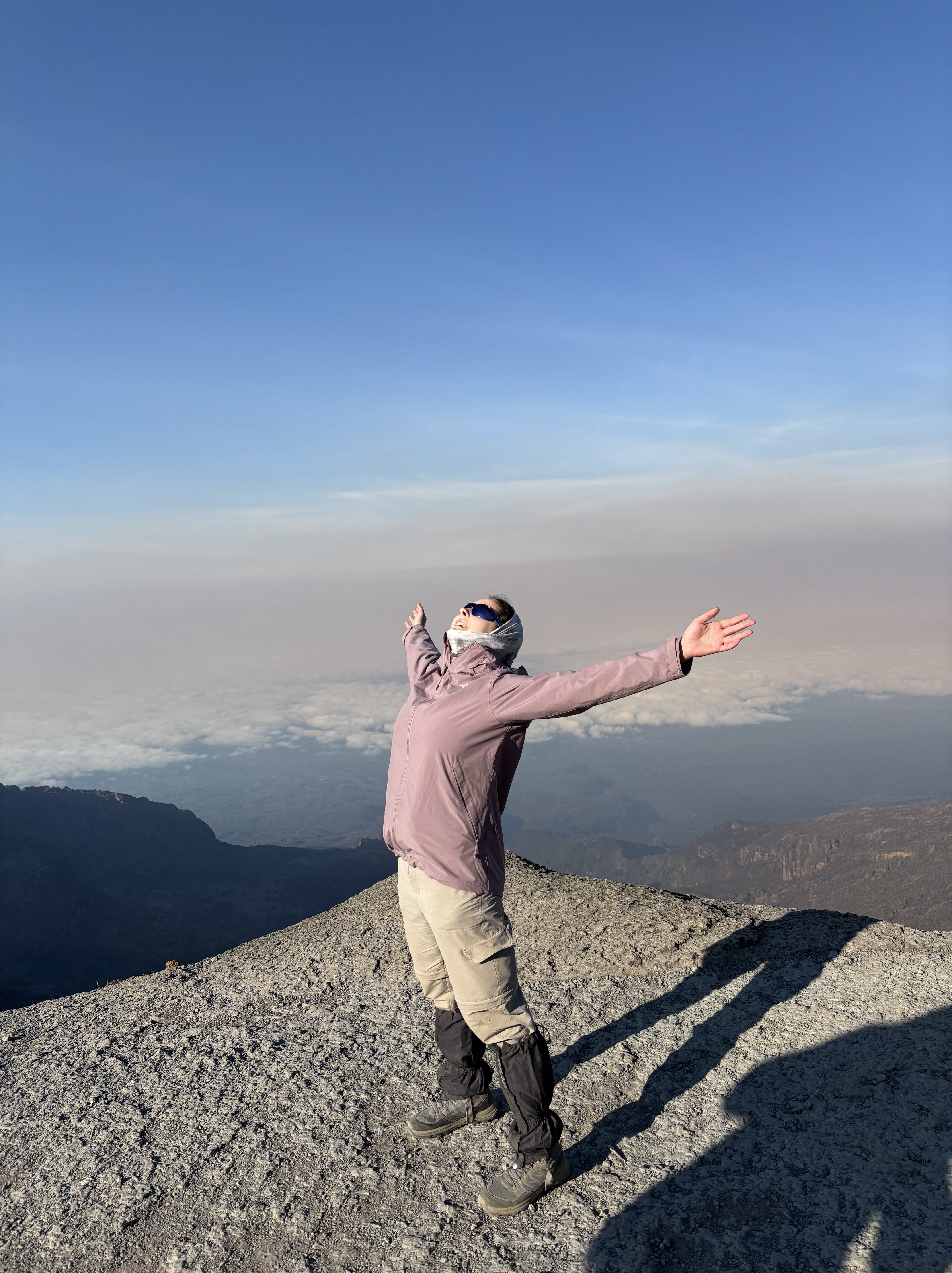
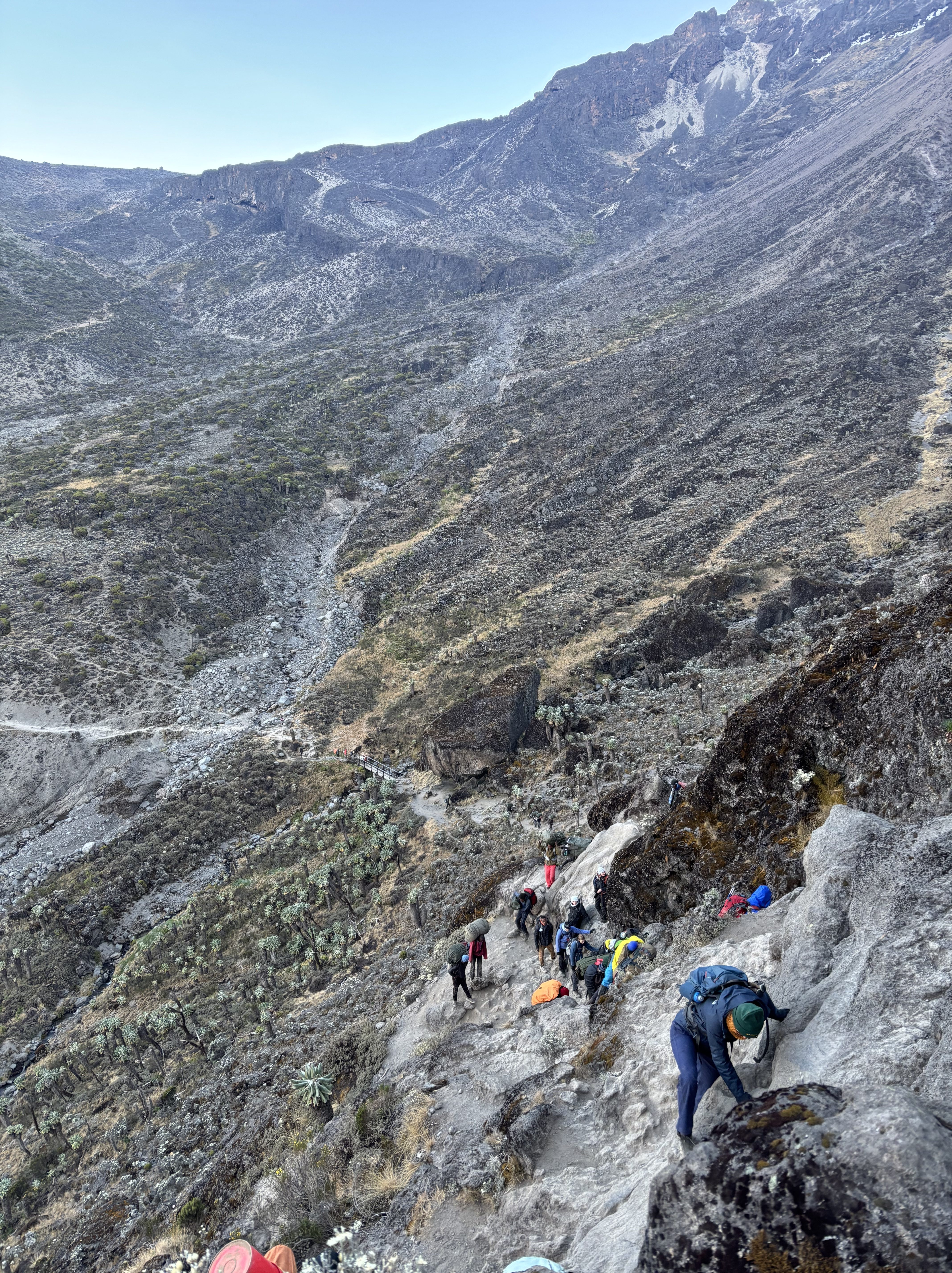
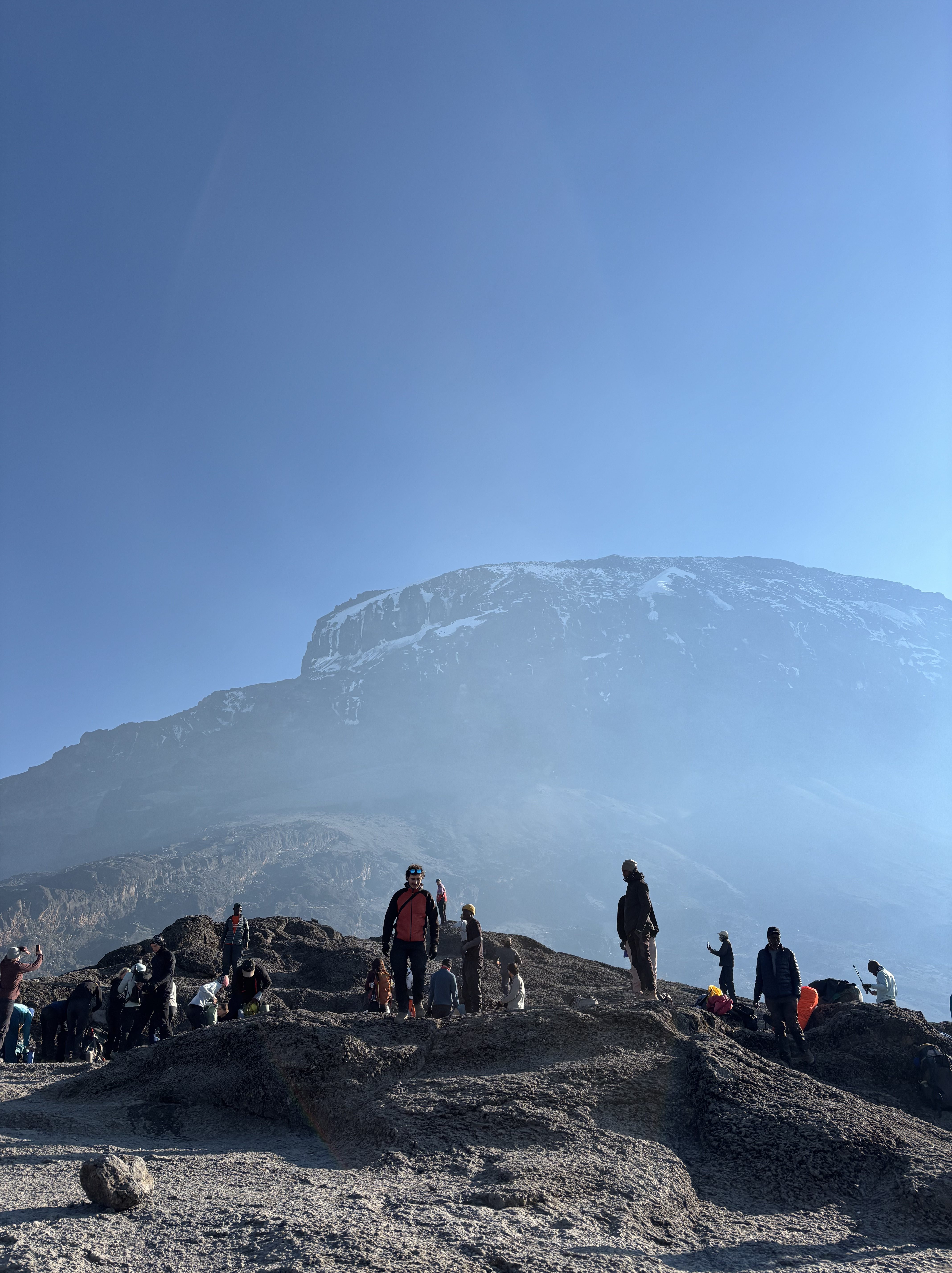
After pictures, de-layering, and water, we continued trekking through the alpine desert, until our lunch spot at Karanga Camp. We stopped around 9:30am on a hill where we could see the camp, giving us the visual impression of a 15-20 minute walk. However, the guides were smart to give us a break there because what we couldn’t see was a massive downhill portion followed by an uphill slog (basically going up what we had just come down) that took us a good hour. Smart break move.
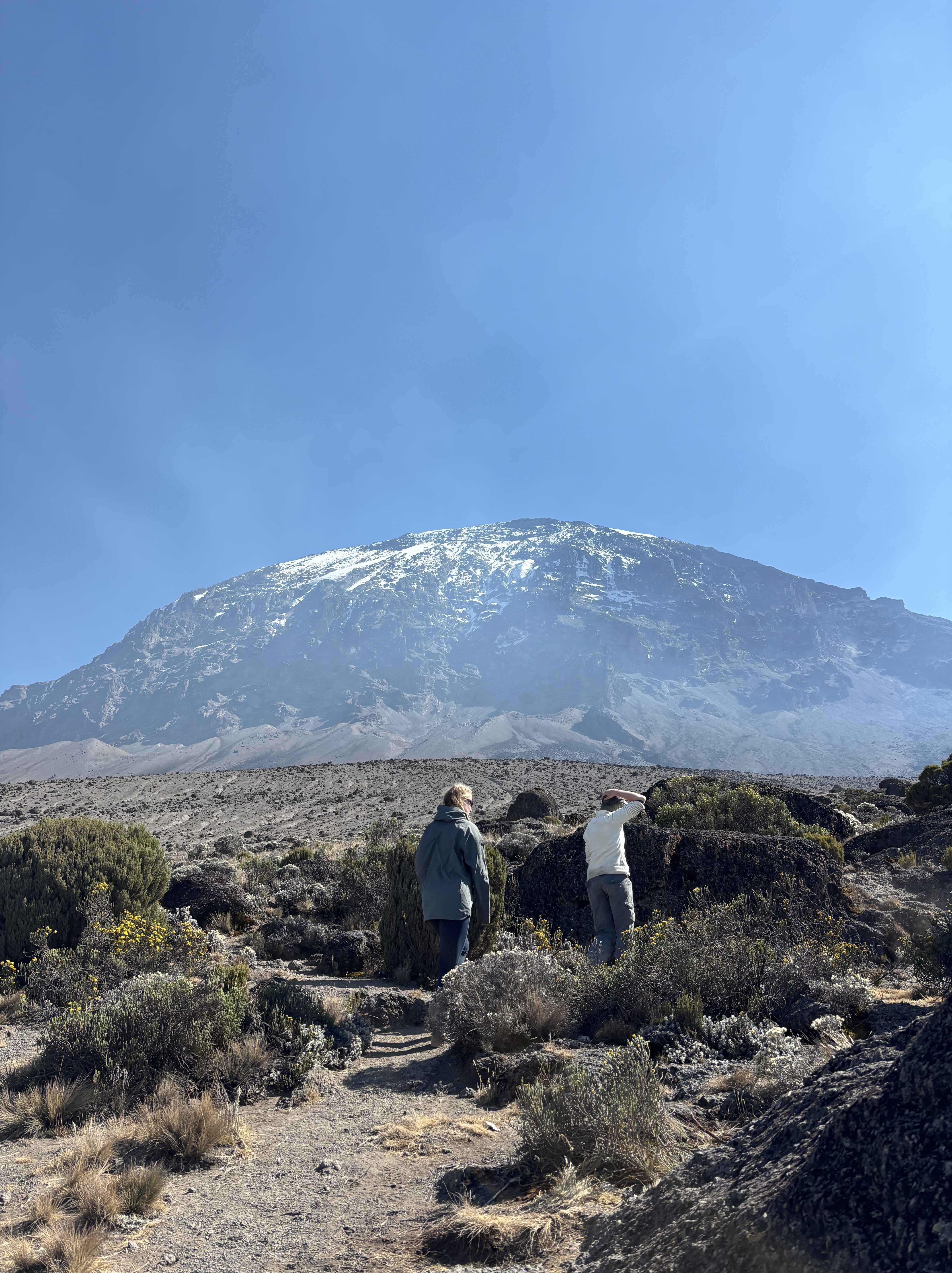
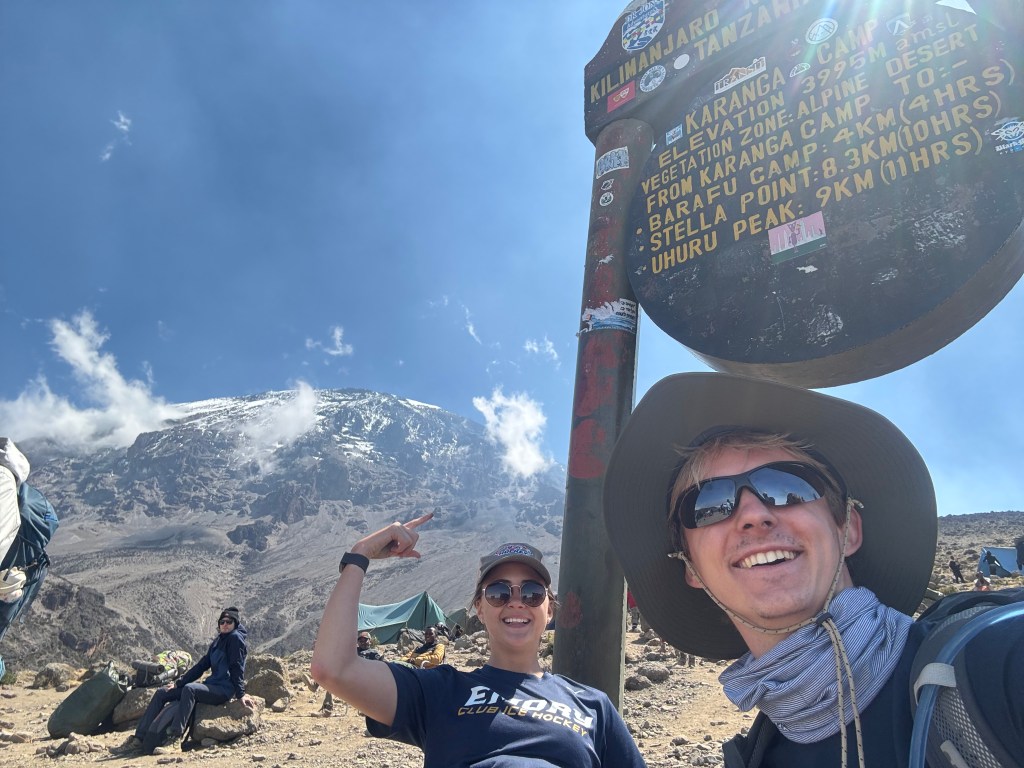
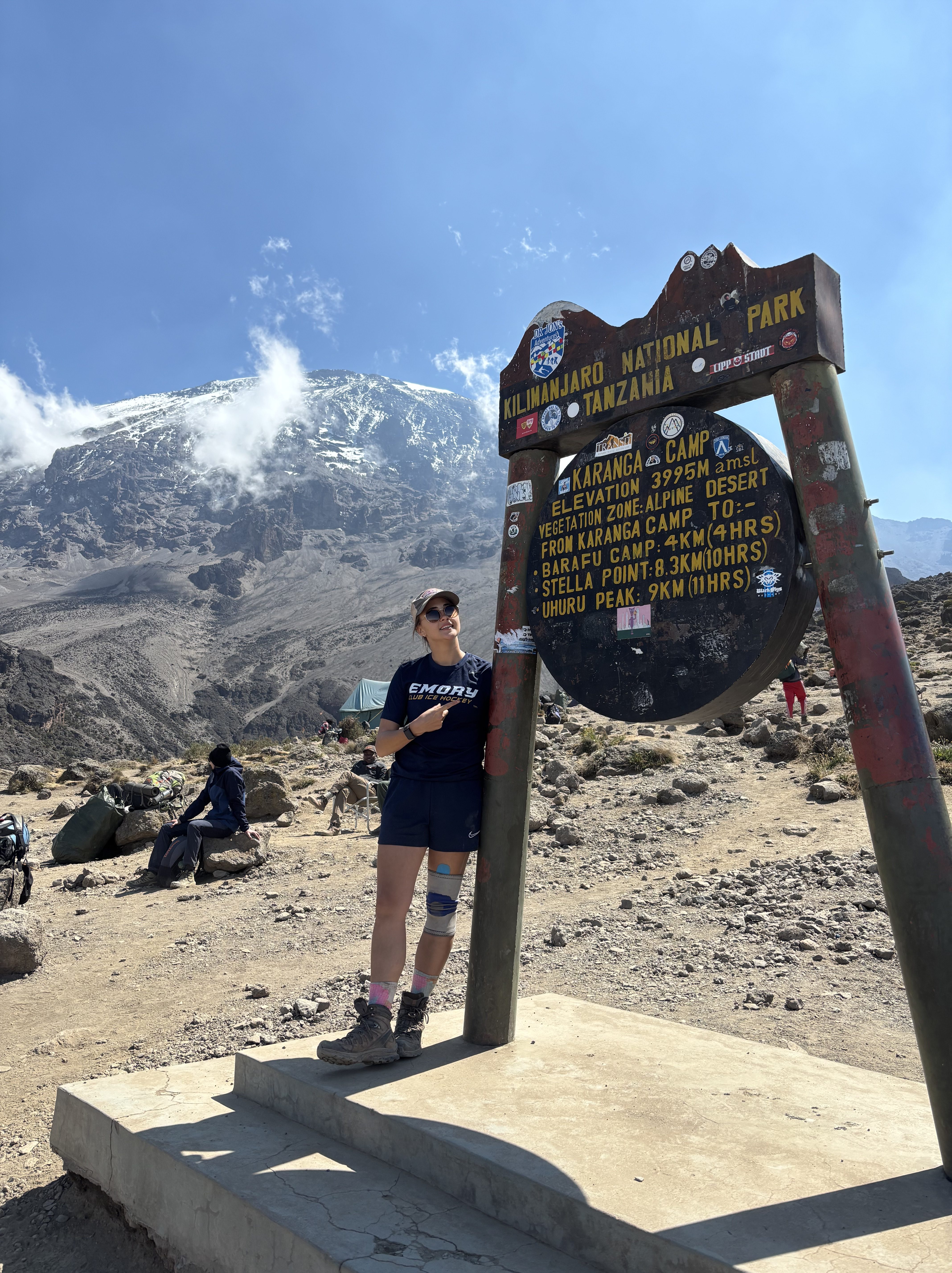
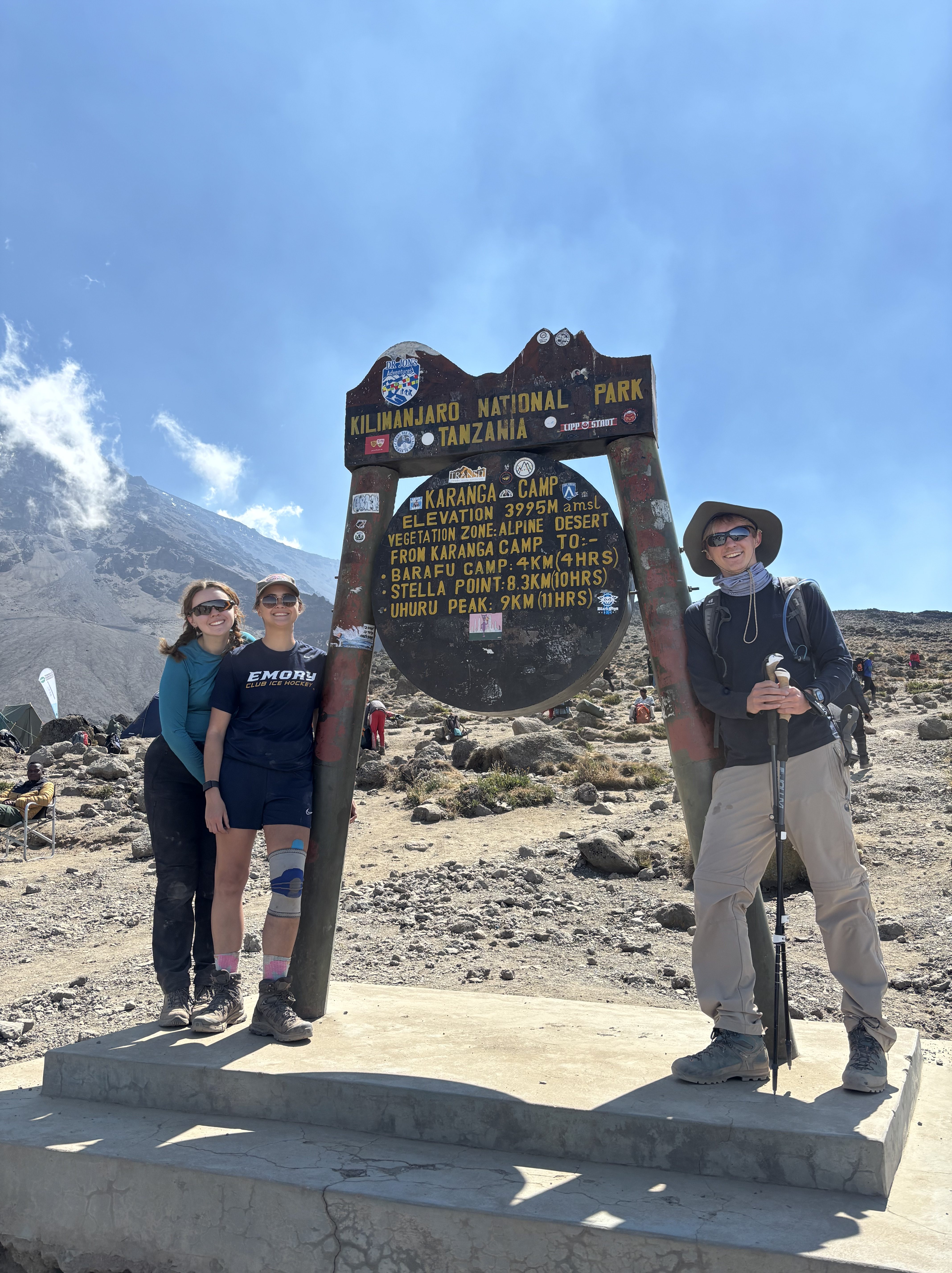
For those doing the 7-day treks, they spend the night at Karanga, but since we’re on a tight schedule we just stopped for lunch – chicken, rice, and soup (I think that day was a sweet corn soup – I really enjoyed it, to my surprise). We continued through a dusty, desolate landscape. Kili towered over us on our left side. The route pathed east and curved slightly north. Pole pole we trekked the barren landscape. Some of the route was flat, and for the parts that were uphill I was increasingly diligent in breathing because we were ascending up to 4600m.
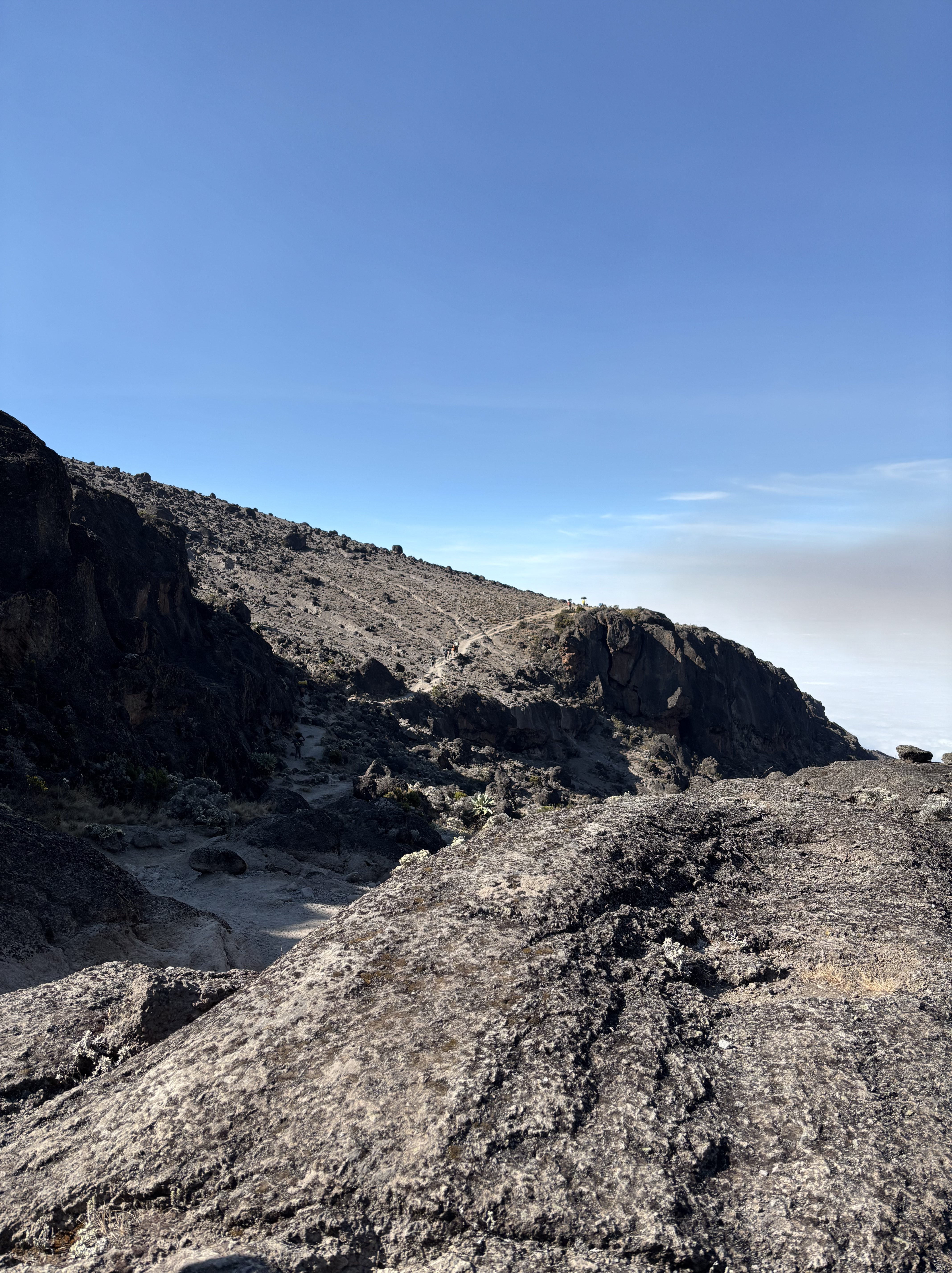
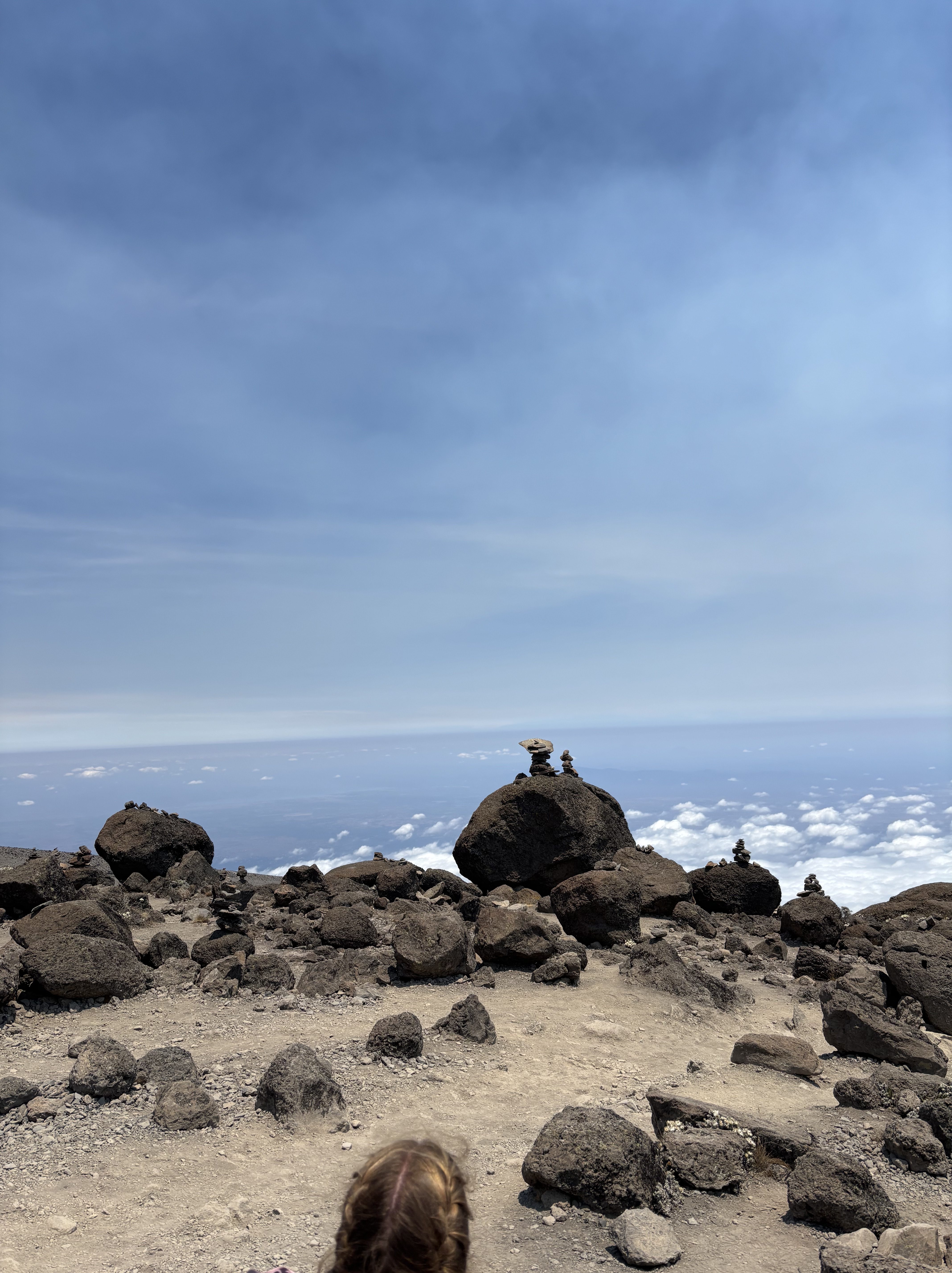
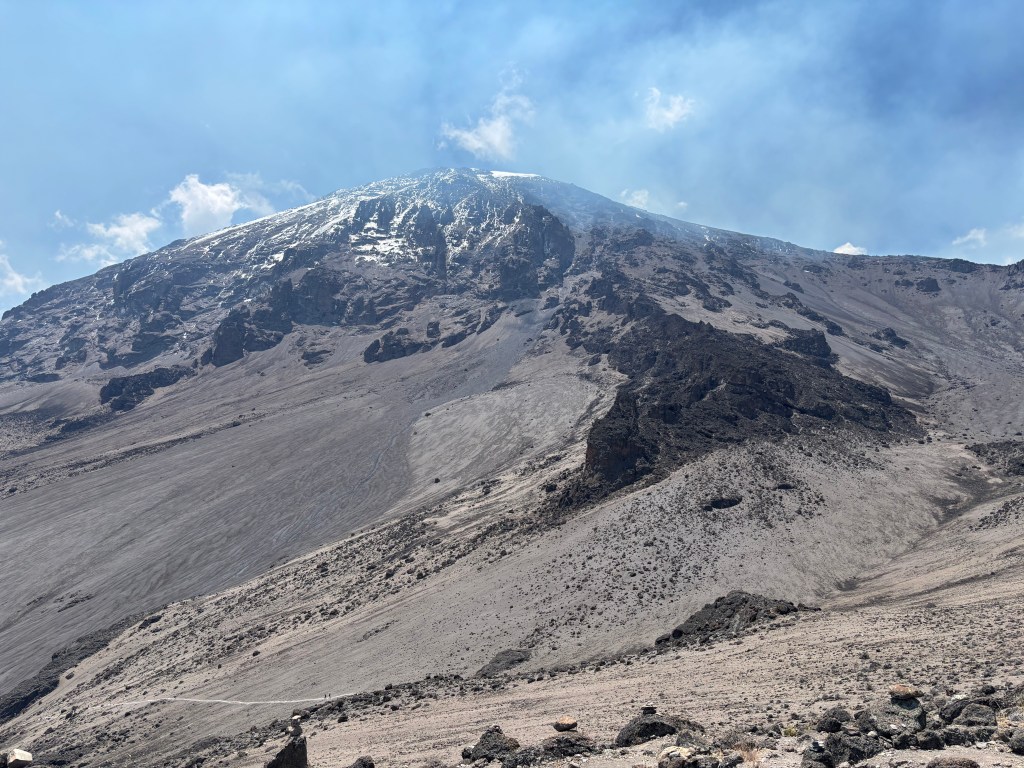
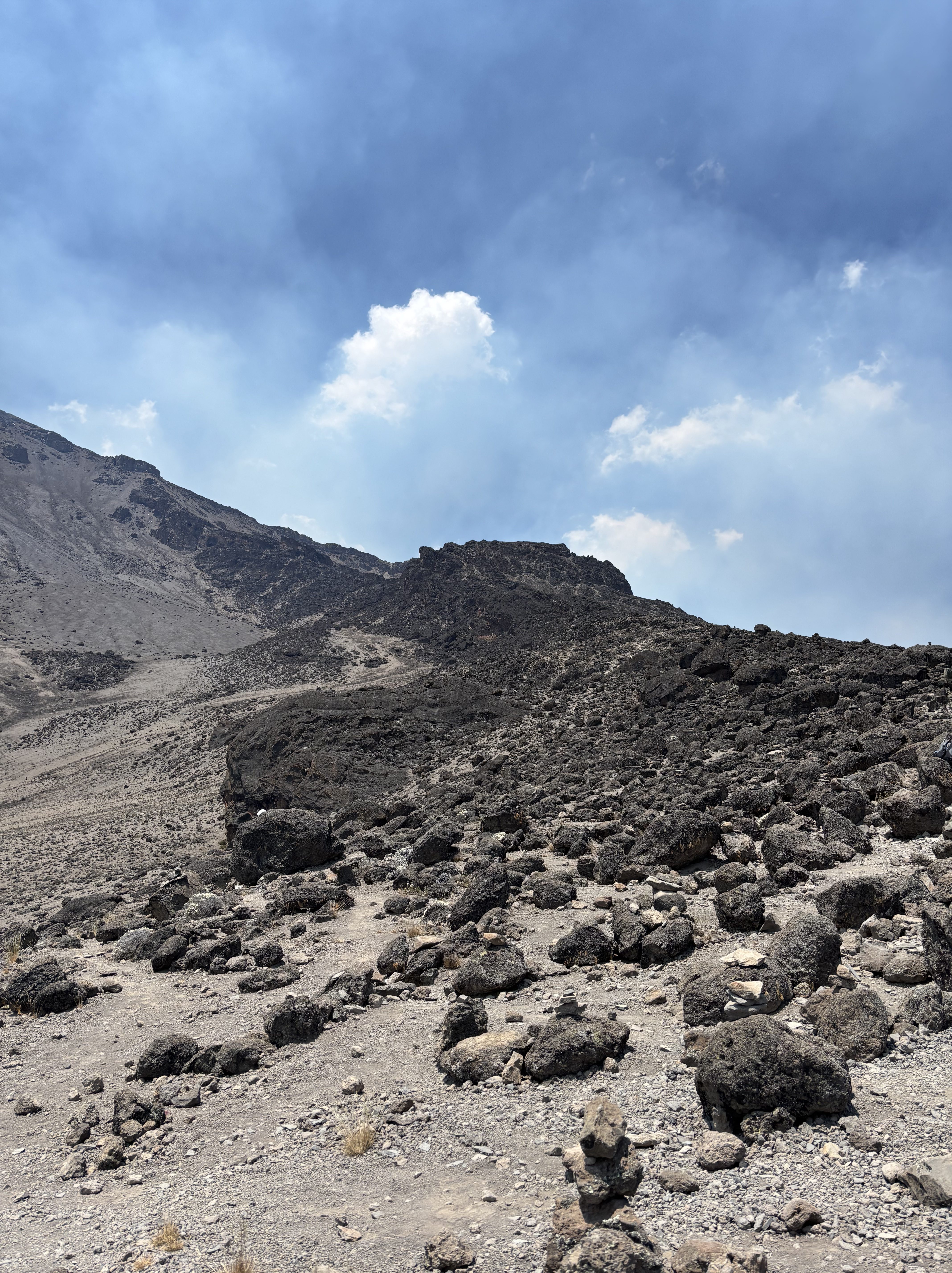
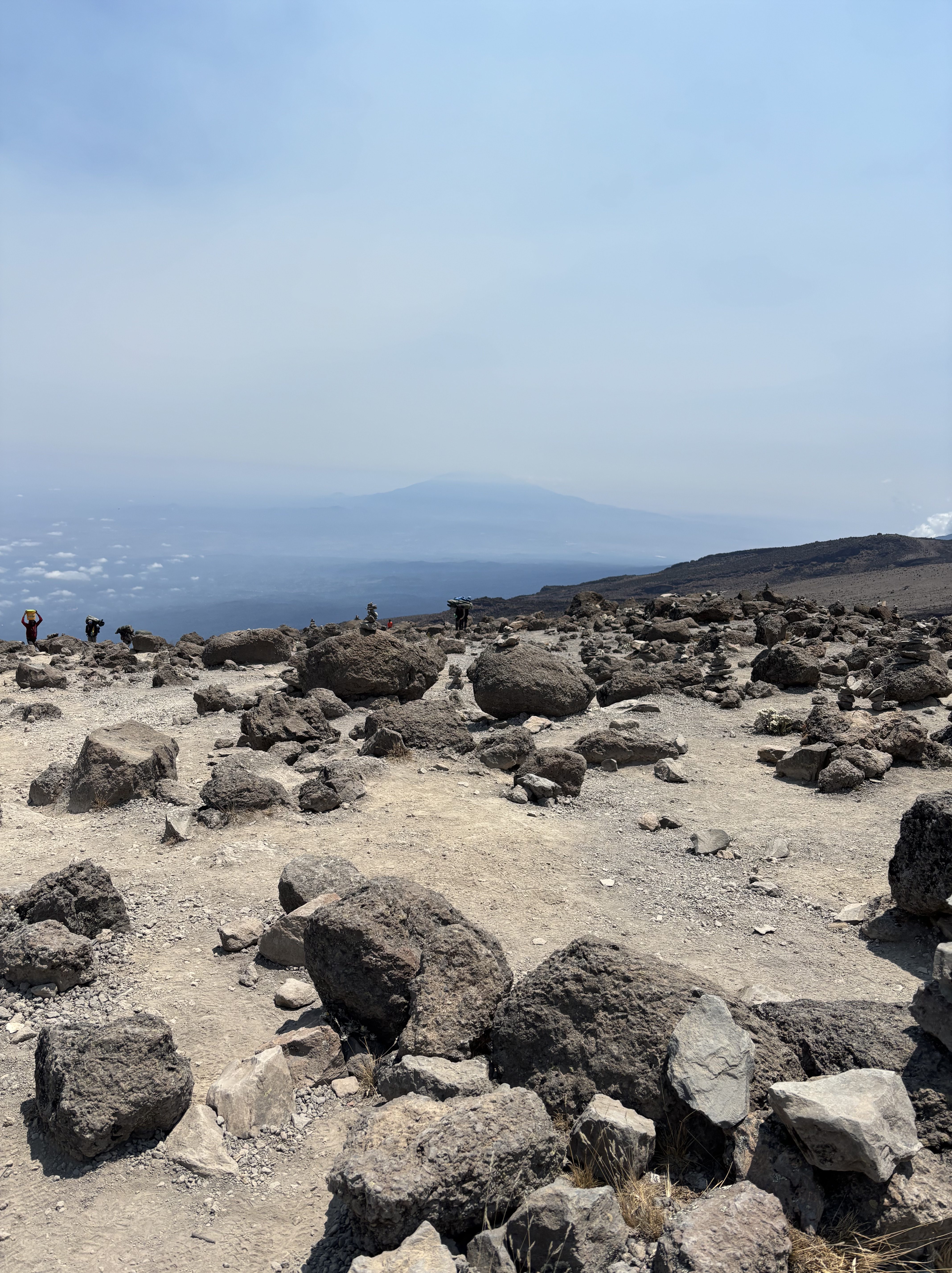
We had one last large hike uphill to get to Barafu camp. Huffing and puffing, we reached the top only to realize that the camps were quite spread out across the rocky, uneven terrain. So, we hiked another good thirty minutes to get to our site. I am thankful we did the extra 30 minutes and 50-100m of elevation on this day because it meant we didn’t have to climb it on summit night.
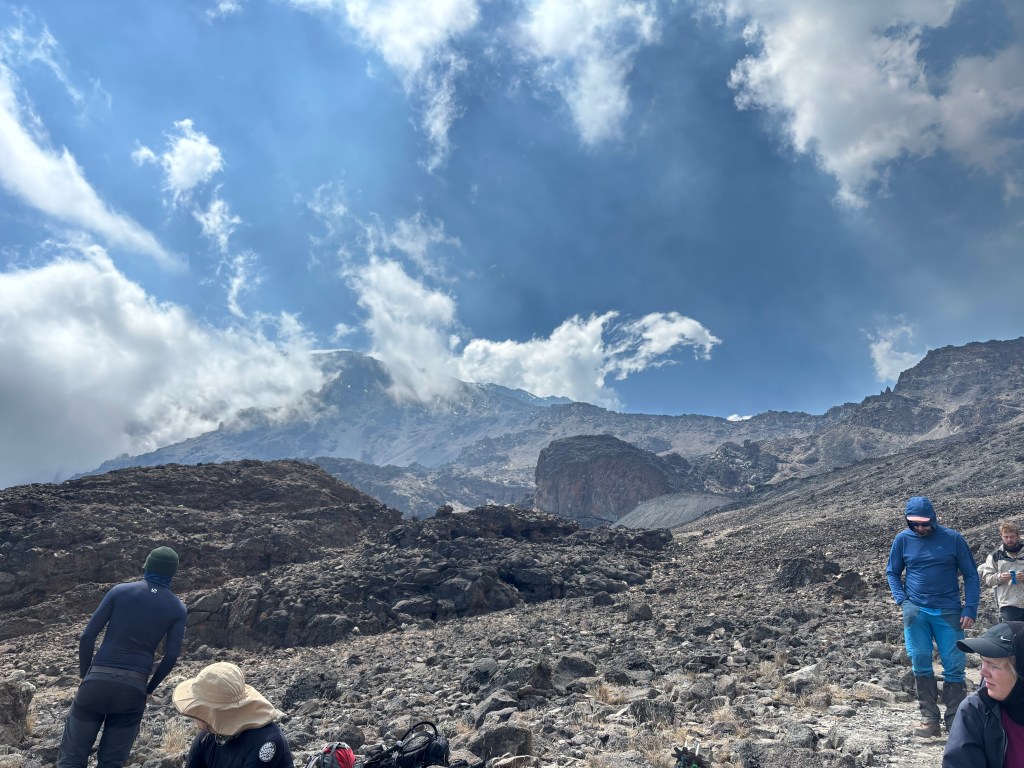
We arrived at camp with a short amount of time before dinner. At that point, I became programmed to prep for summit night. All the days before, I was focused on one day at a time, getting to the next meal etc. There was no need to psychologically prep for summit night because that would be expending energy I didn’t have at a time when it wasn’t necessary. If I had a tip for Kili, it’s taking it day by day. Focus on the landscapes around you, the camp you’re getting to. You can’t get caught up in thinking about the final destination without completing the many steps beforehand. And it would have tired me out to plan that far in advance or try to predict how gruelling that night would be. Another piece of advice related to the “take it one step at a time” is focusing on satiating your survival needs even in the preliminary days. Sure, day 1 was a good hike, but it wasn’t super taxing physically, mentally, or respiratorily (is that even a word?). Instead of riding out the moderate comfort, or should I say, lack of discomfort, I made sure to get into the routine of cleaning myself with baby wipes diligently to make sure my sleeping clothes stayed clean. I focused on drinking 4-6 liters of water even when it was hard, finishing my plate of food even when it felt tough. Although there are many things you cannot control on the mountain, you can control a lot of the physical preparation (in training beforehand or maintaining good habits while on the mountain).
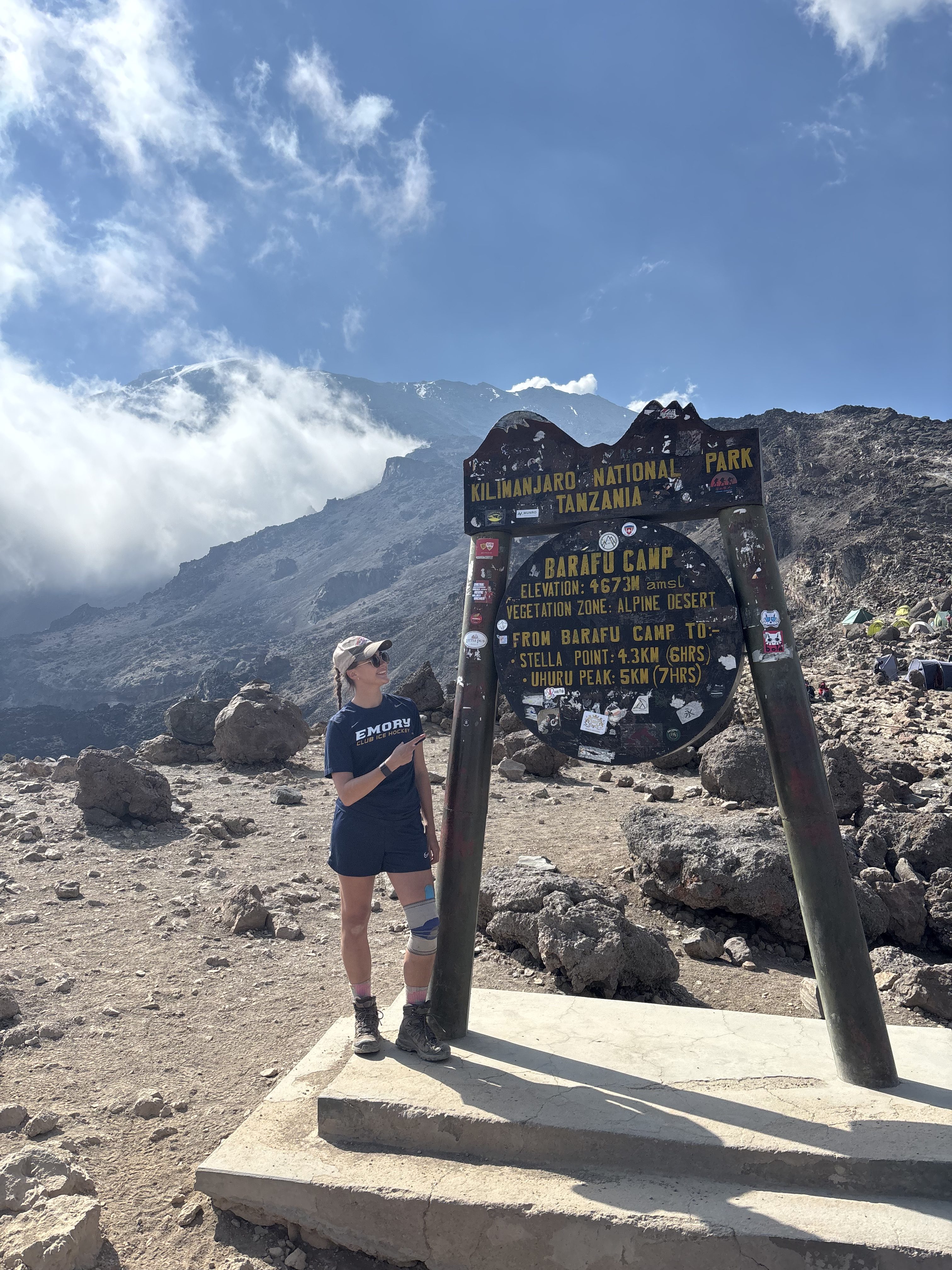
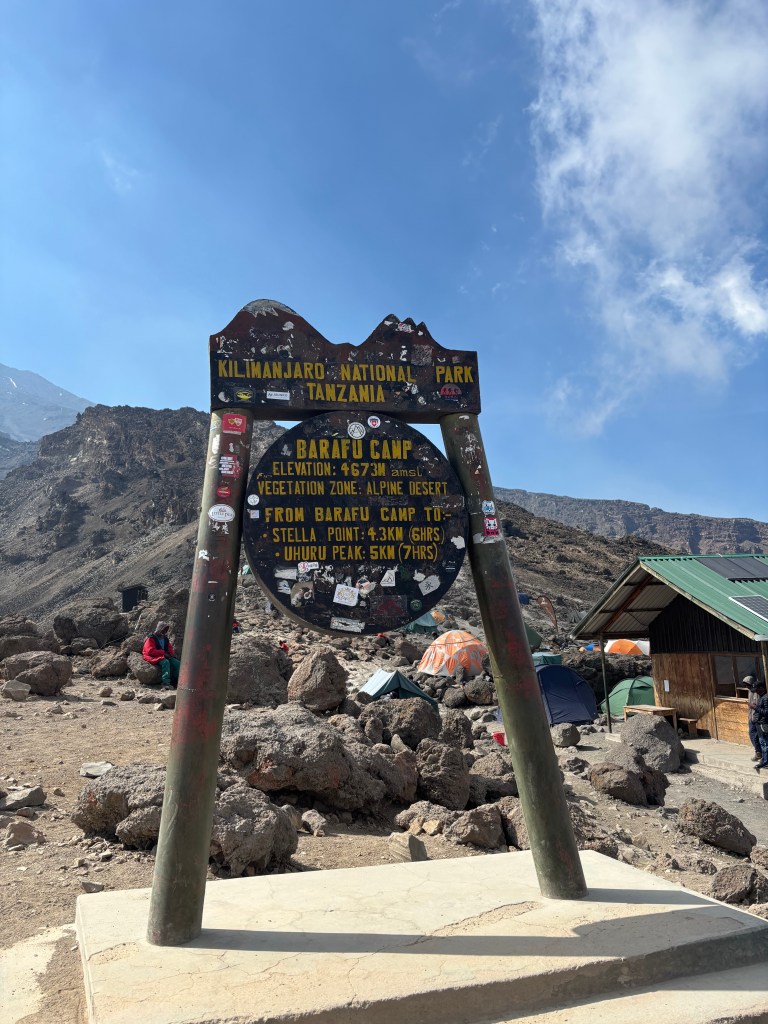
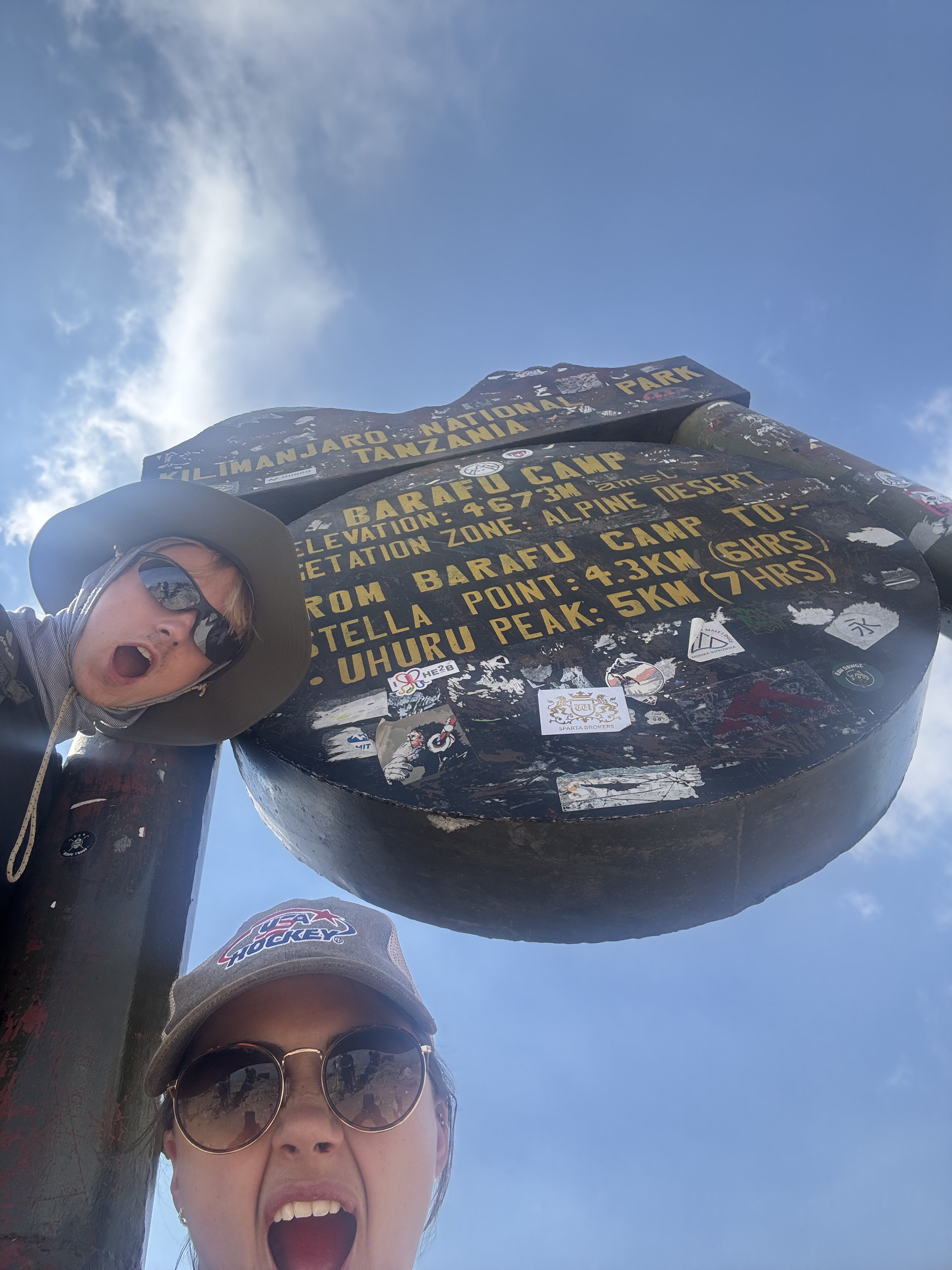
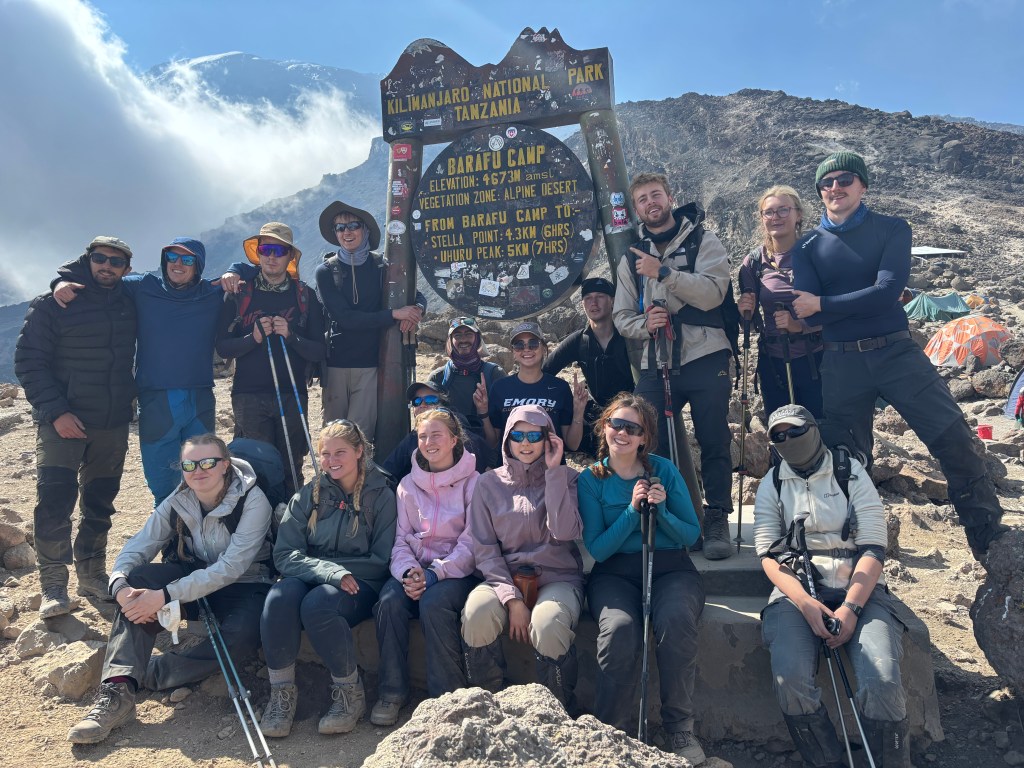
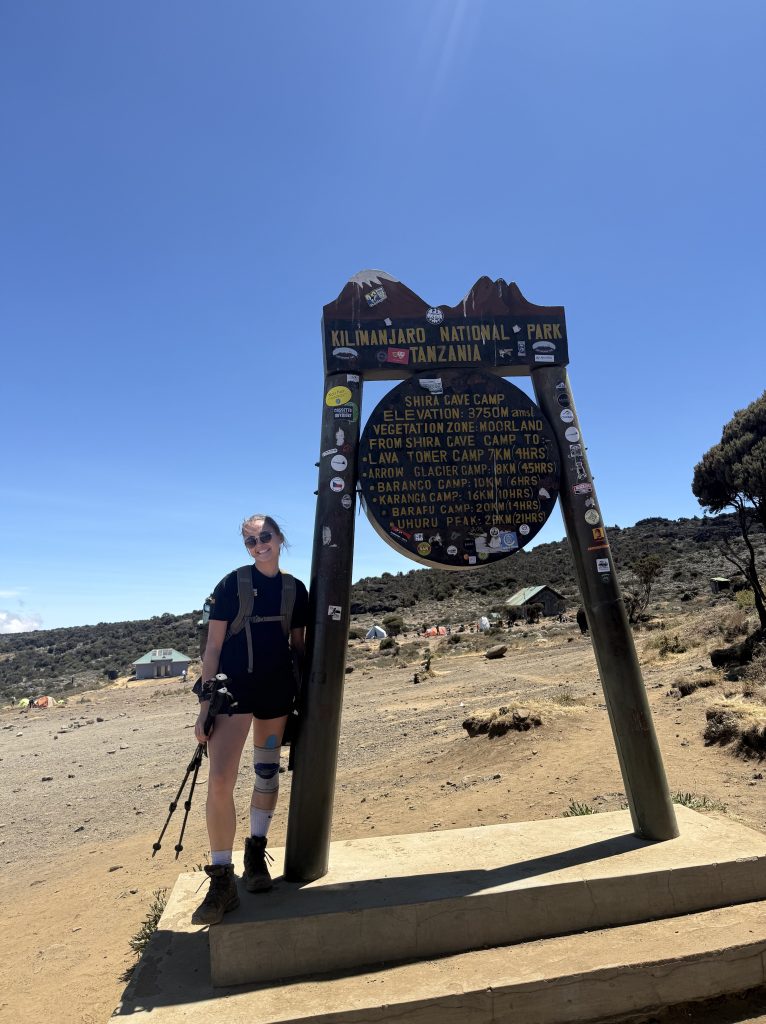
Back to Day 4 at Barafu camp (aka Base camp). The air was thin. Just scrambling up the rocks to get to the mess tent location (which the porters literally terraformed in a few hours) would leave me out of breath. I underestimated the thin air when we first arrived and took pictures at the sign. I lagged back to take pictures of Rob and the group got ahead of us. I began to walk quickly and added a few jogging paces, before I heard a guide say to me Pole Pole. I naively just wanted to catch up and didn’t feel out of breath, but now having experienced just walking and feeling out of breath up there, I understand why they don’t want climbers running around; it just increases your chance of falling or getting altitude sick.
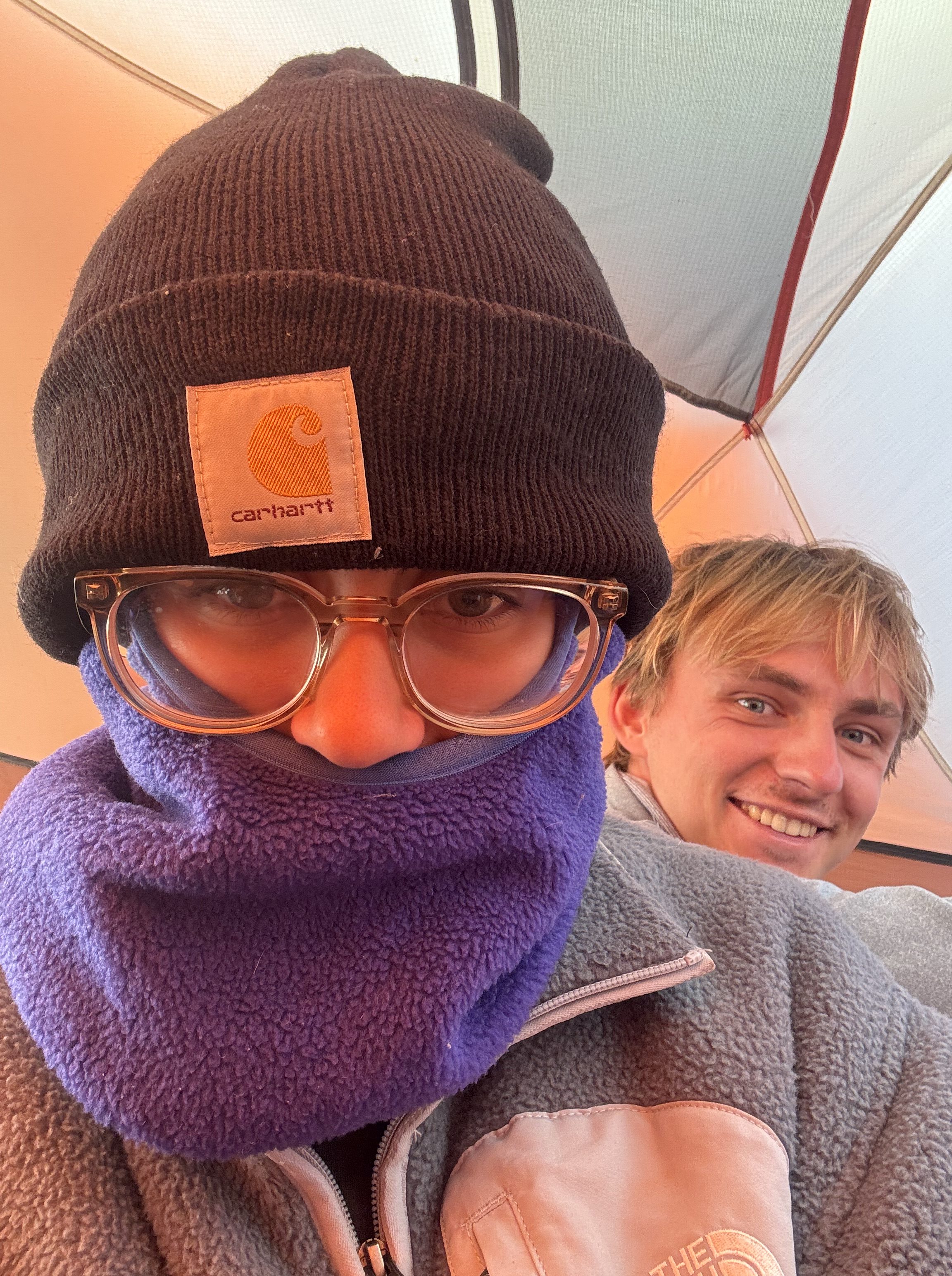
Once at our camp, I knew that the sun was setting rapidly and without daylight the nights get cold fast. I wanted to be bundled up, ready for bed, in my sleeping bag asap. I began separating the clothes I needed for the summit night: Moose’s red marmot jacket, Nana’s purple balaclava, glove liners plus thick mittens, black Carhart hat, long underwear, favorite snacks, three liters of water. Sidenote on the water front – it amazed me how many people, despite being explicitly told by Godwin, Nashto, or Joshua to fill up the night before or when you had time, would wait until the last minute or the morning or in the freezing night. I seldom went to the water station when other people were around.
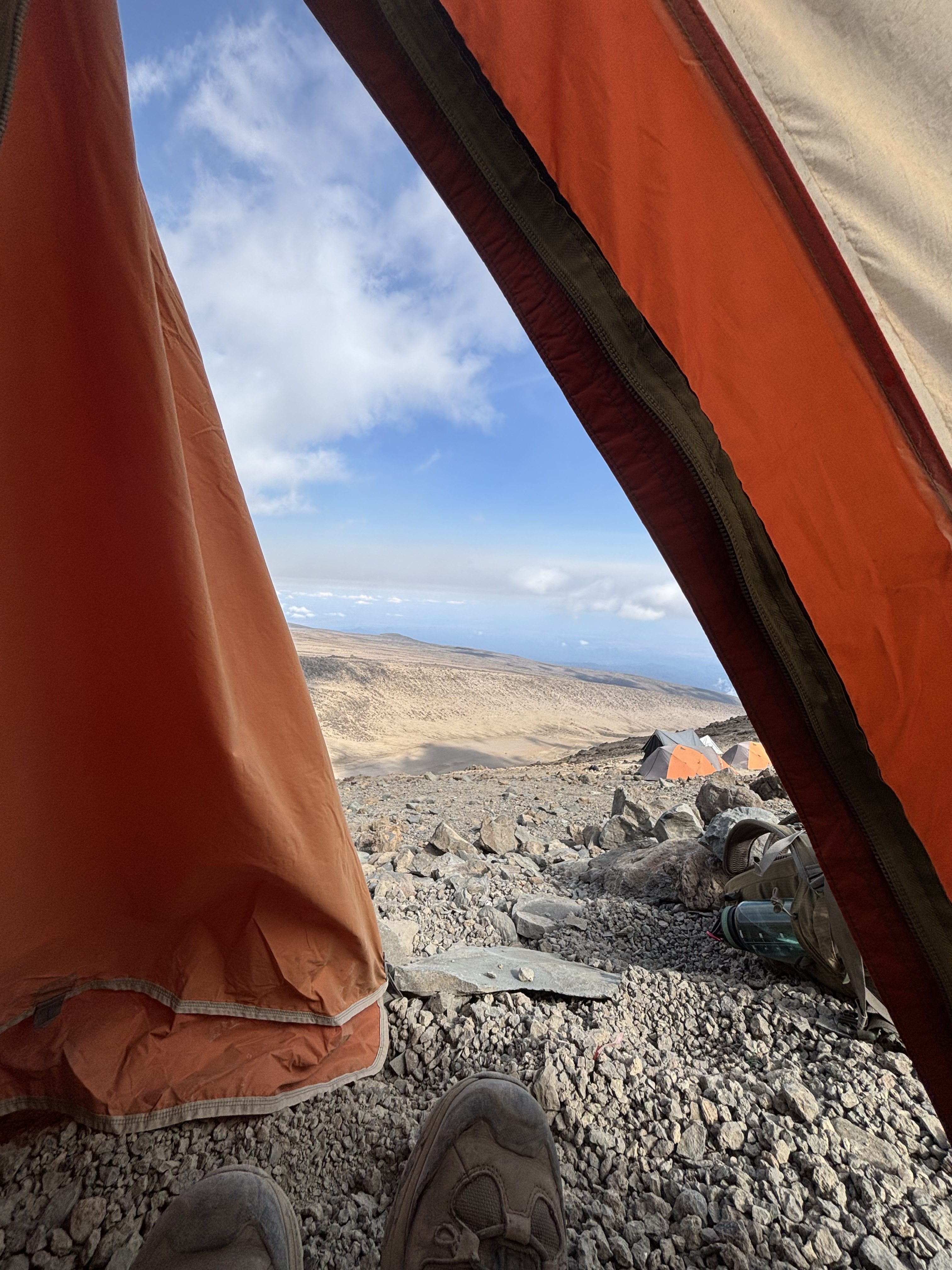
Day 4 and 5 – Summit Night
We enjoyed the last supper before summit night, and received our briefing: 11:00pm wake up, 11:20 tea, popcorn, snacks, water, 11:40 departure. I scrapped up enough batteries in case my head torch died (I had issues with it randomly turning on due to collision with other items in my bag even when I placed it on the outside). Because I knew that I wanted to do as little as possible when we were awoken, I slept in the shorts, tshirt, socks, and long underwear that I was going to wear that night. Lukas and I slept for about 2.5 hours before the wakeup call. We laughed and reminded ourselves that this was a completely voluntary thing we decided to put ourselves through. We groggily made it to snack time. Nashto wanted the girls in the front of the line, so I helped him shepard the girls up front. While waiting for the stragglers, I admired the night sky. You could see the Milky Way clearly and the stars were so vibrant. I attempted to take one photo, which obviously doesn’t do it justice. Also my hands got so cold outside the gloves, so there were few good photo opportunities.
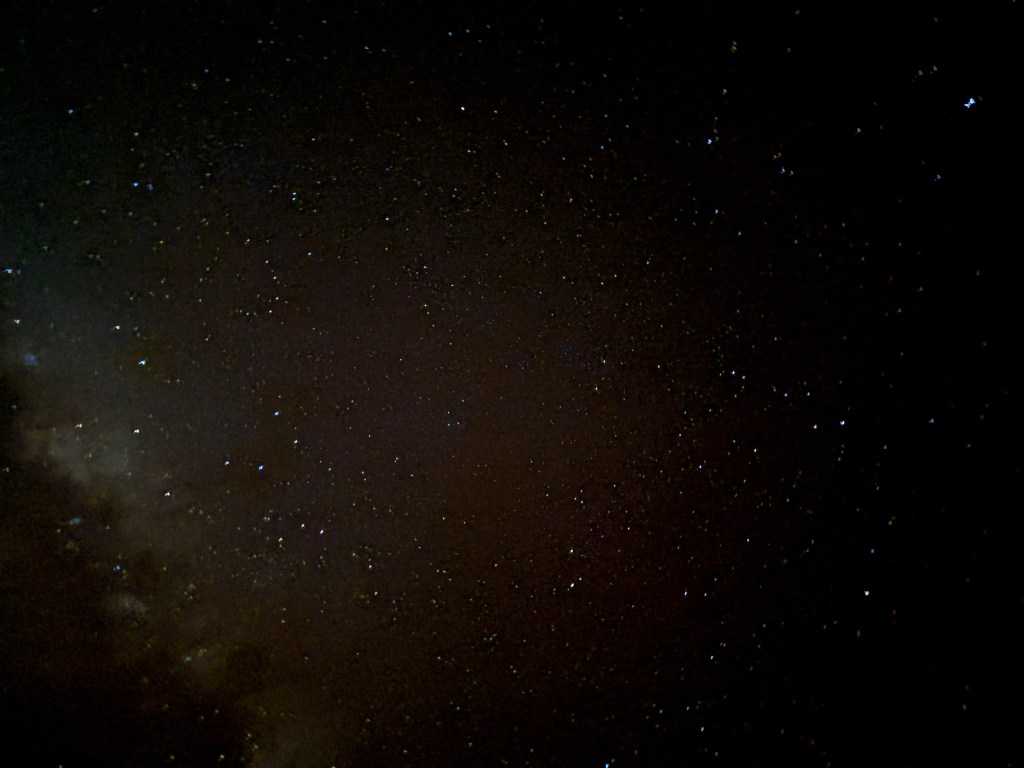
Around midnight we began the trek upwards. We could see the trail of headlamps in front of us like a constellation pattern. I felt genuine awe when looking at these flickers of light. You couldn’t see the humans and the porters and the guides, but you could feel this collective effervescence in what we were about to attempt. Excitement grew in my bones, I could not believe we had arrived to attempt what we had been working towards – all the hard work, from fundraising, to visa filing, to hiking, etc. Nashto elected me line leader, a position I deeply valued because it meant not dealing with slow hikers, lack of pace/rhythm, and also getting his insight and encouragement. From 12:00amish to 6:50am we hiked upwards. The first part of the ascent was mostly bouldering and weaving. It was really tough to determine where land was/wasn’t. Only occasionally could I see or detect huge rocks to our right or left because of shadows of their looming presence. We really went up there blind. Our guide team included enough people for a 1:1 climber/porter ratio. While all of us huffed and puffed in our thick winter gear and packs, the porters (some in sneakers or even crocs) danced, sang, and hopped spryly up the mountain. A guide from another group periodically yelled “yee-haw” which was oddly comforting and motivating. Lots of chanting and singing – I joined in when I had the breath to. Every 60-90 minutes we got, I kid you not, a 3 minute break. Because you were freezing, out of breath, and physically exhausted, this meant you could either drink, eat, put on another layer, or use the restroom. Not more than one. Just putting the pack on and off was a lot of work. Every break concluded with Nashto yelling my name to get the line started up again. The guides were very attentive and if they saw people struggling, at the breaks, they would do a medical triage to assess their status. Head torches shone in peoples faces to see if they were discolored or if their eyes showed signs of altitude sickness. We lost 3 group members along the trek up due to being unfit to continue.
I brought headphones to listen to music on the way up, but I was too exhausted to dig out the headphones from my pockets and I needed to eat and drink to sustain myself during the brief breaks. Also, I had to focus so hard on breathing that there was literally no more brain capacity to dedicate to listening or thinking or anything else. One foot in front of the other. I kept morale up by tracking the moon. When it first popped over the horizon into the sky it was a beautiful orange upside down crescent. I told myself that it would keep rising, and eventually the sun would follow. When the sun came out, I knew we would be getting close, but for the time being, I had to bear the discomfort of the cold air and darkness.
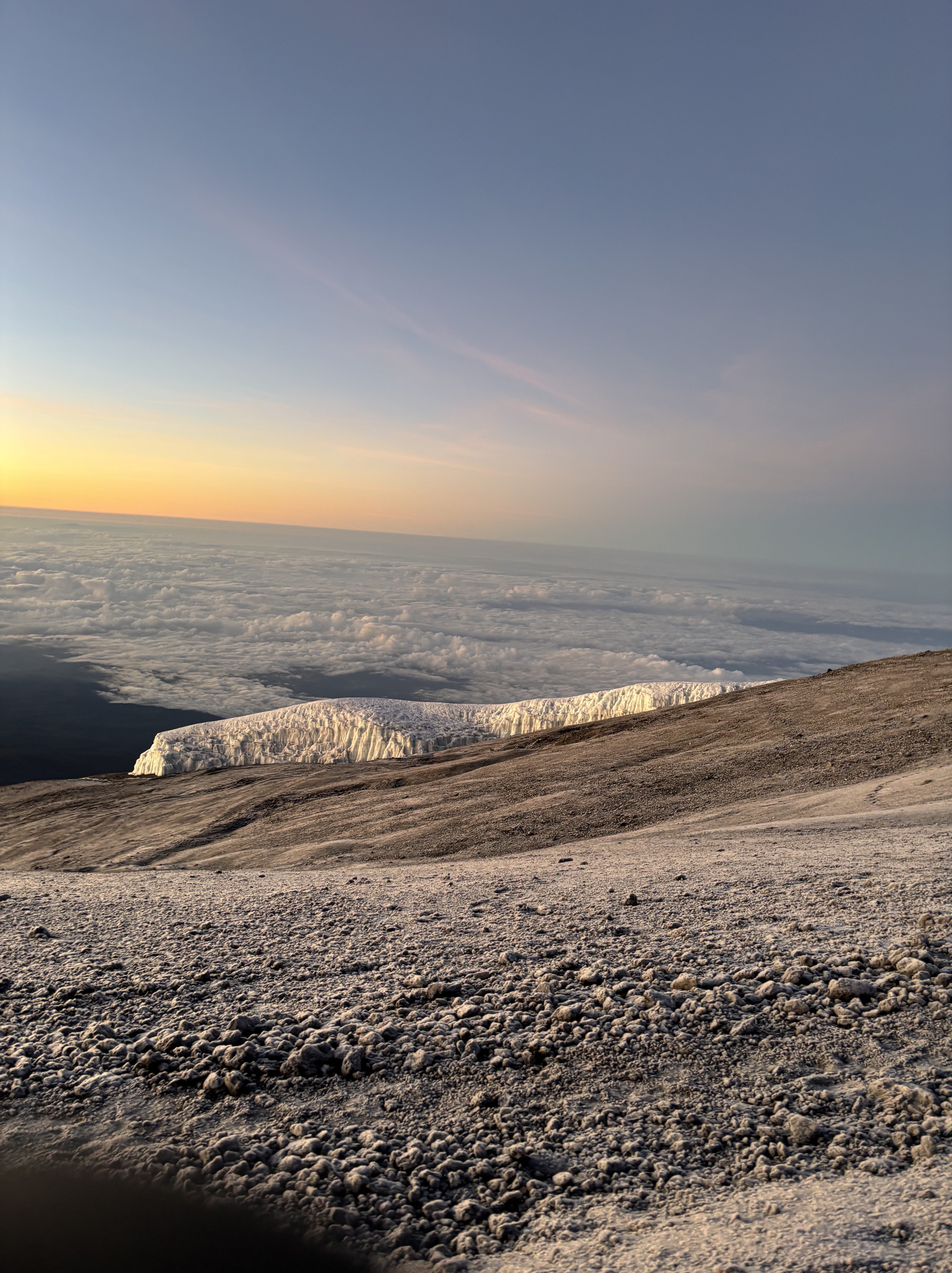
The guides gaslit us about our first major landmark, Stella Point ( 5,756 meters (18,885 feet)), saying it was 15 or 8 minutes away, when we ended up having about 30 min. I’m not complaining, it helped psychologically to keep pushing through. We made it to Stella Point as the sun was rising – how magical. No time to stop for photos, we had to continue up for the last 0.7kms to Uhuru. After Stella Point is the “uninhabitable zone.” Boy, it felt and looked like that. We could see the volcanic ash, the ground was dark or covered by ice or glaciers, and even walking on a gentler uphill grade proved hard to breathe. I tried to mentally calculate the distance to the summit by tracking how many groups descended past us.
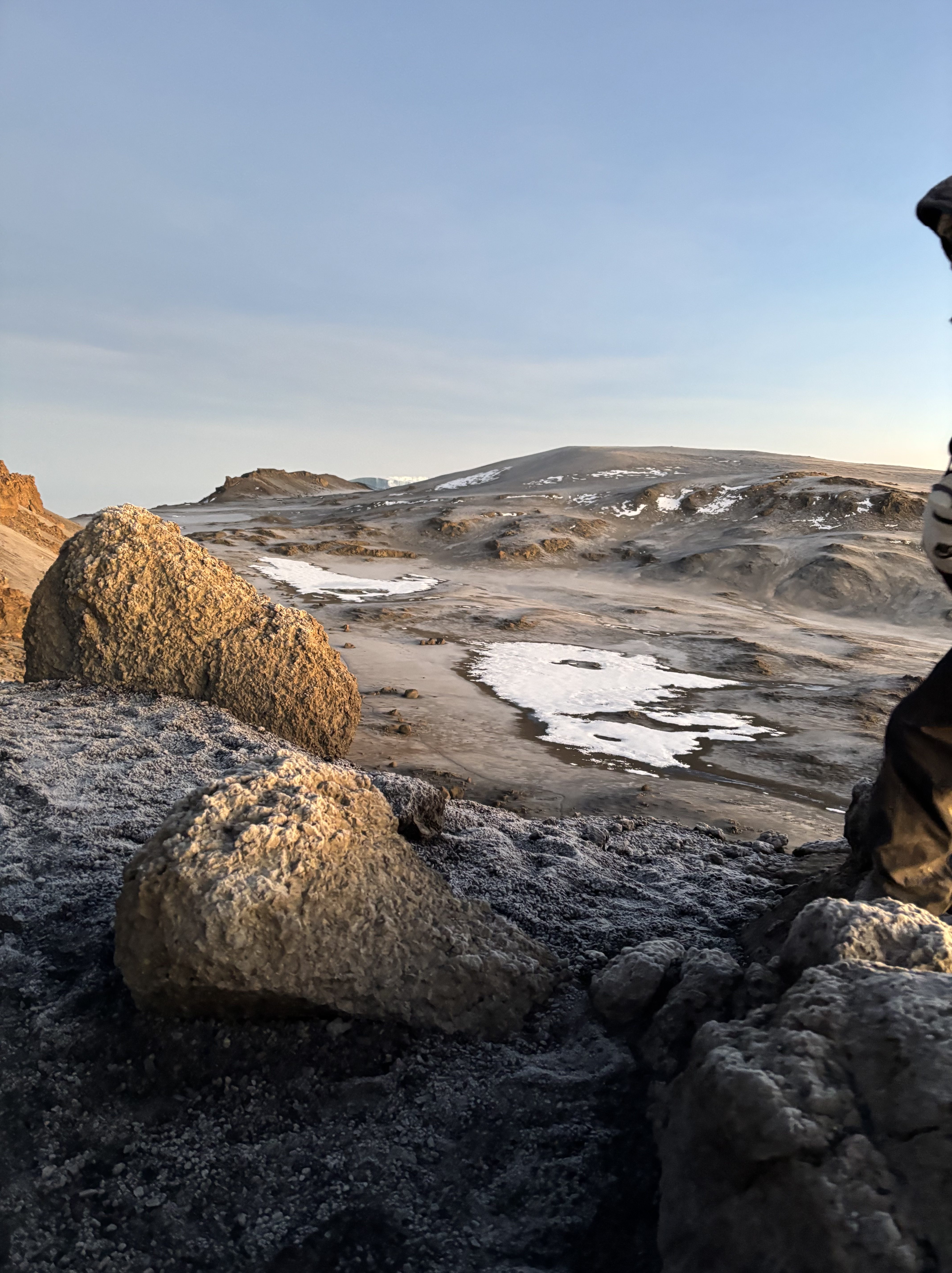
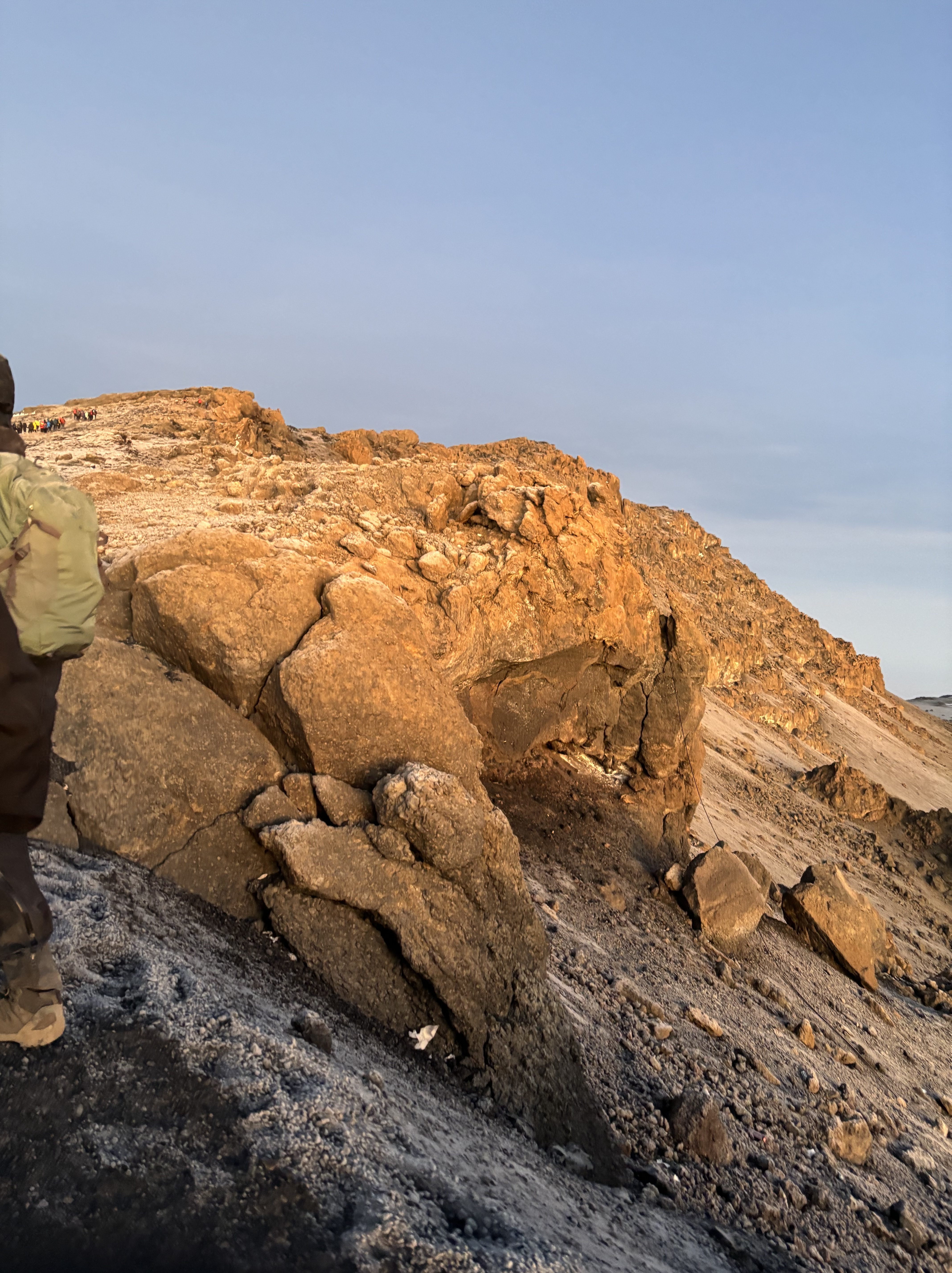
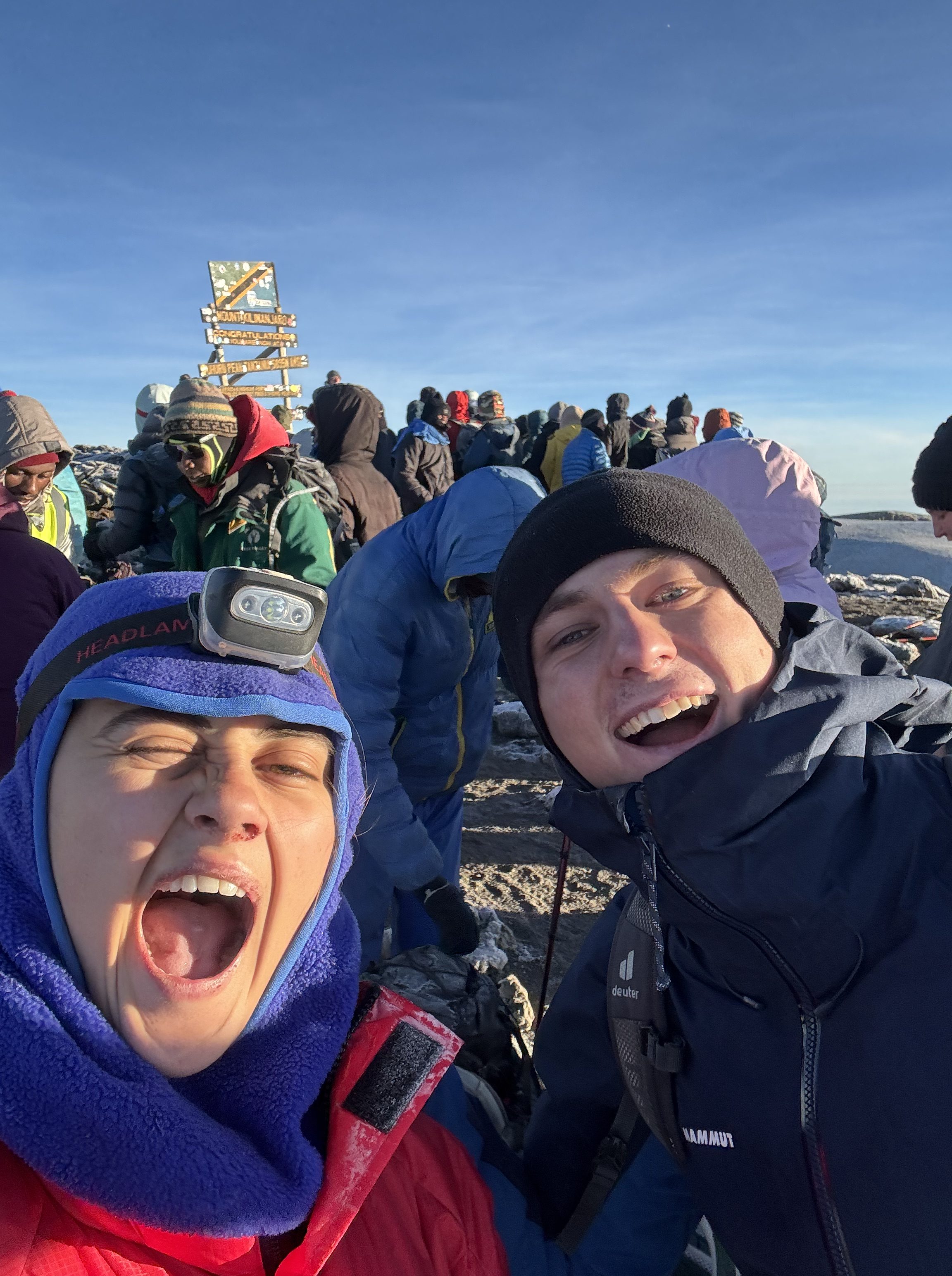
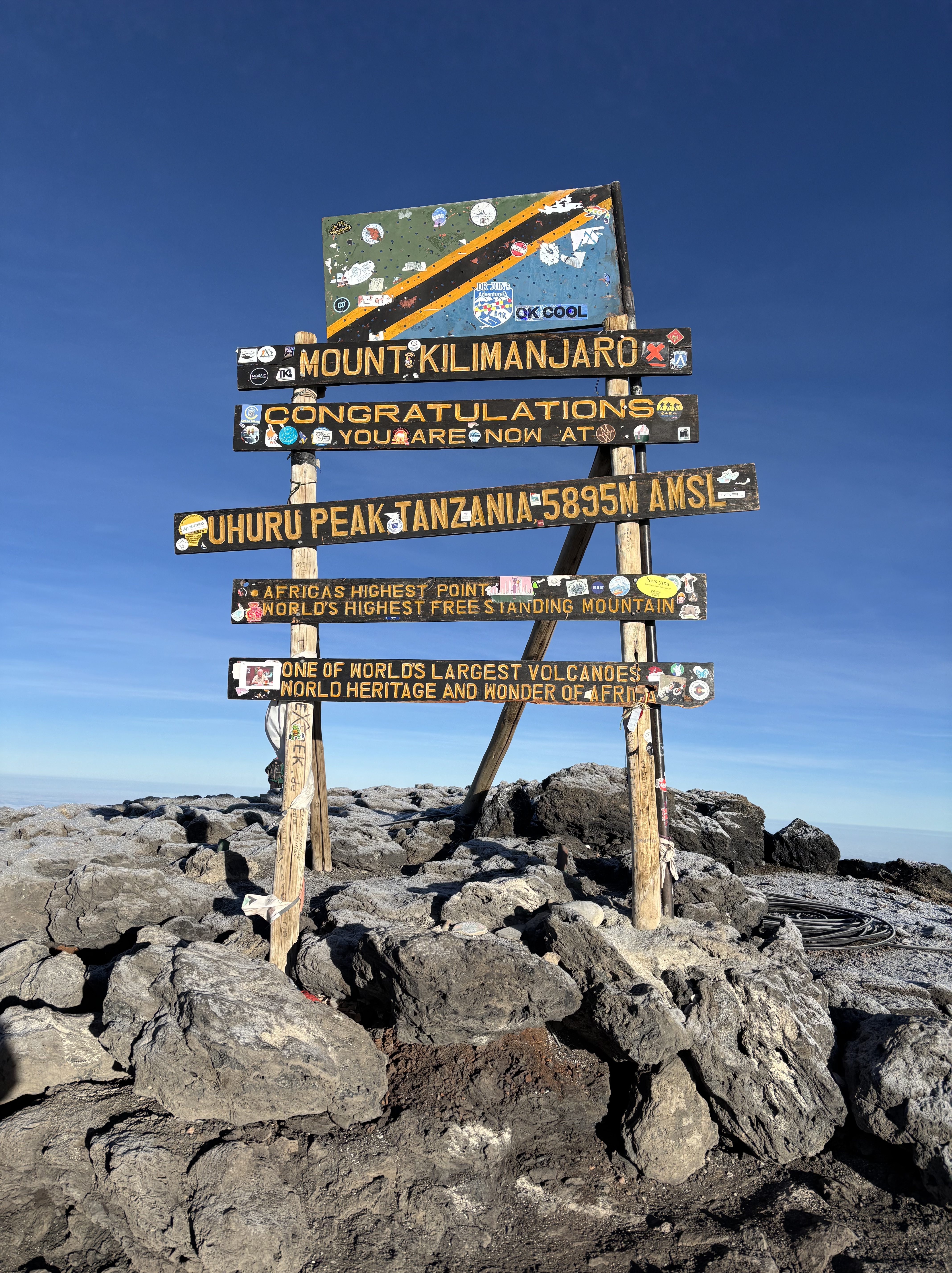
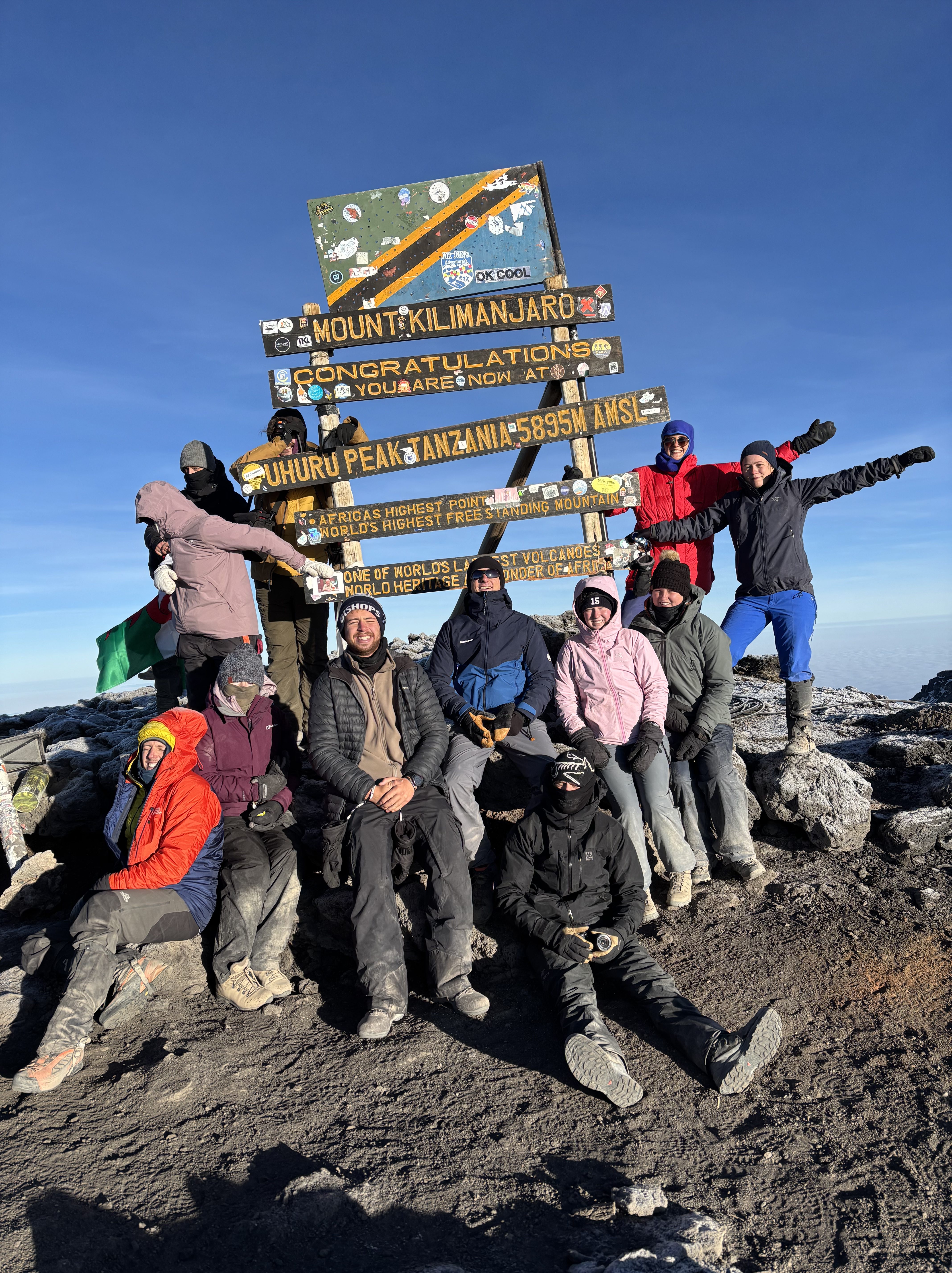
Slowly but surely we rounded to the top and there stood the Uhuru Peak Summit Sign. At this point, I already felt compelled to cry twice, simply from overwhelming emotions of pride, awe, amazement, incredulity, exhaustion.. I felt relief and exhilaration and triumph seeing that sign. Many of us hugged and high fived and fist pumped etc at the top. Lukas and I took a selfie and you can see the crustiness of my nose from the frozen snot and blood from breathing and the altitude. The guides hurriedly got us in line for quick flicks because time was of the essence. Victoria and I did a little video celebration, emphasis on little, maybe a couple seconds. Group photo done, some solo pics, done. Lots of shouting to get everyone organized and off the top as soon as possible. My head was pounding from the lack of oxygen and I can’t imagine what others were going through (I was later informed that the majority of people were literally hallucinating things).
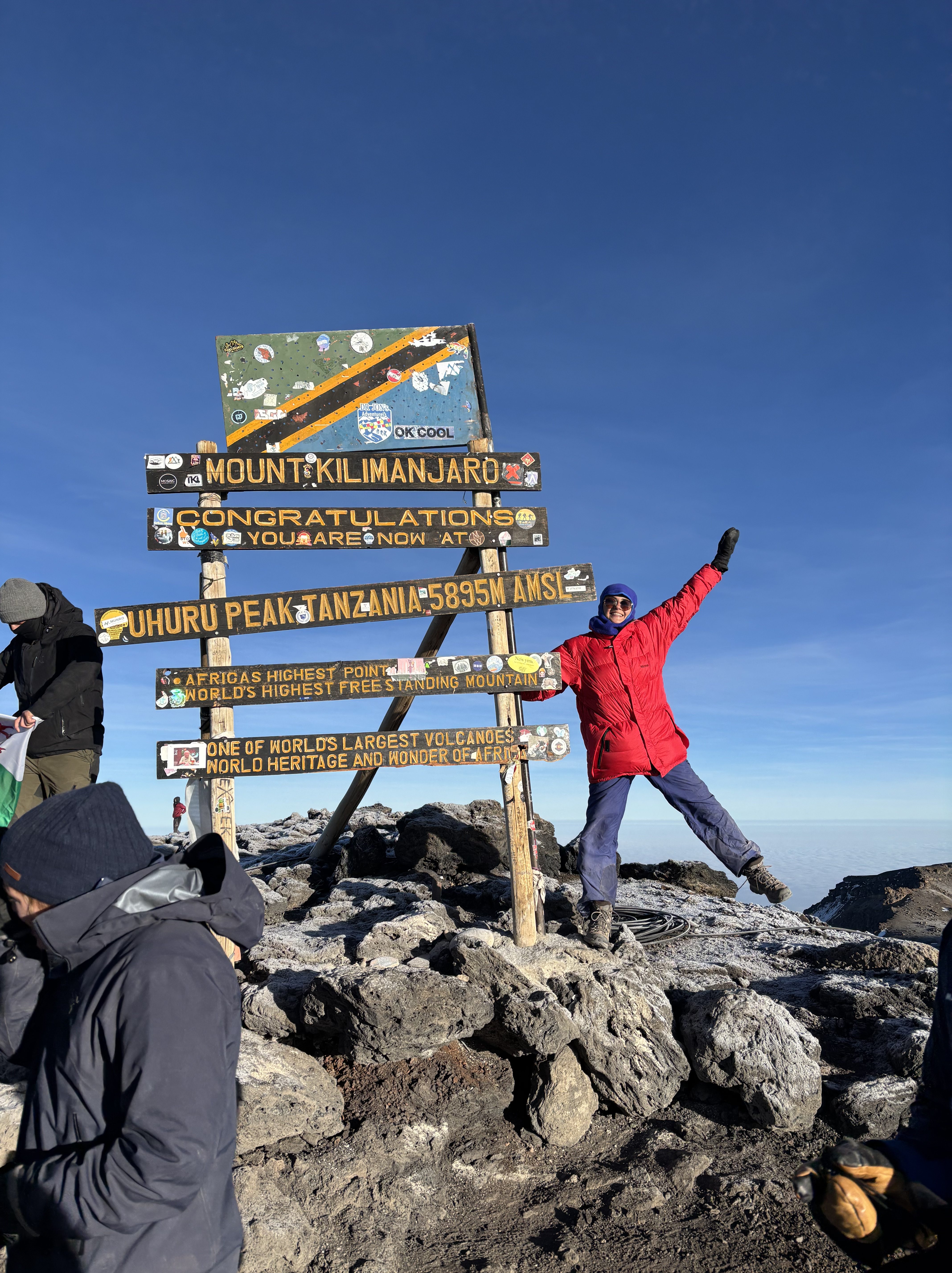
Still trying to breathe and maintain a quicker descent pace, we hiked down the mountain. It was wild to see all that we had climbed up in the daylight for the first time. The first descent bit was technical and rocky so the hiking poles were essential. Eventually, we naturally paired off with a porter or two each. Some people were hooked up to oxygen backpacks; others were in and out of consciousness and had to be physically helped down the mountain, usually one or two porters on each side.
Luckily, my spirits were high, headache subsided, and I was so eager to get off the mountain and to base camp. The King of the Jungle and I led the way. For the first time, I relinquished my day pack to the porter, just like everyone else in the group had done earlier, and we began flying down the mountain. They call it sand skiing, basically gliding and running down the shale and sand and stones gaining momentum and descending rapidly. This part was the toughest on the leg muscles because of the pace and because I was so focused on my footing as to not wipe out and painfully tumble down.
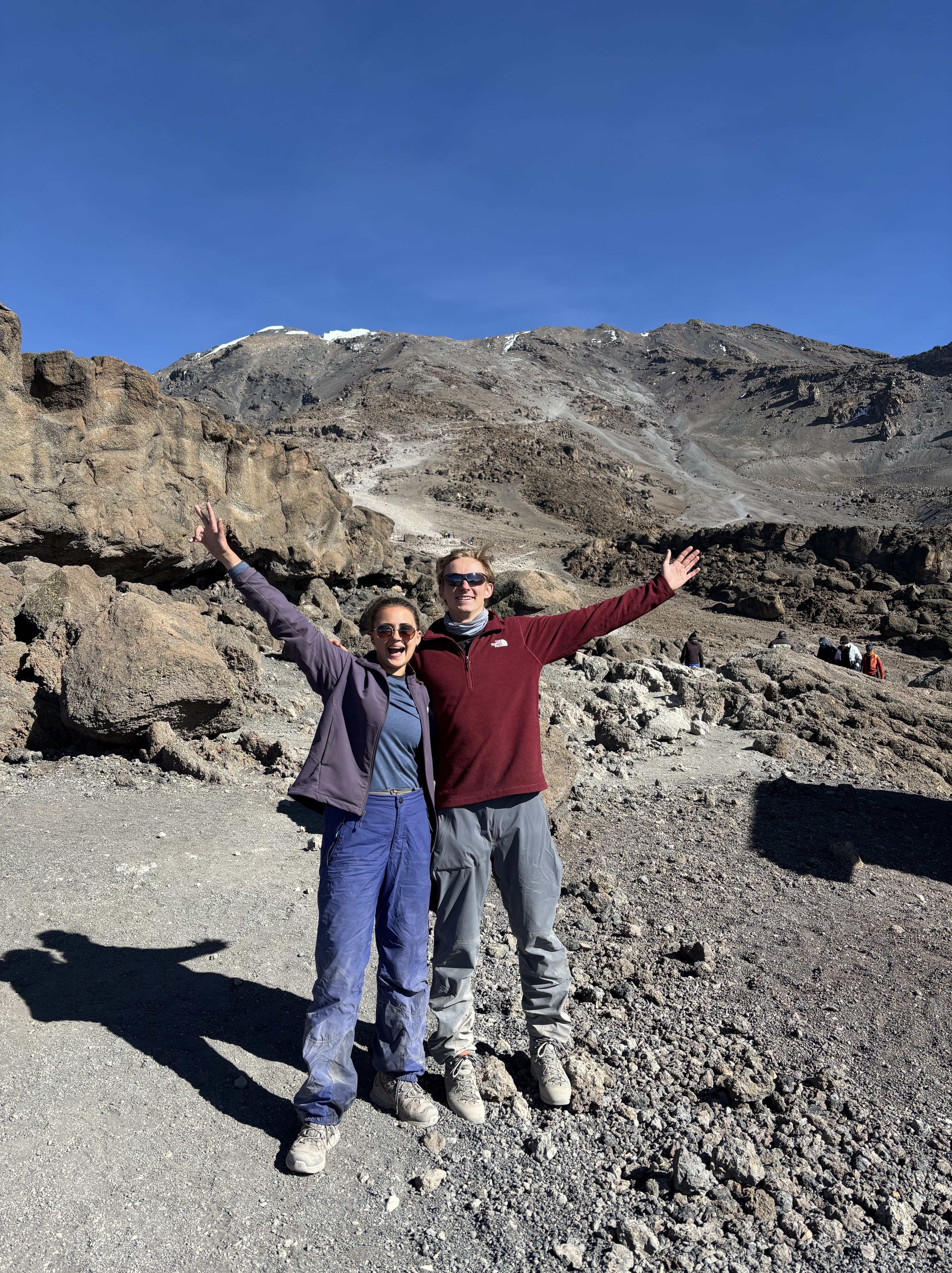
We got to a sandy road/trail thing just above the Upper Camp – Camp Kosovo (you can pay extra $300 to stay at the higher camp to cut off some of the summit night elevation). Located there, which we couldn’t see when we first ascended was a helipad, where we watched some people get lifted off the mountain. Other porters from our group met us with juice?! How crazy?! King of the Jungle, another porter, and I continued our swift descent. I was the first person back to base camp and King of the Jungle exclaimed “Queen Liz, we need to take a photo!” I happily obliged.
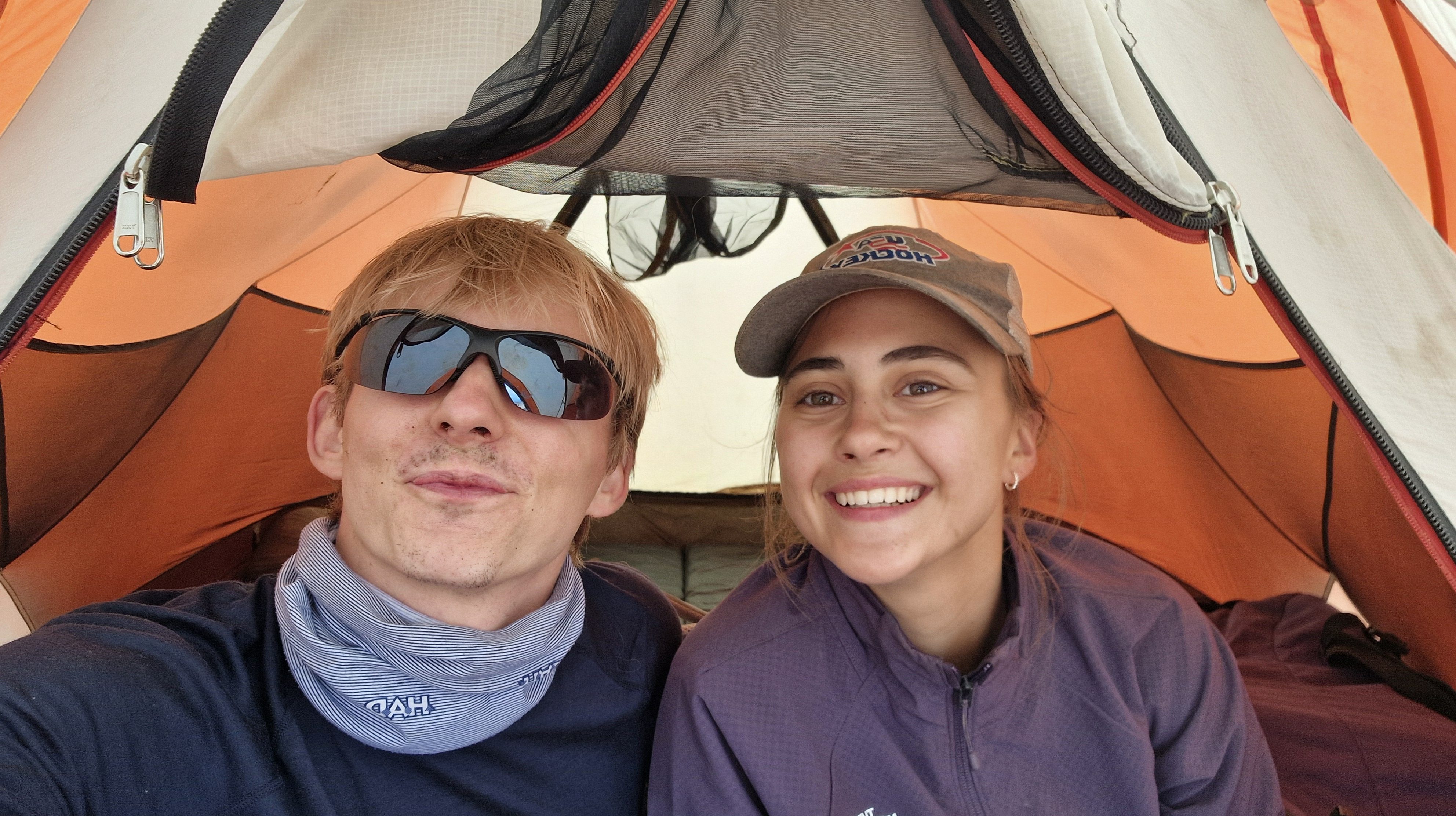
Others arrived at the camp 10 minutes later and trickled in for the next 20-30 min. Lukas, Bryce, and I chatted while Victoria slept in the tent during part of the 45 minutes we had to pack up our camp. Sitting in the “vestibule” of the tent, we were kind of in disbelief that we had summited and gotten back down the mountain by like 10am-ish. Amazing that by that time in the morning we had already reached Africa’s highest point… such a time warp… Lukas and I vlogged for way too long (good content though) – which meant we had to pack quite rapidly. At lunch, people were delusional, joyous, exhausted, all over the place, describing their hallucinations, stories, disbeliefs, trials and tribulations. Reluctantly, after lunch, we got back on the trail for two hours to descend further. Again, it was key to get out of the high altitude because of how sick we could get.
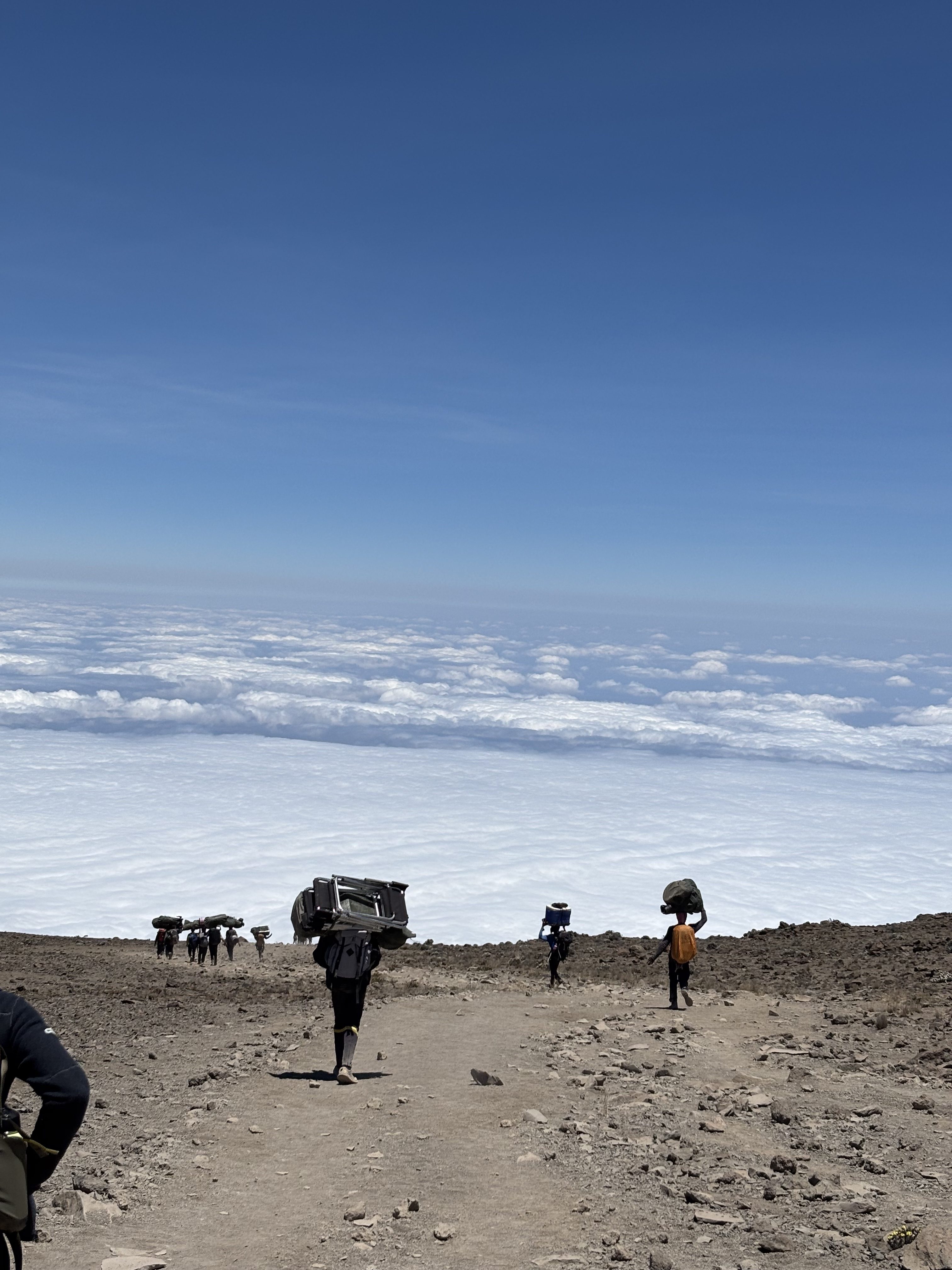
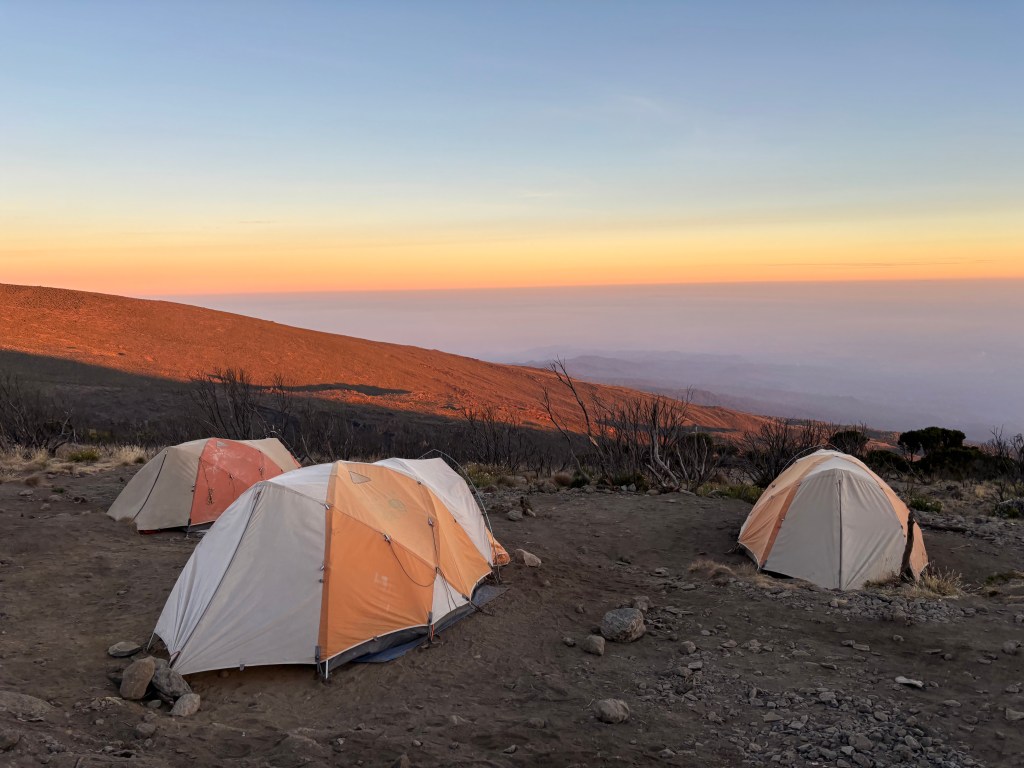
At last, we made it to High Camp – during the summit ascent, the head guides make slight alterations to our original itinerary. Originally, we were supposed to descend all the way to Mweka Camp, but seeing how we were faring physically, they altered our route to have camp at the High Camp, about 3km before Mweka.
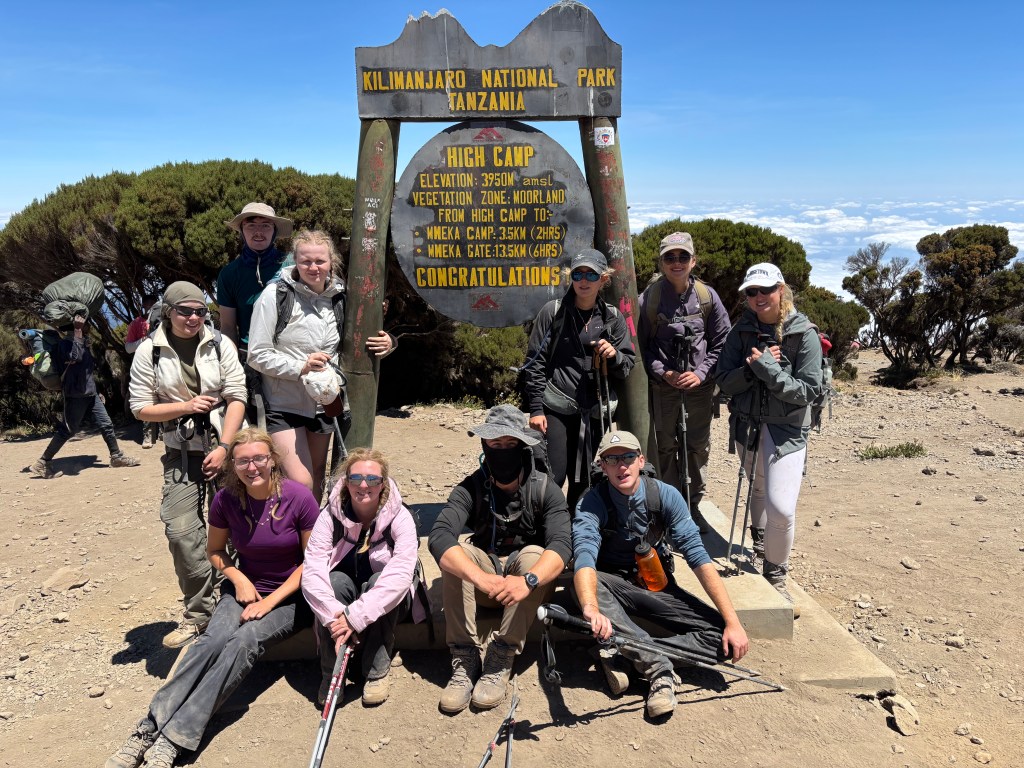
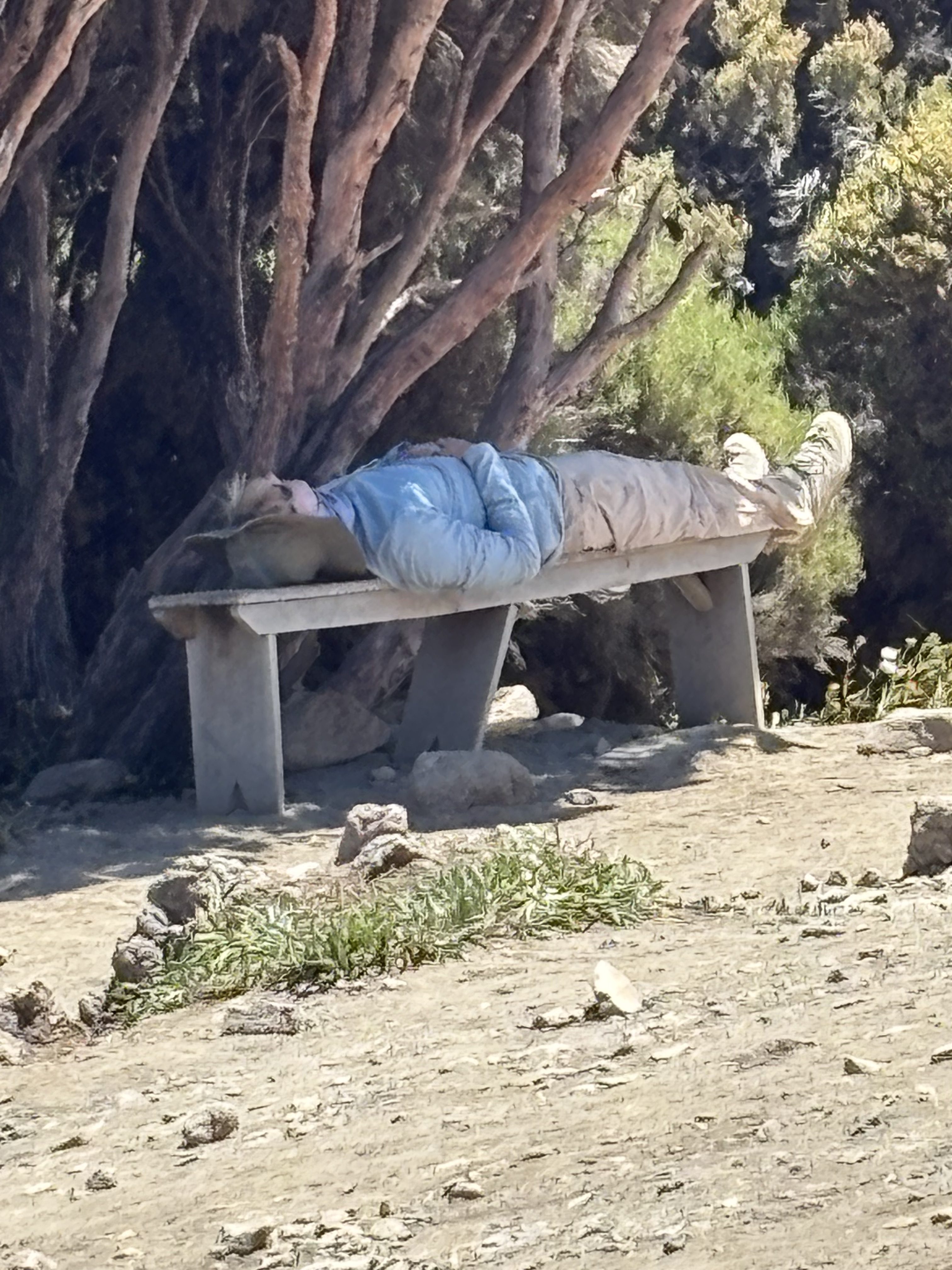
We slept anywhere we could around the campsite while waiting for the tents to be pitched.
The sun beat down on us in the mid afternoon, and, once again, I knew that I would have no energy to do anything in the evening, so I tried to do as much as possible before dinner so I could sleep early. I washed myself with baby wipes, picked out clothes for the final day, organized the pack a bit, then passed out on my sleeping mat with no pillow or blanket. I slept for maybe 2-3 hours before waking up for dinner. Post-dinner Sarah and Bryce collected tip money from the exhausted hikers and we did our med checks with Pierre – I was surprised that my oxygen levels were at 96% given all the strain that day! (my baseline was 99!). In our post-dinner debrief, we learned that we had another 13.5k down the mountain. Since we had to sign out, catch a shuttle, get back in time for lunch and celebrations at Kili Eco Hostel, Nashto insisted that we have an early start to the day, one which required head torches.
Day 6 – High Camp to Mweka Gate
At 4:30am, Mo, Sebastian, and Igor knocked on the tent. I was by far the most groggy that morning, so Lukas was kind enough to reach out of the tent and grab our tea. We got our act together for 5:10 breakfast in hopes of starting down the trail at 5:30/5:40. Due to some… well.. unprepared hikers, by the time we started down the trail, we did not in fact need head torches, lol. I passed the time chatting with Stella, Patrick, Lukas, Victoria, Bryce, and Sarah. We blasted through the rainforest with minimal breaks. The joy and relief I felt when we finally reached the dirt road.. my goodness the end was near.
At last! The Bon Voyage and Congratulations sign stood at Mweka Gate!!! I shed several tears when I saw that Nicole was okay (she had a major medical emergency due to altitude sickness – she was carryed off the mountain, and stretchered part of the way to Mweka Gate) and when she brought me Cadbury chocolate – we made a deal that if we summited, we would buy the other a chocolate bar. And she came through with that deal – I had practically forgotten about it!
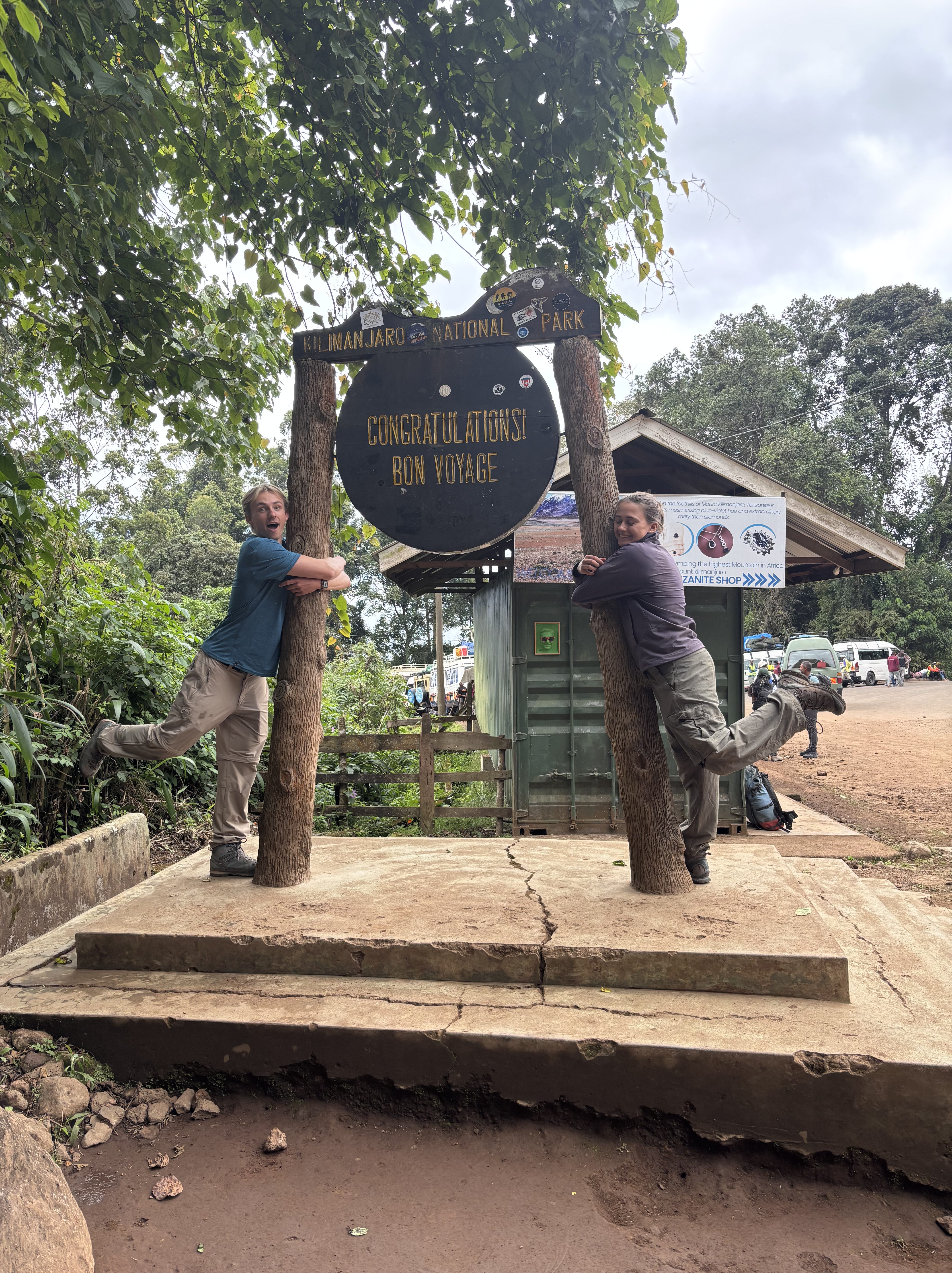
The Dig Deep group met us with coca colas, juices, and beer, which we savoured in line to check out of the National Park. They validate your park pass, record your passport details, DOB etc., and then you’re sent on your way. Afterwards, we lined up in a circle, and Simbo, the leader of African Scenic Safaris announced each porter’s name to be recognized and tipped. The celebration ended with singing, dancing, and a group photo.
We took a bus ride back to the Eco Hostel, popped champagne, and devoured a hot lunch. Despite tackling Africa’s tallest point, there was no time for dilly-dallying. Lukas and I furiously packed and showered in the afternoon in preparation for the next leg of our travels, which we would begin at 4:50am the next morning.
The final closing ceremony included more words from Dig Deep on the impact of our fundraising and the handing out of official climbing certifications. I was recognized as the top fundraiser in the final groups and the second-highest overall fundraiser for the entire year.
Closing Reflections
If you made it this far, give yourself a pat on the back. I promise I am wrapping this up with a few, final reflective words.
Writing this post a week from the journey, the whole experience still feels surreal. For five days, we lived and hiked above the clouds, sharing the mountain with our fellow hikers and the incredible porters who made the journey possible. Putting yourself into these big physical challenges quickly realigns your mental and physical priorities. You are forced to slow down, deliberately attend to your survival needs, and pay attention to the world immediately around you.
Entering into a one-year masters programme thanks to the Bobby Jones Scholarship, graduate school was never just about the classroom for me. This year has been about saying ‘yes!’ to once-in-a-lifetime experiences, fully embracing the University of St Andrews, and leaning into the kind of challenges that shape who you become. Fundraising for Dig Deep and climbing Mount Kilimanjaro epitomizes just that.
In the wee hours of the morning on the summit trek, I felt overwhelmed with emotion and gratitude. There were several moments in the darkness where doubt creeped in. Would I be able to endure the heavy breathing for over 6 hours? Would my body succumb to altitude sickness? Was my body fit enough to push through? It was in those moments, I reminded myself why I was there. It wasn’t just me or my pride motivating me to summit Africa’s tallest mountain. I was carrying with me the dozens of people who had supported this journey, contributed to my fundraiser, encouraged me, given me advice, and believed I could do it.
That sense of community stayed with me beyond Kili. As I have continued travelling through Kenya, I found myself thinking differently about the things I so easily take for granted. I spent hours weaving through two-lane highways, seeing communities spread along the roadside, and staying in eco-tents where notices about water consumption elevated my awareness of what access to basic infrastructure actually means. Water is life, and infrastructure that makes clean water accessible can fundamentally change what is possible for a community.
This is what makes me so grateful that I was able to take on this challenge in support of Dig Deep. The incredible generosity of my community allowed me to turn a personal challenge into something connected to a main larger purpose. Together, your donations helped contribute to a record-breaking year in which Dig Deep raised £1 million, supporting vital work with communities in Bomet County, Kenta. After the instagram/linkedin posts, after the novelty of adventure story-telling wears off, I know that the money we raised will continue to have an impact for individuals and generations to come. This awareness and long-term impact makes the entire climbing experience feel even more meaningful.
I am incredibly grateful – for the people who supported me, the people I met along the way, for the opportunity to spend this year at St Andrews and cap it off in such a spectacular way, and for the chance to experience a small part of Tanzania and Kenya in a way that encouraged me to look beyond myself.
I look forward to the conversations and reflections that will organizally emerge from this journey. I know I will carry this experience with me, returning to it often in the years ahead.
Write Soon ❤
 postcards from EM